
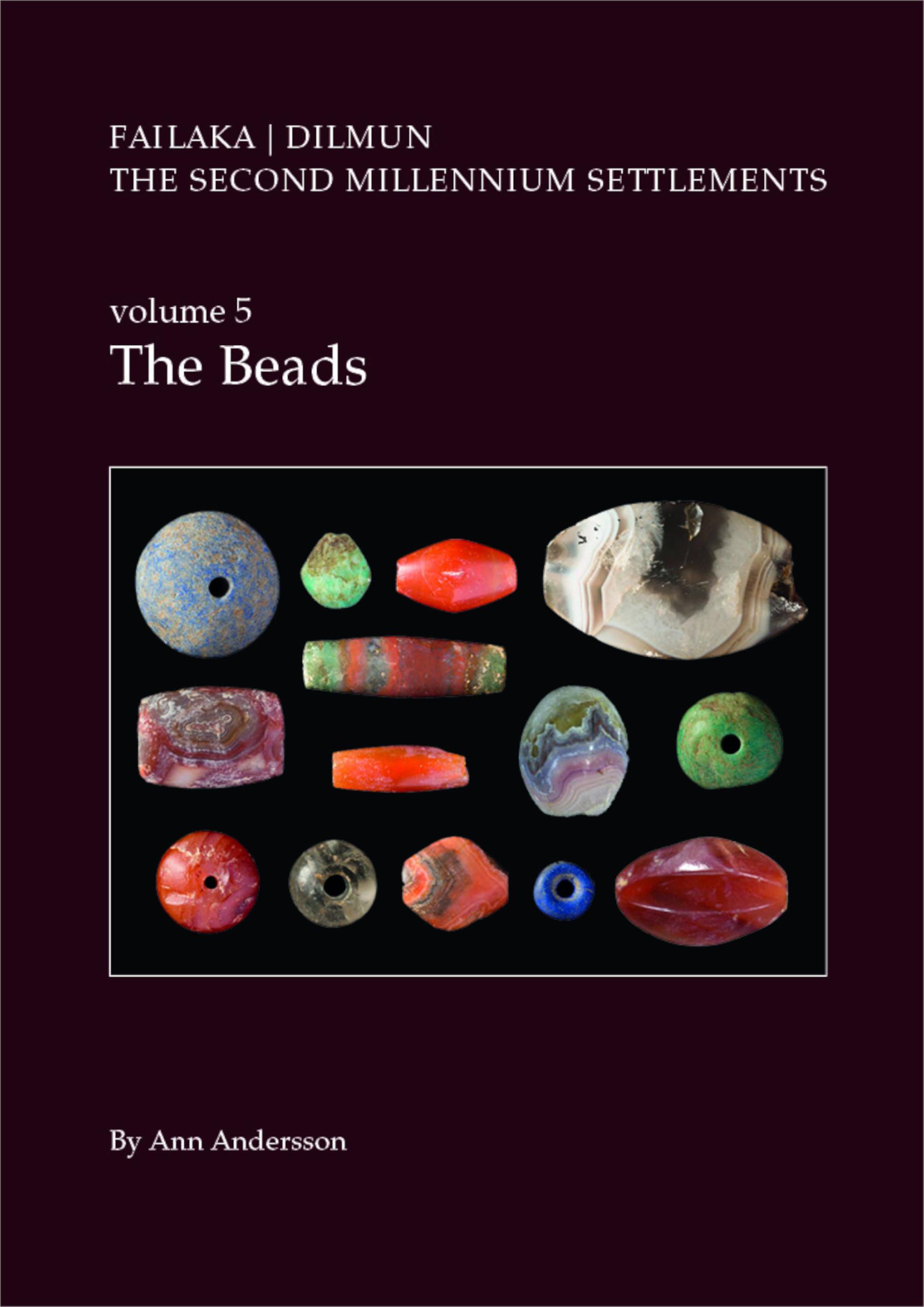
Excavations in 1958-1963 on the island of Failaka in Kuwait uncovered a small community of Dilmun traders from the second millennium BC. Prominent among the finds were 629 beads, most of them made of semi-precious stone, such as different varieties of chalcedony (agate, carnelian, jasper, and moss agate) and quartz (rock crystal, milky quartz, and smoky quartz), and a range of other stone types, such as calcite, chlorite, lapis lazuli, turquoise and porphyry. Additionally, part of the beads was made of glass: a new prestige material of the second millennium.
The study consists of a typology, a classification of materials and an analysis of the dating and distribution of the beads. Manufacturing techniques, including perforation and use-wear, are also considered. In a final discussion, the bead corpus from Failaka is compared with similar material from contemporary sites on Failaka and in Bahrain, along with some thoughts on connections and trade relations, which may be inferred from the materials and forms in the bead assemblage. The study proposes far-reaching connections with the Indus in the east and the Aegean in the west.
Maksa helposti kortilla, Klarnalla, Apple Paylla tai Google Paylla. Etkö ole tyytyväinen? Sinulla on aina 14 päivän palautusoikeus. Lue lisää ehdoistamme. Jos sinulla on kysyttävää, lähetä meille sähköpostia osoitteeseen hello@memmo.org.
Memmo tekee opiskelusta helpompaa – missä päin maailmaa ikinä oletkin. Meillä yhdistät kurssikirjat ja fiksut opiskelutyökalut yhteen paikkaan: tiivistelmät, visat, podcastit ja muistikortit. Ja sitten Ted, opiskelukaverisi, joka vastaa kaikkeen, mitä ikinä mietitkin. Yli 50 000 opiskelijaa opiskelee jo täällä – rakennettu auttamaan sinua oppimaan nopeammin ja stressaamaan vähemmän.
Saatat pitää myös näistä
Osta kirja0