
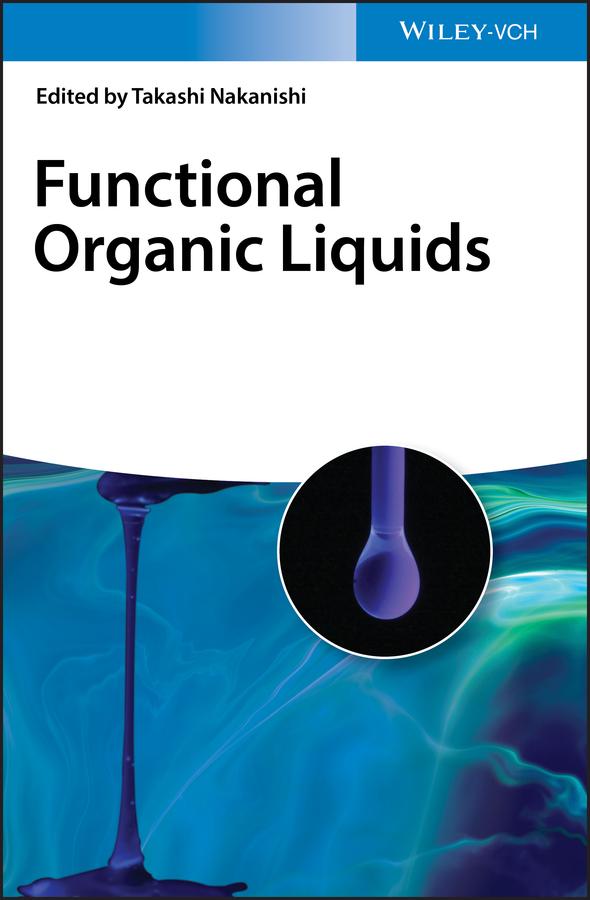
The first book to comprehensively cover the burgeoning new class of soft materials known as functional organic liquids
Functional organic liquids, a new concept in soft matter materials science, exhibit favorable properties compared to amorphous polymers and ionic liquids. They are composed of a functional core unit and a side chain, which induces fluidity even at room temperature. Due to their fluidity, functional organic liquids can adopt any shape and geometry and fulfill their function in stretchable and bendable devices for applications in photovoltaics, organic electronics, biomedicine, and biochemistry.
Presented in five parts, this book starts with an overview of the design methods and properties of functional organic liquids. The next three parts focus on the applications of this exciting new class of soft materials in the fields of energy conversion, nanotechnology, and biomaterials. They study the liquids for energy conversion, those containing inorganic nanoclusters, and solvent-free soft biomaterials. Functional Organic Liquids concludes with a comparison in terms of properties and application potential between functional organic liquids and more conventional soft matter such as ionic liquids and liquid metals.
-Examines the current state of science and technology for functional organic liquids
-Focuses on potential and already realized applications such as functional organic liquids for energy conversion
-Stimulates researchers to move forward on future development and applications
Functional Organic Liquids is an excellent book for materials scientists, polymer chemists, organic chemists, physical chemists, surface chemists, and surface physicists.
Functional organic liquids, a new concept in soft matter materials science, exhibit favorable properties compared to amorphous polymers and ionic liquids. They are composed of a functional core unit and a side chain, which induces fluidity even at room temperature. Due to their fluidity, functional organic liquids can adopt any shape and geometry and fulfill their function in stretchable and bendable devices for applications in photovoltaics, organic electronics, biomedicine, and biochemistry.
Presented in five parts, this book starts with an overview of the design methods and properties of functional organic liquids. The next three parts focus on the applications of this exciting new class of soft materials in the fields of energy conversion, nanotechnology, and biomaterials. They study the liquids for energy conversion, those containing inorganic nanoclusters, and solvent-free soft biomaterials. Functional Organic Liquids concludes with a comparison in terms of properties and application potential between functional organic liquids and more conventional soft matter such as ionic liquids and liquid metals.
-Examines the current state of science and technology for functional organic liquids
-Focuses on potential and already realized applications such as functional organic liquids for energy conversion
-Stimulates researchers to move forward on future development and applications
Functional Organic Liquids is an excellent book for materials scientists, polymer chemists, organic chemists, physical chemists, surface chemists, and surface physicists.
Maksa helposti kortilla, Klarnalla, Apple Paylla tai Google Paylla. Etkö ole tyytyväinen? Sinulla on aina 14 päivän palautusoikeus. Lue lisää ehdoistamme. Jos sinulla on kysyttävää, lähetä meille sähköpostia osoitteeseen hello@memmo.org.
Memmo tekee opiskelusta helpompaa – missä päin maailmaa ikinä oletkin. Meillä yhdistät kurssikirjat ja fiksut opiskelutyökalut yhteen paikkaan: tiivistelmät, visat, podcastit ja muistikortit. Ja sitten Ted, opiskelukaverisi, joka vastaa kaikkeen, mitä ikinä mietitkin. Yli 50 000 opiskelijaa opiskelee jo täällä – rakennettu auttamaan sinua oppimaan nopeammin ja stressaamaan vähemmän.