
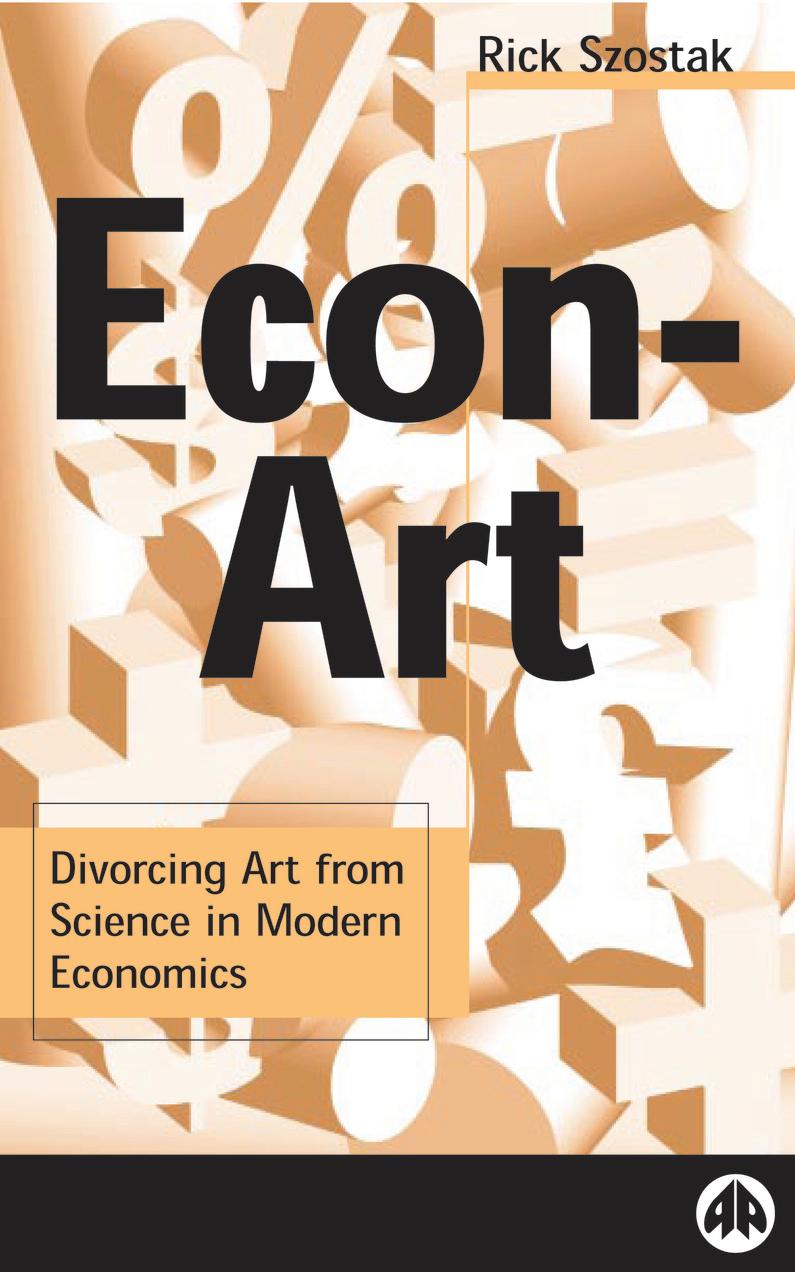
'While identifying two types of activity, namely econ-art and econ-science, he demonstrates why economists should acknowledge their artistic impulses and develop a more scientific conduct.' ARTbibliographies Modern
Historians of economic thought have long recognised the possibility that cultural influences might be important, but have never analysed them in any detail. In the first study of economics from the perspective of art history, Rick Szostak shows how the cultural influences identified by art historians have affected economic theory. He also reveals that not only has economic theory been informed by aesthetic considerations, but the very methods employed by economists are shown to serve primarily artistic goals.
Professor Szostak assesses the extent of these cultural and aesthetic effects through a wide-ranging study of the development of surrealism, cubism and abstract art, juxtaposed with examples drawn from virtually every field of economics. Two types of endeavour are identified, Econ-Art and Econ-Science. Szostak argues that the pursuit of econ-science would be much aided if economists first recognised their artistic impulses, and then developed more scientific standards of conduct. As the first economist to thoroughly address the question of whether Economics is Art, Professor Szostak raises some important philosophical issues with this volume. The result is a controversial and scholarly, yet accessible, examination of the influence of both culture and aesthetic considerations on economics.
Historians of economic thought have long recognised the possibility that cultural influences might be important, but have never analysed them in any detail. In the first study of economics from the perspective of art history, Rick Szostak shows how the cultural influences identified by art historians have affected economic theory. He also reveals that not only has economic theory been informed by aesthetic considerations, but the very methods employed by economists are shown to serve primarily artistic goals.
Professor Szostak assesses the extent of these cultural and aesthetic effects through a wide-ranging study of the development of surrealism, cubism and abstract art, juxtaposed with examples drawn from virtually every field of economics. Two types of endeavour are identified, Econ-Art and Econ-Science. Szostak argues that the pursuit of econ-science would be much aided if economists first recognised their artistic impulses, and then developed more scientific standards of conduct. As the first economist to thoroughly address the question of whether Economics is Art, Professor Szostak raises some important philosophical issues with this volume. The result is a controversial and scholarly, yet accessible, examination of the influence of both culture and aesthetic considerations on economics.
Maksa helposti kortilla, Klarnalla, Apple Paylla tai Google Paylla. Etkö ole tyytyväinen? Sinulla on aina 14 päivän palautusoikeus. Lue lisää ehdoistamme. Jos sinulla on kysyttävää, lähetä meille sähköpostia osoitteeseen hello@memmo.org.
Memmo tekee opiskelusta helpompaa – missä päin maailmaa ikinä oletkin. Meillä yhdistät kurssikirjat ja fiksut opiskelutyökalut yhteen paikkaan: tiivistelmät, visat, podcastit ja muistikortit. Ja sitten Ted, opiskelukaverisi, joka vastaa kaikkeen, mitä ikinä mietitkin. Yli 50 000 opiskelijaa opiskelee jo täällä – rakennettu auttamaan sinua oppimaan nopeammin ja stressaamaan vähemmän.
Saatat pitää myös näistä
Osta kirja0