
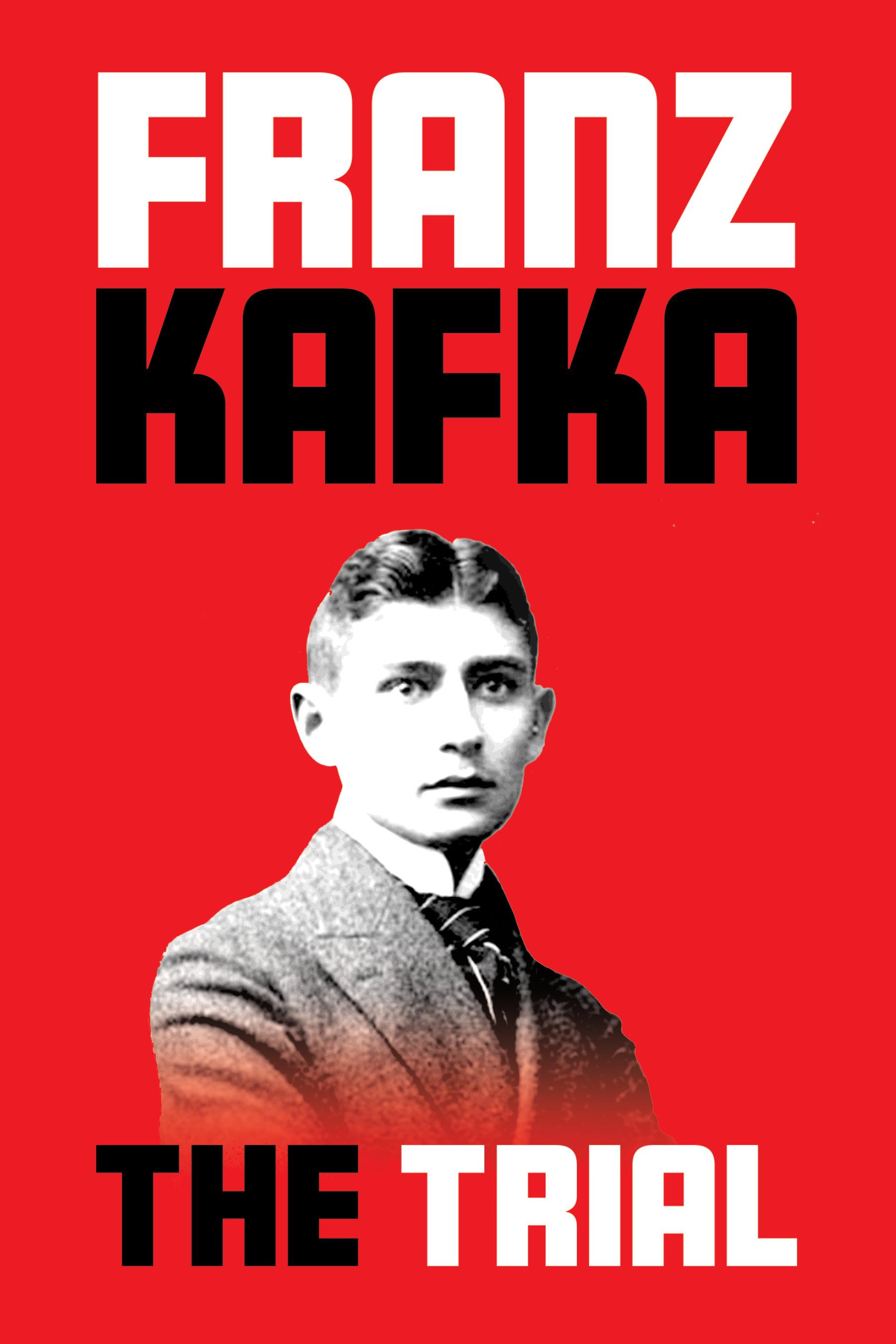
"Someone must have been telling tales about Josef K. for one morning, without having done anything wrong, he was arrested.'
From this gripping first sentence, The Trial, by Franz Kafka, is a darkly humorous, somewhat terrifying narrative of an ordeal faced by Josephy K., a bank clerk, who wakes up one day to find himself arrested and prosecuted by a remote, inaccessible authority who accuses him of a crime he did not commit. In a maze of nonsensical rules and bureaucratic roadblocks Joseph K.’s entrapment is based on an undisclosed charge and the nature of his crime is never revealed to him nor to the reader.
Once arrested, he is released, but must report to court on a regular basis--an event that proves maddening, as nothing is ever resolved. His trial is conducted in a mysterious court, outwardly co-operative, but capable of horrific violence. As Josef K. gradually succumbs to the psychological pressure, he consults various advisers but cannot escape his fate. He finds himself in an excruciating downward spiral.
Was there some way out that he failed to see? Is this study of political power a pessimistic religious parable, or is it a crime novel where the accused man is himself the problem?
This engrossing parable about the human condition is one of Kafka’s best known works. This ordinary man’s ordeals raise provocative, ever-relevant issues related to guilt, responsibility, freedom, the role of government and the nature of justice. Kafka offers no solutions, but provokes his readers to arrive at meanings of their own.
From this gripping first sentence, The Trial, by Franz Kafka, is a darkly humorous, somewhat terrifying narrative of an ordeal faced by Josephy K., a bank clerk, who wakes up one day to find himself arrested and prosecuted by a remote, inaccessible authority who accuses him of a crime he did not commit. In a maze of nonsensical rules and bureaucratic roadblocks Joseph K.’s entrapment is based on an undisclosed charge and the nature of his crime is never revealed to him nor to the reader.
Once arrested, he is released, but must report to court on a regular basis--an event that proves maddening, as nothing is ever resolved. His trial is conducted in a mysterious court, outwardly co-operative, but capable of horrific violence. As Josef K. gradually succumbs to the psychological pressure, he consults various advisers but cannot escape his fate. He finds himself in an excruciating downward spiral.
Was there some way out that he failed to see? Is this study of political power a pessimistic religious parable, or is it a crime novel where the accused man is himself the problem?
This engrossing parable about the human condition is one of Kafka’s best known works. This ordinary man’s ordeals raise provocative, ever-relevant issues related to guilt, responsibility, freedom, the role of government and the nature of justice. Kafka offers no solutions, but provokes his readers to arrive at meanings of their own.
Maksa helposti kortilla, Klarnalla, Apple Paylla tai Google Paylla. Etkö ole tyytyväinen? Sinulla on aina 14 päivän palautusoikeus. Lue lisää ehdoistamme. Jos sinulla on kysyttävää, lähetä meille sähköpostia osoitteeseen hello@memmo.org.
Memmo tekee opiskelusta helpompaa – missä päin maailmaa ikinä oletkin. Meillä yhdistät kurssikirjat ja fiksut opiskelutyökalut yhteen paikkaan: tiivistelmät, visat, podcastit ja muistikortit. Ja sitten Ted, opiskelukaverisi, joka vastaa kaikkeen, mitä ikinä mietitkin. Yli 50 000 opiskelijaa opiskelee jo täällä – rakennettu auttamaan sinua oppimaan nopeammin ja stressaamaan vähemmän.
Saatat pitää myös näistä
Osta kirja0