
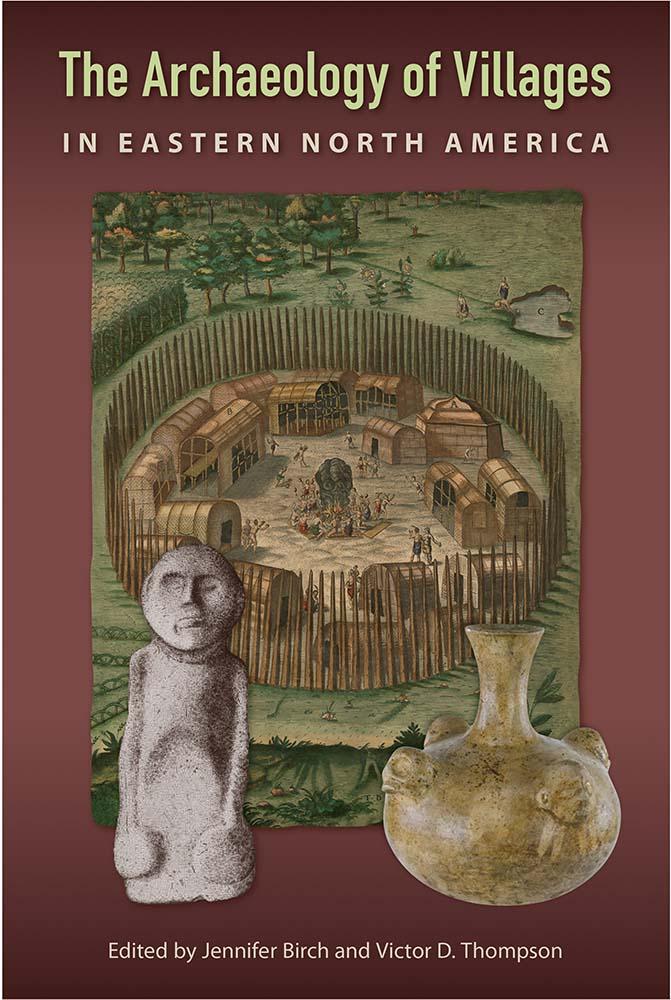
The emergence of village societies out of hunter-gatherer groups profoundly transformed social relations in every part of the world where such communities formed. Drawing on the latest archaeological and historical evidence, this volume explores the development of villages in eastern North America from the Late Archaic period to the eighteenth century.
Sites analyzed here include the Kolomoki village in Georgia, Mississippian communities in Tennessee, palisaded villages in the Appalachian Highlands of Virginia, and Iroquoian settlements in New York and Ontario. Contributors use rich data sets and contemporary social theory to describe what these villages looked like, what their rules and cultural norms were, what it meant to be a villager, what cosmological beliefs and ritual systems were held at these sites, and how villages connected with each other in regional networks. They focus on how power dynamics played out at the local level and among interacting communities.
Highlighting the similarities and differences in the histories of village formation in the region, these essays trace the processes of negotiation, cooperation, and competition that arose as part of village life and changed societies. This volume shows how studying these village communities helps archaeologists better understand the forces behind human cultural change.
Maksa helposti kortilla, Klarnalla, Apple Paylla tai Google Paylla. Etkö ole tyytyväinen? Sinulla on aina 14 päivän palautusoikeus. Lue lisää ehdoistamme. Jos sinulla on kysyttävää, lähetä meille sähköpostia osoitteeseen hello@memmo.org.
Memmo tekee opiskelusta helpompaa – missä päin maailmaa ikinä oletkin. Meillä yhdistät kurssikirjat ja fiksut opiskelutyökalut yhteen paikkaan: tiivistelmät, visat, podcastit ja muistikortit. Ja sitten Ted, opiskelukaverisi, joka vastaa kaikkeen, mitä ikinä mietitkin. Yli 50 000 opiskelijaa opiskelee jo täällä – rakennettu auttamaan sinua oppimaan nopeammin ja stressaamaan vähemmän.
Saatat pitää myös näistä
Osta kirja0