
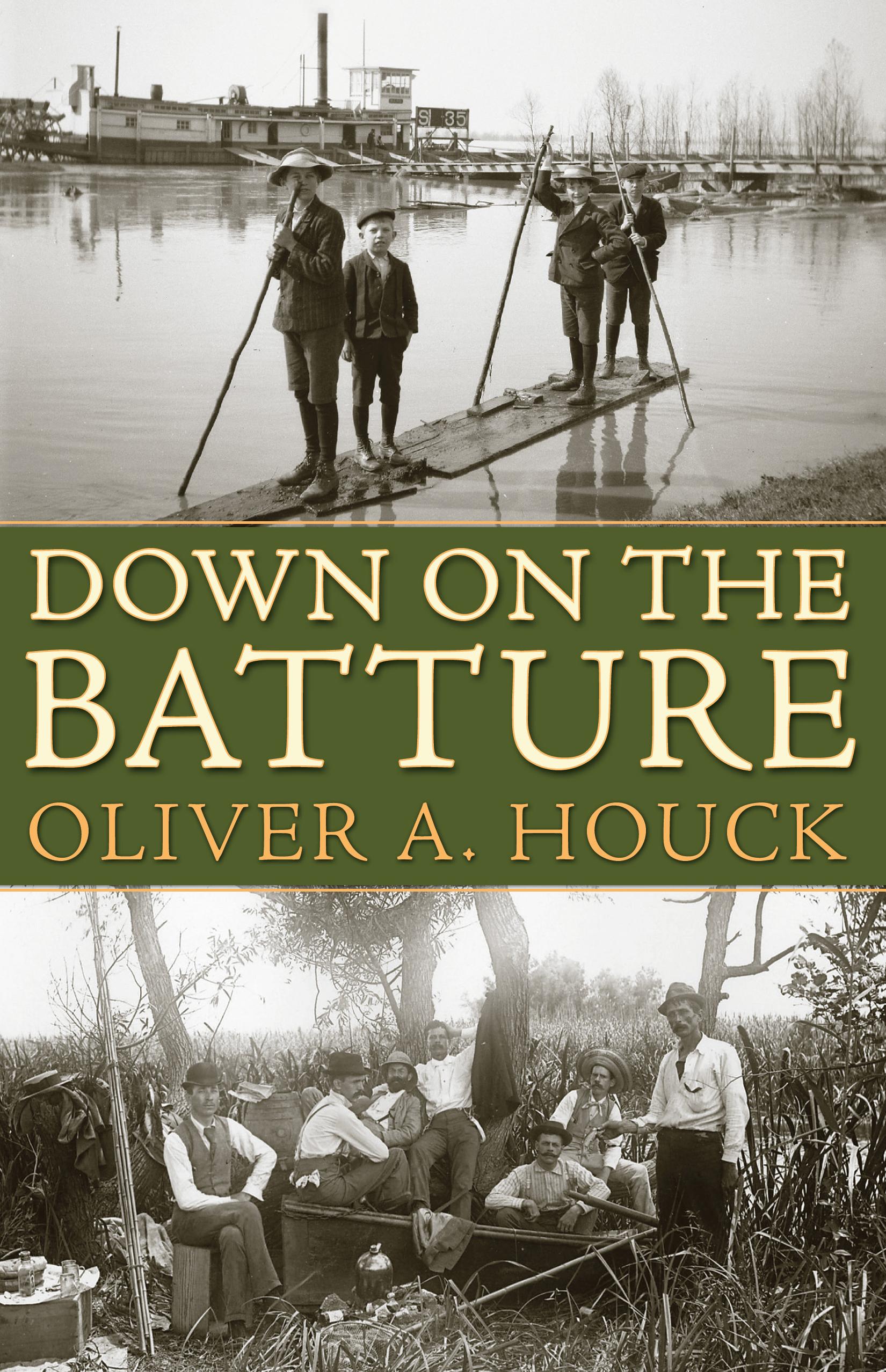
The lower Mississippi River winds past the city of New Orleans between enormous levees and a rim of sand, mud, and trees called “the batture.” On this remote and ignored piece of land thrives a humanity unique to the region—ramblers, artists, drinkers, fishers, rabbit hunters, dog walkers, sunset watchers, and refugees from immigration, alimony, and other aspects of modern life.
Author Oliver A. Houck has frequented this place for the past twenty-five years. Down on the Batture describes a life, pastoral, at times marginal, but remarkably fecund and surprising. From this place he meditates on Louisiana, the state of the waterway, and its larger environs. He describes all the actors who have played lead roles on the edge of the mightiest river of the continent, and includes in his narrative plantations, pollution, murder, land grabs, keelboat brawlers, slave rebellions, the Corps of Engineers, and the oil industry.
Houck draws from his experience in New Orleans since the early 1970s in the practice and teaching of law. He has been a player in many of the issues he describes, although he does not undertake to argue them here. Instead, story by story, he uses the batture to explore the forces that have shaped and spell out the future of the region. The picture emerges of a place that—for all its tangle of undergrowth, drifting humanity, shifting dimensions in the rise and fall of floodwater—provides respite and sanctuary for values that are original to America and ever at risk from the homogenizing forces of civilization.
Author Oliver A. Houck has frequented this place for the past twenty-five years. Down on the Batture describes a life, pastoral, at times marginal, but remarkably fecund and surprising. From this place he meditates on Louisiana, the state of the waterway, and its larger environs. He describes all the actors who have played lead roles on the edge of the mightiest river of the continent, and includes in his narrative plantations, pollution, murder, land grabs, keelboat brawlers, slave rebellions, the Corps of Engineers, and the oil industry.
Houck draws from his experience in New Orleans since the early 1970s in the practice and teaching of law. He has been a player in many of the issues he describes, although he does not undertake to argue them here. Instead, story by story, he uses the batture to explore the forces that have shaped and spell out the future of the region. The picture emerges of a place that—for all its tangle of undergrowth, drifting humanity, shifting dimensions in the rise and fall of floodwater—provides respite and sanctuary for values that are original to America and ever at risk from the homogenizing forces of civilization.
Maksa helposti kortilla, Klarnalla, Apple Paylla tai Google Paylla. Etkö ole tyytyväinen? Sinulla on aina 14 päivän palautusoikeus. Lue lisää ehdoistamme. Jos sinulla on kysyttävää, lähetä meille sähköpostia osoitteeseen hello@memmo.org.
Memmo tekee opiskelusta helpompaa – missä päin maailmaa ikinä oletkin. Meillä yhdistät kurssikirjat ja fiksut opiskelutyökalut yhteen paikkaan: tiivistelmät, visat, podcastit ja muistikortit. Ja sitten Ted, opiskelukaverisi, joka vastaa kaikkeen, mitä ikinä mietitkin. Yli 50 000 opiskelijaa opiskelee jo täällä – rakennettu auttamaan sinua oppimaan nopeammin ja stressaamaan vähemmän.
Saatat pitää myös näistä
Osta kirja0