
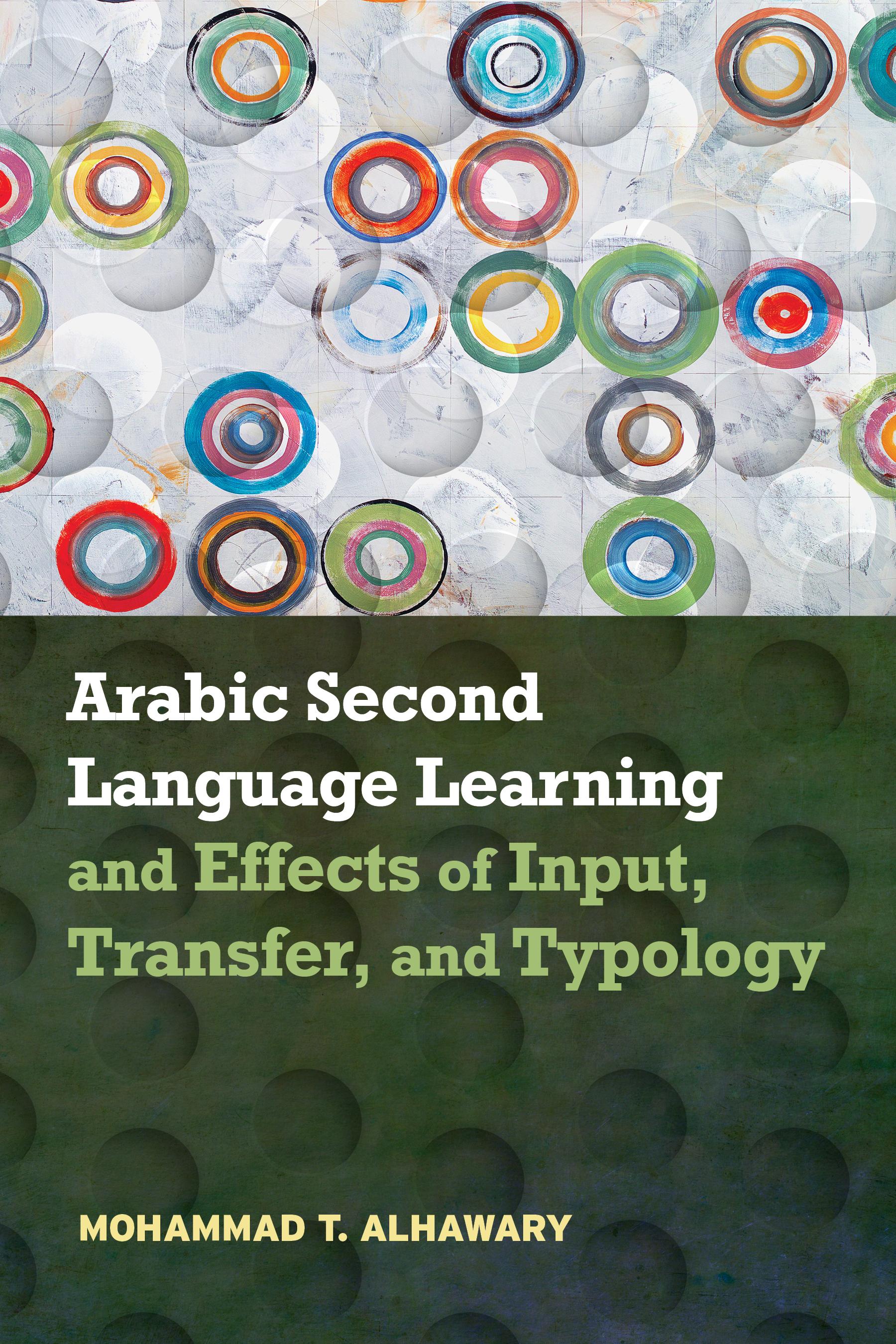
Despite the status of Arabic as a global language and the high demand to learn it, the field of Arabic second language acquisition remains underinvestigated. Second language acquisition findings are crucial for informing and advancing the field of Arabic foreign language pedagogy including Arabic language teaching, testing, and syllabus design.
Arabic Second Language Learning and Effects of Input, Transfer, and Typology provides data-driven empirical findings for a number of basic and high-frequency morphosyntactic structures with two novel typological language pairings, examining Arabic second language acquisition data from adult L1 Chinese- and Russian-speaking learners of Arabic as a foreign language. Alhawary’s study examines the different processes, hypotheses, and acquisition tendencies from the two learner groups, and documents the extent of the successes and challenges faced by such learners in their L2 Arabic grammatical development during the first three years of learning the language. In addition, the book offers both theoretical and practical implications related to input exposure, L1 and L2 transfer, and typological and structural proximity effects.
This book serves as a valuable resource for both second language acquisition experts and foreign language teaching practitioners.
Maksa helposti kortilla, Klarnalla, Apple Paylla tai Google Paylla. Etkö ole tyytyväinen? Sinulla on aina 14 päivän palautusoikeus. Lue lisää ehdoistamme. Jos sinulla on kysyttävää, lähetä meille sähköpostia osoitteeseen hello@memmo.org.
Memmo tekee opiskelusta helpompaa – missä päin maailmaa ikinä oletkin. Meillä yhdistät kurssikirjat ja fiksut opiskelutyökalut yhteen paikkaan: tiivistelmät, visat, podcastit ja muistikortit. Ja sitten Ted, opiskelukaverisi, joka vastaa kaikkeen, mitä ikinä mietitkin. Yli 50 000 opiskelijaa opiskelee jo täällä – rakennettu auttamaan sinua oppimaan nopeammin ja stressaamaan vähemmän.