
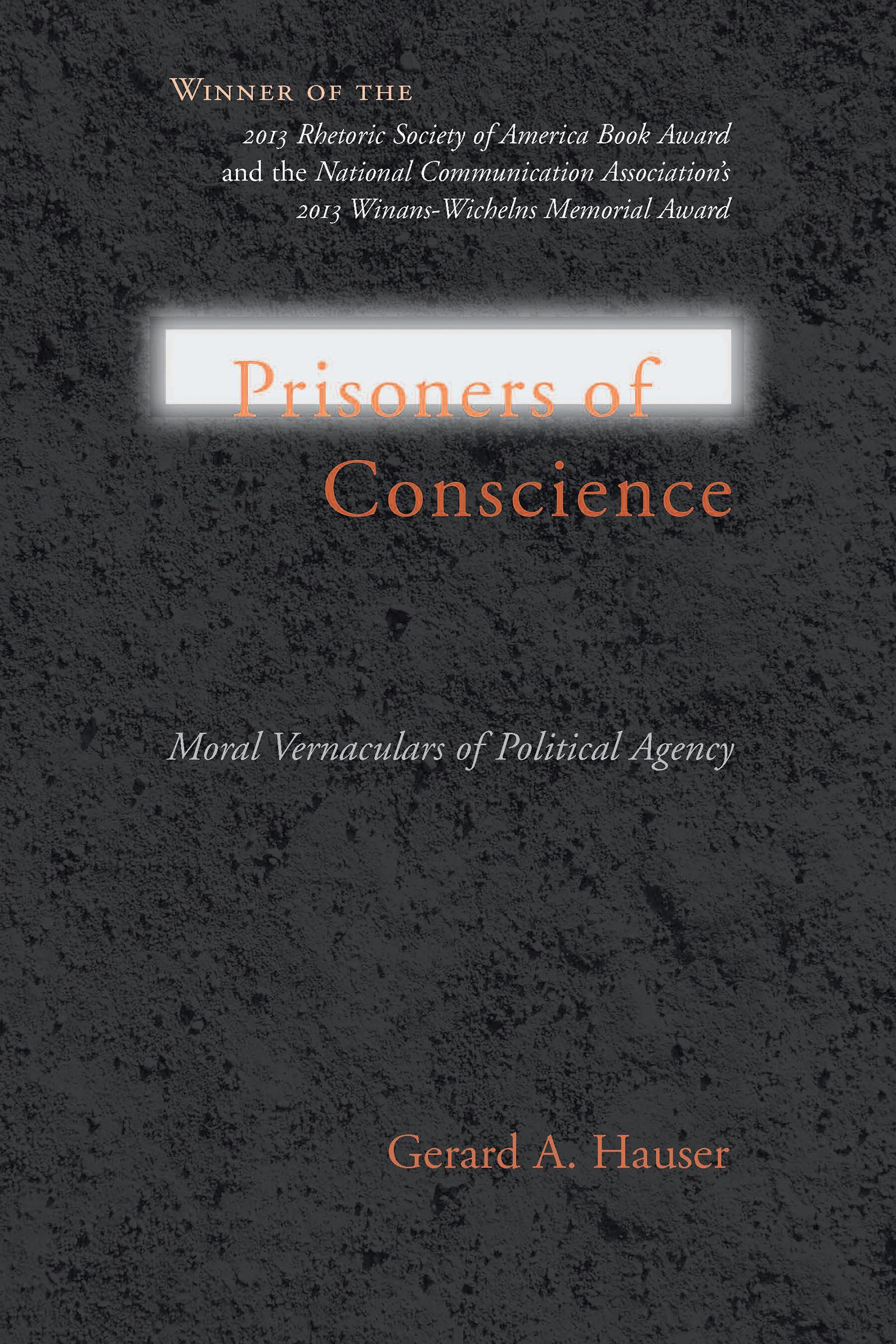
An examination of the discourse of political prisoners as a form of vernacular rhetoric
Prisoners of Conscience continues the work begun by Gerard A. Hauser in Vernacular Voices: The Rhetoric of Publics and Public Spheres, winner of the National Communication Association's Hochmuth Nichols Award. In his new book, Hauser examines the discourse of political prisoners, specifically the discourse of prisoners of conscience, as a form of rhetoric in which the vernacular is the main source of available appeals and the foundation for political agency.
Hauser explores how modes of resistance employed by these prisoners constitute what he deems a "thick moral vernacular" rhetoric of human rights. Hauser's work considers in part how these prisoners convert universal commitments to human dignity, agency, and voice into the moral vernacular of the society and culture to which their rhetoric is addressed.
Hauser grounds his study through a series of case studies, each centered on a different rhetorical mechanism brought to bear in the act of resistance. Through a transnational rhetorical analysis of resistance within political prisons, Hauser brings to bear his skills as a rhetorical theorist and critic to illuminate the rhetorical power of resistance as tied to core questions in contemporary humanistic scholarship and public concern.
Maksa helposti kortilla, Klarnalla, Apple Paylla tai Google Paylla. Etkö ole tyytyväinen? Sinulla on aina 14 päivän palautusoikeus. Lue lisää ehdoistamme. Jos sinulla on kysyttävää, lähetä meille sähköpostia osoitteeseen hello@memmo.org.
Memmo tekee opiskelusta helpompaa – missä päin maailmaa ikinä oletkin. Meillä yhdistät kurssikirjat ja fiksut opiskelutyökalut yhteen paikkaan: tiivistelmät, visat, podcastit ja muistikortit. Ja sitten Ted, opiskelukaverisi, joka vastaa kaikkeen, mitä ikinä mietitkin. Yli 50 000 opiskelijaa opiskelee jo täällä – rakennettu auttamaan sinua oppimaan nopeammin ja stressaamaan vähemmän.