
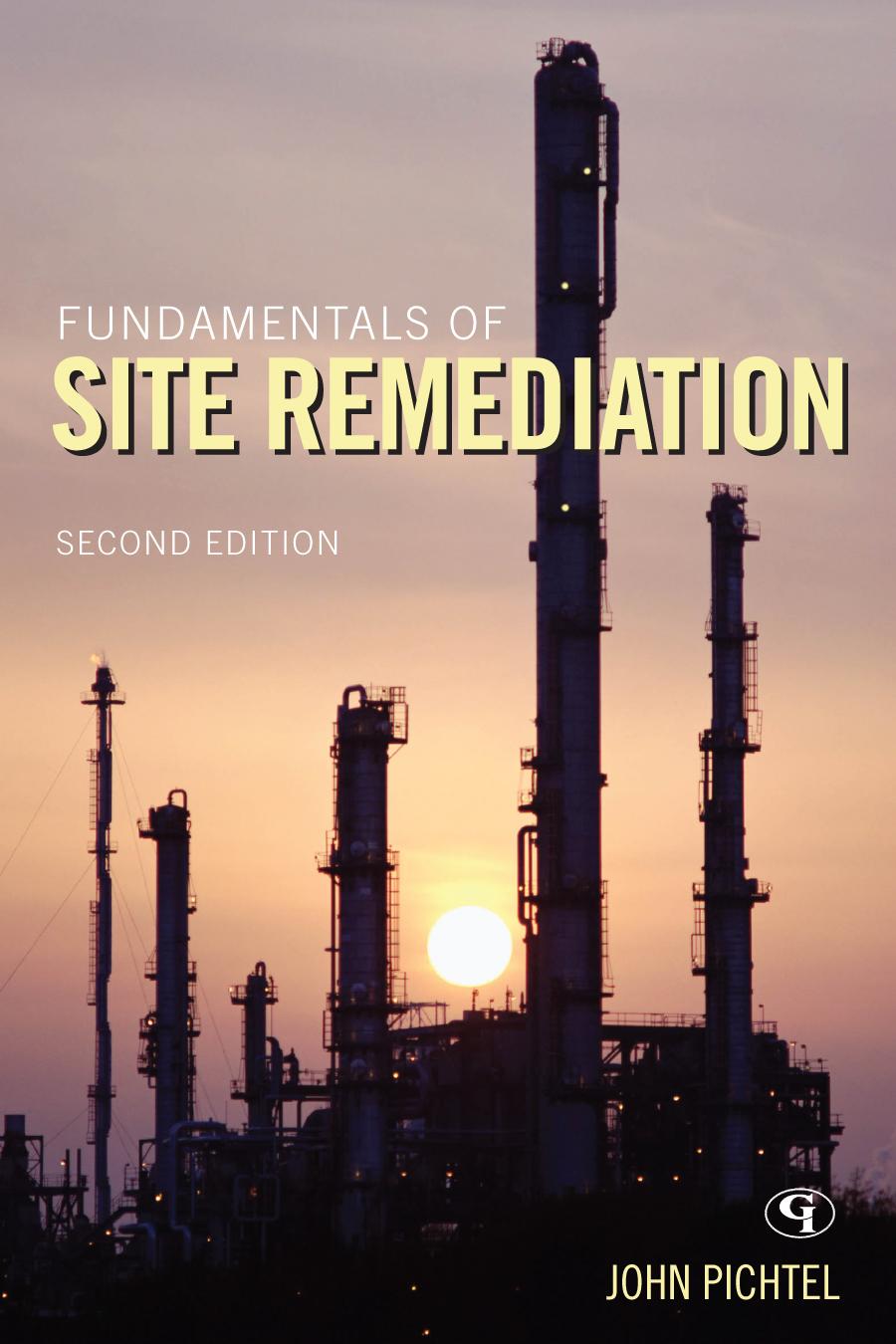
This introductory manual addresses environmental site restoration practices that both ensure compliance with federal statutes and prevent further contamination or expense. It also includes up-to-date information and several new features to enhance the process.
Emphasizing environmental chemistry, soil science, microbiology, plant science, and the underlying chemical processes, author John Pichtel discusses relevant chemical principles as they apply to the cleanup and removal of hazardous chemicals from soil, geological strata, and groundwater.
The first part of this book provides an overview of the recent history of environmental contamination and the formulation of relevant regulations, leading to regulations for hazardous waste site remediation. This part also provides a background for several salient aspects of site remediation.
The second part of the book closely examines field remediation technologies, including phytoremediation, bioremediation, and electrokinetic remediation. Theory of operation, practical considerations, and possible environmental impacts and other consequences of use are also discussed.
Readers of the first edition will discover two new chapters in this Second Edition covering permeable reactive walls and technology selection. This updated edition now also includes end-of-chapter questions and instructions for completing two web-based exercises, one for the chapter on environmental site assessments and one for the chapter on technology selection.
Emphasizing environmental chemistry, soil science, microbiology, plant science, and the underlying chemical processes, author John Pichtel discusses relevant chemical principles as they apply to the cleanup and removal of hazardous chemicals from soil, geological strata, and groundwater.
The first part of this book provides an overview of the recent history of environmental contamination and the formulation of relevant regulations, leading to regulations for hazardous waste site remediation. This part also provides a background for several salient aspects of site remediation.
The second part of the book closely examines field remediation technologies, including phytoremediation, bioremediation, and electrokinetic remediation. Theory of operation, practical considerations, and possible environmental impacts and other consequences of use are also discussed.
Readers of the first edition will discover two new chapters in this Second Edition covering permeable reactive walls and technology selection. This updated edition now also includes end-of-chapter questions and instructions for completing two web-based exercises, one for the chapter on environmental site assessments and one for the chapter on technology selection.
Maksa helposti kortilla, Klarnalla, Apple Paylla tai Google Paylla. Etkö ole tyytyväinen? Sinulla on aina 14 päivän palautusoikeus. Lue lisää ehdoistamme. Jos sinulla on kysyttävää, lähetä meille sähköpostia osoitteeseen hello@memmo.org.
Memmo tekee opiskelusta helpompaa – missä päin maailmaa ikinä oletkin. Meillä yhdistät kurssikirjat ja fiksut opiskelutyökalut yhteen paikkaan: tiivistelmät, visat, podcastit ja muistikortit. Ja sitten Ted, opiskelukaverisi, joka vastaa kaikkeen, mitä ikinä mietitkin. Yli 50 000 opiskelijaa opiskelee jo täällä – rakennettu auttamaan sinua oppimaan nopeammin ja stressaamaan vähemmän.