
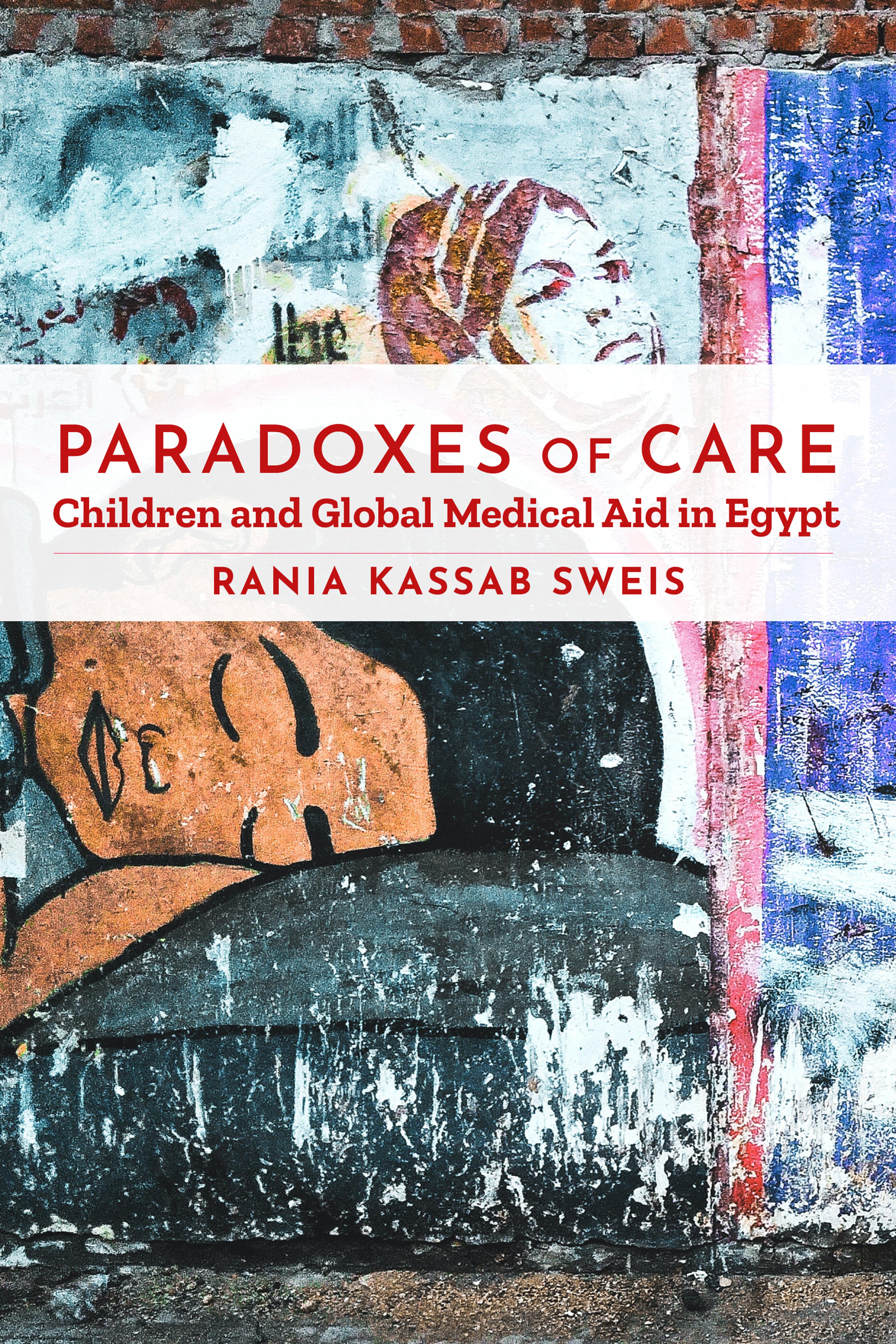
Each year, billions of dollars are spent on global humanitarian health initiatives. These efforts are intended to care for suffering bodies, especially those of distressed children living in poverty. But as global medical aid can often overlook the local economic and political systems that cause bodily suffering, it can also unintentionally prolong the very conditions that hurt children and undermine local aid givers. Investigating medical humanitarian encounters in Egypt, Paradoxes of Care illustrates how child aid recipients and local aid experts grapple with global aid's shortcomings and its paradoxical outcomes.
Rania Kassab Sweis examines how some of the world's largest aid organizations care for vulnerable children in Egypt, focusing on medical efforts with street children and out-of-school village girls. Her in-depth ethnographic study reveals how global medical aid fails to "save" these children according to its stated aims, and often maintains—or produces new—social disparities in children's lives. Foregrounding vulnerable children's responses to medical aid, Sweis moves past the unquestioned benevolence of global health to demonstrate how children must manage their own bodies and lives in the absence of adult care. With this book, she challenges readers to engage with the question of what medical caregivers and donors alike gain from such global humanitarian transactions.
Maksa helposti kortilla, Klarnalla, Apple Paylla tai Google Paylla. Etkö ole tyytyväinen? Sinulla on aina 14 päivän palautusoikeus. Lue lisää ehdoistamme. Jos sinulla on kysyttävää, lähetä meille sähköpostia osoitteeseen hello@memmo.org.
Memmo tekee opiskelusta helpompaa – missä päin maailmaa ikinä oletkin. Meillä yhdistät kurssikirjat ja fiksut opiskelutyökalut yhteen paikkaan: tiivistelmät, visat, podcastit ja muistikortit. Ja sitten Ted, opiskelukaverisi, joka vastaa kaikkeen, mitä ikinä mietitkin. Yli 50 000 opiskelijaa opiskelee jo täällä – rakennettu auttamaan sinua oppimaan nopeammin ja stressaamaan vähemmän.