
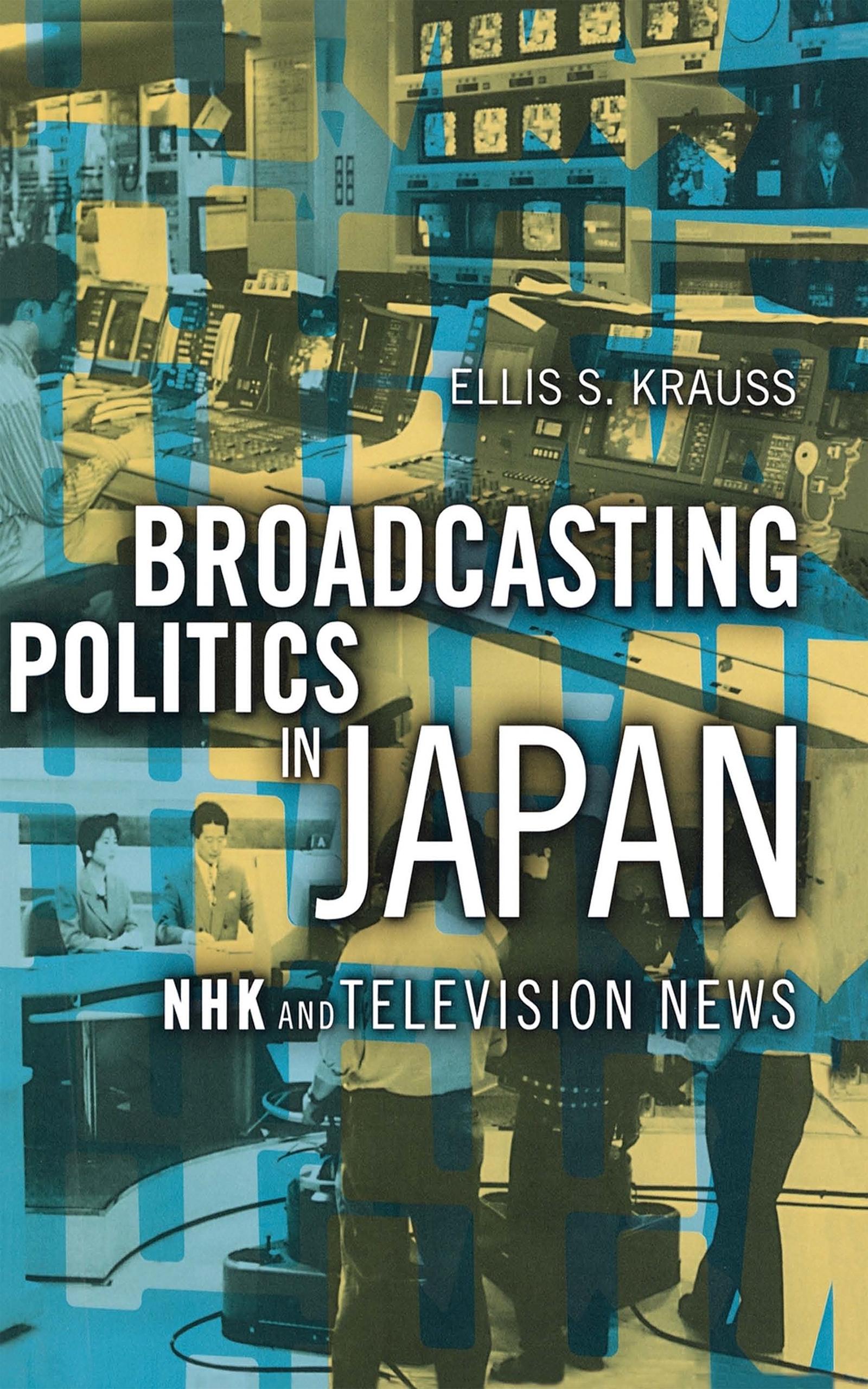
The aftermath of Japan's 1945 military defeat left its public institutions in a state of deep crisis; virtually every major source of state legitimacy was seriously damaged or wholly remade by the postwar occupation. Between 1960 and 1990, however, these institutions renewed their strength, taking on legitimacy that erased virtually all traces of their postwar instability.
How did this transformation come about? This is the question Ellis S. Krauss ponders in Broadcasting Politics in Japan; his answer focuses on the role played by the Japanese mass media and in particular by Japan's national broadcaster, NHK.
Since the 1960s, television has been a fixture of the Japanese household, and NHK's TV news has until very recently been the dominant, and most trusted, source of political information for the Japanese citizen. NHK's news style is distinctive among the broadcasting systems of industrialized countries; it emphasizes facts over interpretation and gives unusual priority to coverage of the national bureaucracy. Krauss argues that this approach is not simply a reflection of Japanese culture, but a result of the organization and processes of NHK and their relationship with the state. These factors had profound consequences for the state's postwar re-legitimization, while the commercial networks' recent challenge to NHK has helped engender the wave of cynicism currently faced by the state.
Krauss guides the reader through the complex interactions among politics, media organizations, and Japanese journalism to demonstrate how NHK television news became a shaper of Japan's political world, rather than simply a lens through which to view it.
Maksa helposti kortilla, Klarnalla, Apple Paylla tai Google Paylla. Etkö ole tyytyväinen? Sinulla on aina 14 päivän palautusoikeus. Lue lisää ehdoistamme. Jos sinulla on kysyttävää, lähetä meille sähköpostia osoitteeseen hello@memmo.org.
Memmo tekee opiskelusta helpompaa – missä päin maailmaa ikinä oletkin. Meillä yhdistät kurssikirjat ja fiksut opiskelutyökalut yhteen paikkaan: tiivistelmät, visat, podcastit ja muistikortit. Ja sitten Ted, opiskelukaverisi, joka vastaa kaikkeen, mitä ikinä mietitkin. Yli 50 000 opiskelijaa opiskelee jo täällä – rakennettu auttamaan sinua oppimaan nopeammin ja stressaamaan vähemmän.