
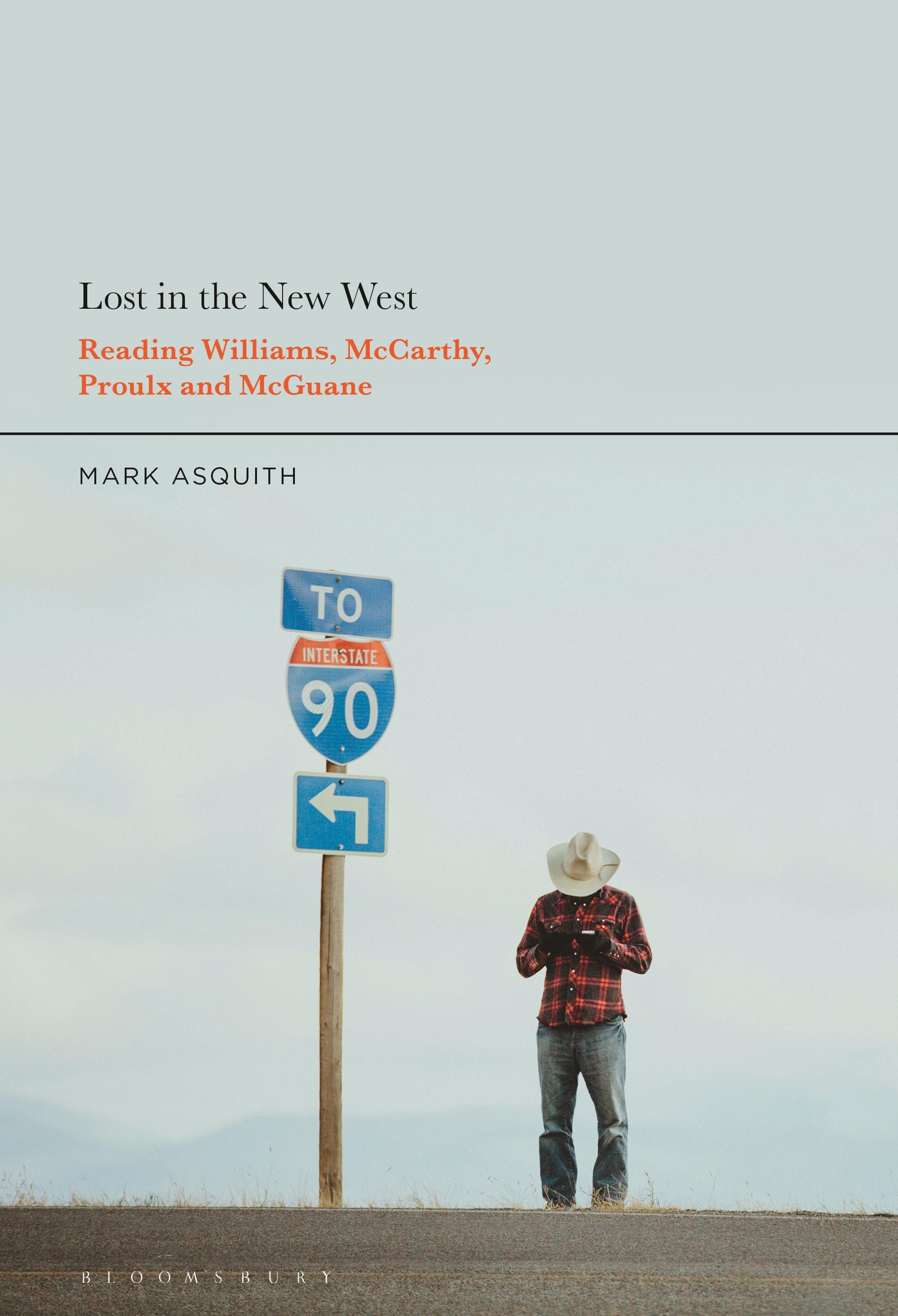
Lost in the New West investigates a group of writers – John Williams, Cormac McCarthy, Annie Proulx and Thomas McGuane – who have sought to explore the tensions inherent to the Western, where the distinctions between old and new, myth and reality, authenticity and sentimentality are frequently blurred. Collectively these authors demonstrate a deep-seated attachment to the landscape, people and values of the West and offer a critical appraisal of the dialogue between the contemporary West and its legacy.
Mark Asquith draws attention to the idealistic young men at the center of such works as Williams's Butcher's Crossing (1960), McCarthy's Blood Meridian (1985) and Border Trilogy, Proulx's Wyoming stories and McGuane's Deadrock novels. For each writer, these characters struggle to come to terms with the difference between the suspect mythology of the West that shapes their identity and the reality that surrounds them. They are, in short, lost in the new West.
Mark Asquith draws attention to the idealistic young men at the center of such works as Williams's Butcher's Crossing (1960), McCarthy's Blood Meridian (1985) and Border Trilogy, Proulx's Wyoming stories and McGuane's Deadrock novels. For each writer, these characters struggle to come to terms with the difference between the suspect mythology of the West that shapes their identity and the reality that surrounds them. They are, in short, lost in the new West.
Maksa helposti kortilla, Klarnalla, Apple Paylla tai Google Paylla. Etkö ole tyytyväinen? Sinulla on aina 14 päivän palautusoikeus. Lue lisää ehdoistamme. Jos sinulla on kysyttävää, lähetä meille sähköpostia osoitteeseen hello@memmo.org.
Memmo tekee opiskelusta helpompaa – missä päin maailmaa ikinä oletkin. Meillä yhdistät kurssikirjat ja fiksut opiskelutyökalut yhteen paikkaan: tiivistelmät, visat, podcastit ja muistikortit. Ja sitten Ted, opiskelukaverisi, joka vastaa kaikkeen, mitä ikinä mietitkin. Yli 50 000 opiskelijaa opiskelee jo täällä – rakennettu auttamaan sinua oppimaan nopeammin ja stressaamaan vähemmän.