
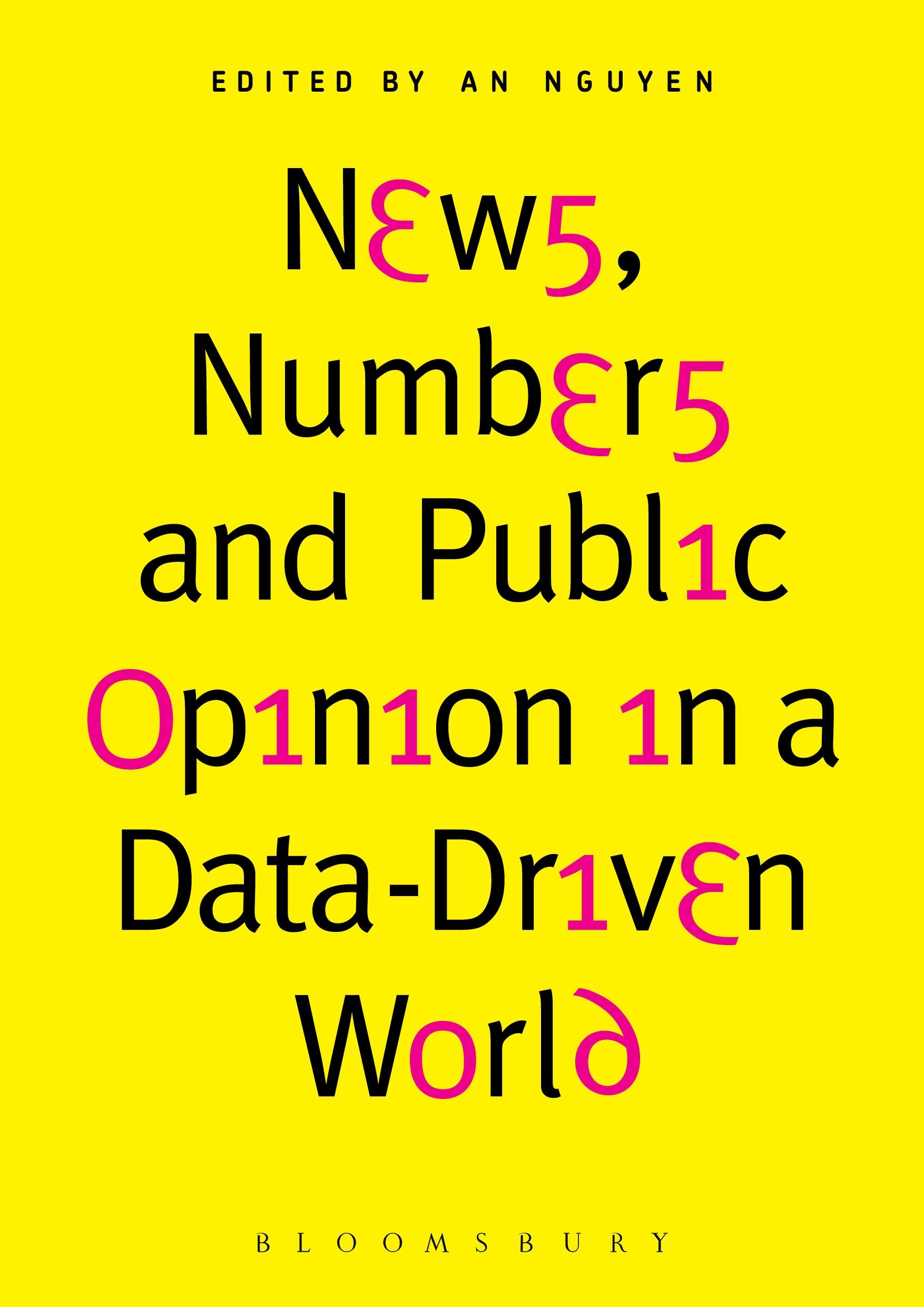
From the quality of the air we breathe to the national leaders we choose, data and statistics are a pervasive feature of daily life and daily news. But how do news, numbers and public opinion interact with each other – and with what impacts on society at large?
Featuring an international roster of established and emerging scholars, this book is the first comprehensive collection of research into the little understood processes underpinning the uses/misuses of statistical information in journalism and their socio-psychological and political effects. Moving beyond the hype around “data journalism," News, Numbers and Public Opinion delves into a range of more latent, fundamental questions such as:
· Is it true that most citizens and journalists do not have the necessary skills and resources to critically process and assess numbers?
· How do/should journalists make sense of the increasingly data-driven world?
· What strategies, formats and frames do journalists use to gather and represent different types of statistical data in their stories?
· What are the socio-psychological and political effects of such data gathering and representation routines, formats and frames on the way people acquire knowledge and form attitudes?
· What skills and resources do journalists and publics need to deal effectively with the influx of numbers into in daily work and life – and how can newsrooms and journalism schools meet that need?
The book is a must-read for not only journalists, journalism and media scholars, statisticians and data scientists but also anybody interested in the interplay between journalism, statistics and society.
Featuring an international roster of established and emerging scholars, this book is the first comprehensive collection of research into the little understood processes underpinning the uses/misuses of statistical information in journalism and their socio-psychological and political effects. Moving beyond the hype around “data journalism," News, Numbers and Public Opinion delves into a range of more latent, fundamental questions such as:
· Is it true that most citizens and journalists do not have the necessary skills and resources to critically process and assess numbers?
· How do/should journalists make sense of the increasingly data-driven world?
· What strategies, formats and frames do journalists use to gather and represent different types of statistical data in their stories?
· What are the socio-psychological and political effects of such data gathering and representation routines, formats and frames on the way people acquire knowledge and form attitudes?
· What skills and resources do journalists and publics need to deal effectively with the influx of numbers into in daily work and life – and how can newsrooms and journalism schools meet that need?
The book is a must-read for not only journalists, journalism and media scholars, statisticians and data scientists but also anybody interested in the interplay between journalism, statistics and society.
Maksa helposti kortilla, Klarnalla, Apple Paylla tai Google Paylla. Etkö ole tyytyväinen? Sinulla on aina 14 päivän palautusoikeus. Lue lisää ehdoistamme. Jos sinulla on kysyttävää, lähetä meille sähköpostia osoitteeseen hello@memmo.org.
Memmo tekee opiskelusta helpompaa – missä päin maailmaa ikinä oletkin. Meillä yhdistät kurssikirjat ja fiksut opiskelutyökalut yhteen paikkaan: tiivistelmät, visat, podcastit ja muistikortit. Ja sitten Ted, opiskelukaverisi, joka vastaa kaikkeen, mitä ikinä mietitkin. Yli 50 000 opiskelijaa opiskelee jo täällä – rakennettu auttamaan sinua oppimaan nopeammin ja stressaamaan vähemmän.