
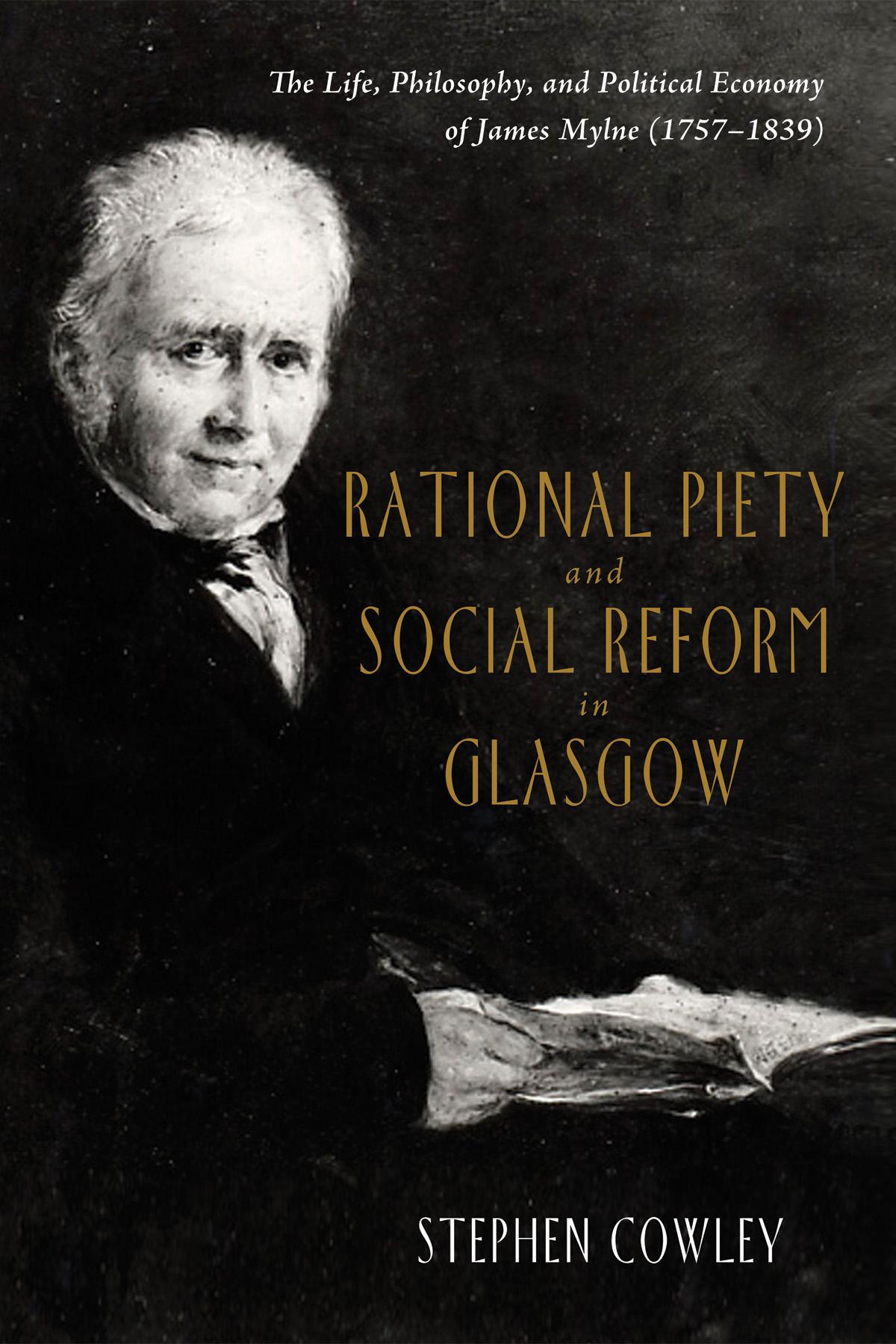
James Mylne (1757-1839) taught moral philosophy and political economy in Glasgow from 1797 to the mid-1830s. Rational Piety and Social Reform in Glasgow offers readers Mylne's biography, a summary of his lectures on moral philosophy and political economy, several interpretative essays, and a collation of his introductory lecture.
Mylne's moral philosophy lectures cover the intellectual and active powers of man and offer an account of his duties to God, neighbor, and self. He diverges from the "moral sense" and "common sense" traditions associated with Francis Hutcheson and Thomas Reid in Glasgow. He reinstates reason as the guiding principle of conscience and argues for utility as the predominant criterion of morality.
Mylne was also active among the Whig "friends of Mr. Fox" and in the Glasgow Reform Association, for his theory of the sovereignty of reason drove his view of political reform and the concept of value in his lectures on political economy. In a criticism of Adam Smith, Mylne interprets use-value as prior to exchange value, founding it in lawful desires identifiable by a merchant community. Mylne's political opinions and activity among local political reformers and literary societies exemplify the Glasgow Whig tradition.
Maksa helposti kortilla, Klarnalla, Apple Paylla tai Google Paylla. Etkö ole tyytyväinen? Sinulla on aina 14 päivän palautusoikeus. Lue lisää ehdoistamme. Jos sinulla on kysyttävää, lähetä meille sähköpostia osoitteeseen hello@memmo.org.
Memmo tekee opiskelusta helpompaa – missä päin maailmaa ikinä oletkin. Meillä yhdistät kurssikirjat ja fiksut opiskelutyökalut yhteen paikkaan: tiivistelmät, visat, podcastit ja muistikortit. Ja sitten Ted, opiskelukaverisi, joka vastaa kaikkeen, mitä ikinä mietitkin. Yli 50 000 opiskelijaa opiskelee jo täällä – rakennettu auttamaan sinua oppimaan nopeammin ja stressaamaan vähemmän.
Saatat pitää myös näistä
Osta kirja0