
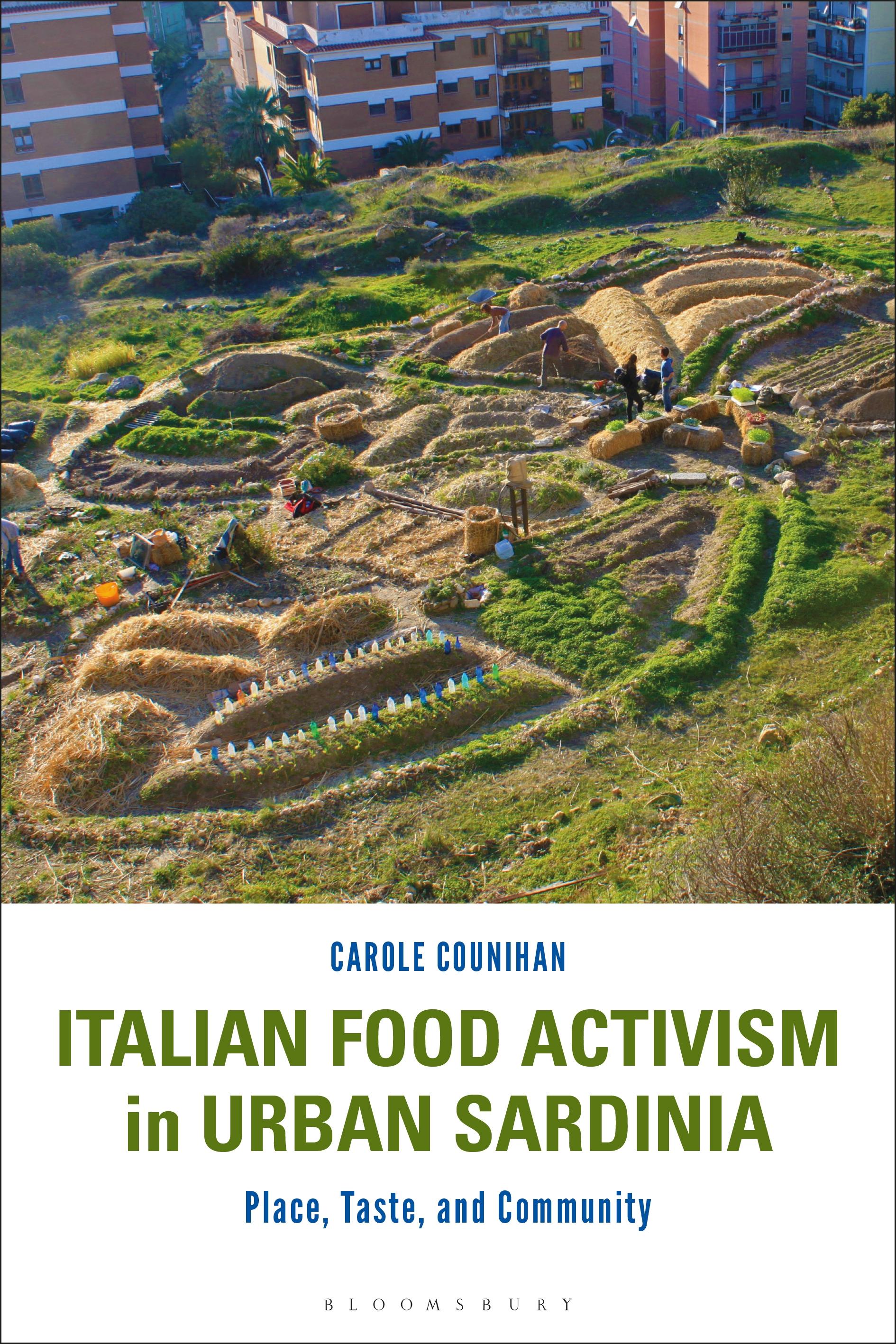
With her new book, Italian Food Activism in Urban Sardinia, cultural anthropologist Carole Counihan makes a significant contribution to understanding the growing global movement for food democracy.
Providing a detailed ethnographic case study from Cagliari, the capital of the Italian island-region of Sardinia, she draws upon Sardinians' own descriptions of their actions and motivations to change their food as they pursue grassroots alternatives to the agro-industrial food system through GAS (Gruppi di Acquisito Solidale or solidarity-based purchase groups), organic and urban agriculture, alternative restaurants, and farm-to-school programs. They link their activism to the sensory and emotional resonance of food and its nostalgic connections to place, tradition, and culture. They stress the importance of education through experience, and they build relationships and networks through workshops, farm visits, and commensality.
The book focuses on three key themes to emerge in interviews with Cagliari food activists: the significance of territorio (or place), the importance of taste, and the role of education. By exploring these areas of concern, Counihan uncovers key tensions in consumption as a force for change, in individual vs. group actions, and in political and economic power relations, which are of crucial importance to wider global efforts to promote food democracy.
Providing a detailed ethnographic case study from Cagliari, the capital of the Italian island-region of Sardinia, she draws upon Sardinians' own descriptions of their actions and motivations to change their food as they pursue grassroots alternatives to the agro-industrial food system through GAS (Gruppi di Acquisito Solidale or solidarity-based purchase groups), organic and urban agriculture, alternative restaurants, and farm-to-school programs. They link their activism to the sensory and emotional resonance of food and its nostalgic connections to place, tradition, and culture. They stress the importance of education through experience, and they build relationships and networks through workshops, farm visits, and commensality.
The book focuses on three key themes to emerge in interviews with Cagliari food activists: the significance of territorio (or place), the importance of taste, and the role of education. By exploring these areas of concern, Counihan uncovers key tensions in consumption as a force for change, in individual vs. group actions, and in political and economic power relations, which are of crucial importance to wider global efforts to promote food democracy.
Maksa helposti kortilla, Klarnalla, Apple Paylla tai Google Paylla. Etkö ole tyytyväinen? Sinulla on aina 14 päivän palautusoikeus. Lue lisää ehdoistamme. Jos sinulla on kysyttävää, lähetä meille sähköpostia osoitteeseen hello@memmo.org.
Memmo tekee opiskelusta helpompaa – missä päin maailmaa ikinä oletkin. Meillä yhdistät kurssikirjat ja fiksut opiskelutyökalut yhteen paikkaan: tiivistelmät, visat, podcastit ja muistikortit. Ja sitten Ted, opiskelukaverisi, joka vastaa kaikkeen, mitä ikinä mietitkin. Yli 50 000 opiskelijaa opiskelee jo täällä – rakennettu auttamaan sinua oppimaan nopeammin ja stressaamaan vähemmän.