
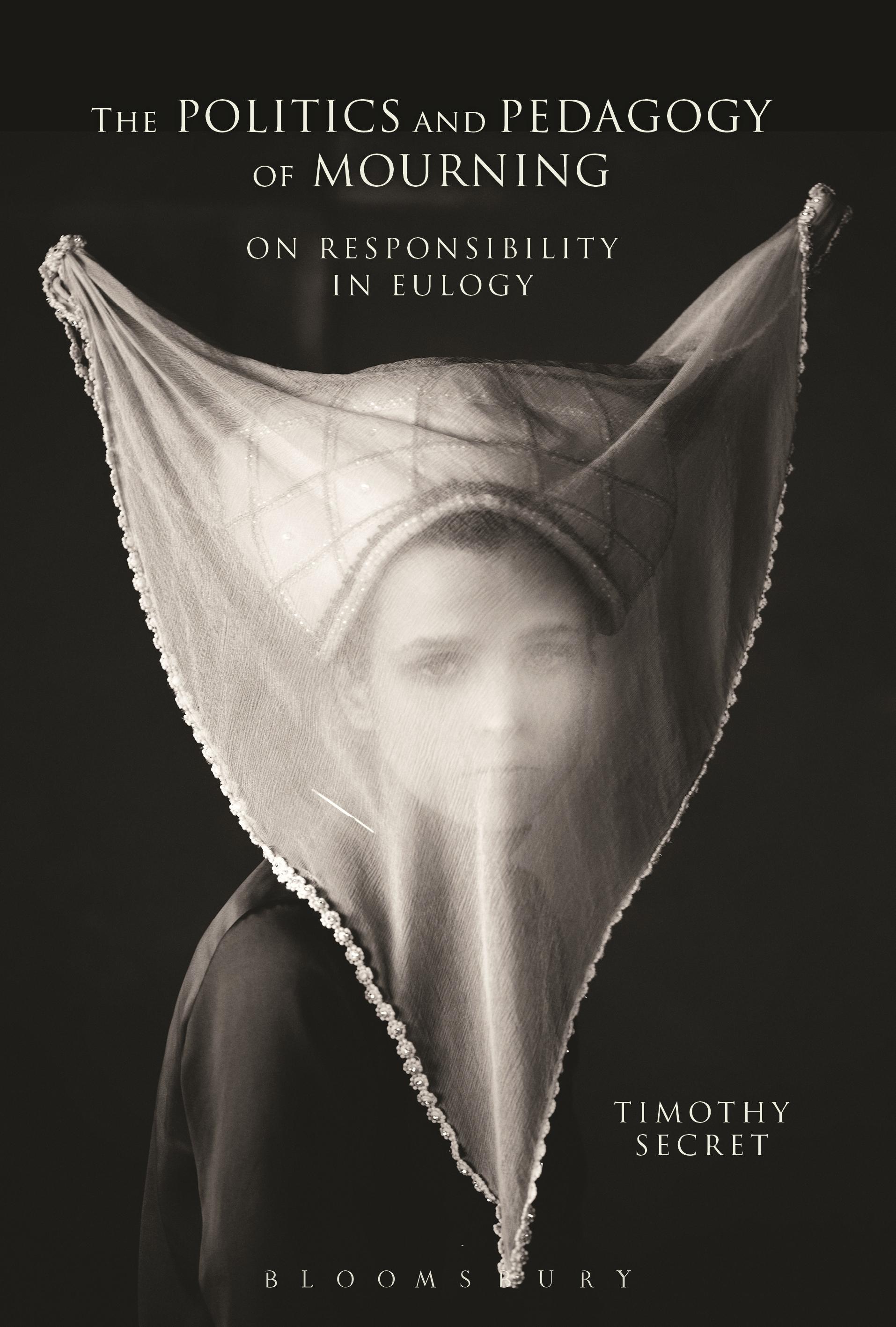
Jacques Derrida famously stated in Specters of Marx that a justice worthy of the name must call us to render justice not only to the living but also to the dead. In The Politics and Pedagogy of Mourning, Timothy Secret argues that offering a persuasive account of such a duty requires establishing a discussion among the 20th century's three key thinkers on death – Heidegger, Levinas and Freud. Despite arguing that none of these three figures' discourses offers us a complete account of our duty to the dead and that it remains impossible to unify them into a single, consistent and correct approach, Secret nevertheless offers an account of how Derrida managed to produce an always singular articulation of these discourses in each of the acts of eulogy he offered for his philosophical contemporaries.
This is one of the first monographs to pay particular attention to the key role any contemporary account of the ethics of eulogy must grant to the revolutionary theoretical work on the materiality of crypts and phantoms offered by the psychoanalysts Nicolas Abraham and Maria Torok. Their work is shown to supplement major limitations in traditional philosophical accounts of the ethical relation.
The account of eulogy as a privileged space where different discourses act on each other under the pressure of responding responsibly to an always singular loss proves itself essential reading not only for those interested in understanding Derrida's overtly political works, but also offers an account of a performative training in negotiating aporias that arise in political society – the result of which is a pedagogy in the art of civility whose relevance today is more timely than ever.
This is one of the first monographs to pay particular attention to the key role any contemporary account of the ethics of eulogy must grant to the revolutionary theoretical work on the materiality of crypts and phantoms offered by the psychoanalysts Nicolas Abraham and Maria Torok. Their work is shown to supplement major limitations in traditional philosophical accounts of the ethical relation.
The account of eulogy as a privileged space where different discourses act on each other under the pressure of responding responsibly to an always singular loss proves itself essential reading not only for those interested in understanding Derrida's overtly political works, but also offers an account of a performative training in negotiating aporias that arise in political society – the result of which is a pedagogy in the art of civility whose relevance today is more timely than ever.
Maksa helposti kortilla, Klarnalla, Apple Paylla tai Google Paylla. Etkö ole tyytyväinen? Sinulla on aina 14 päivän palautusoikeus. Lue lisää ehdoistamme. Jos sinulla on kysyttävää, lähetä meille sähköpostia osoitteeseen hello@memmo.org.
Memmo tekee opiskelusta helpompaa – missä päin maailmaa ikinä oletkin. Meillä yhdistät kurssikirjat ja fiksut opiskelutyökalut yhteen paikkaan: tiivistelmät, visat, podcastit ja muistikortit. Ja sitten Ted, opiskelukaverisi, joka vastaa kaikkeen, mitä ikinä mietitkin. Yli 50 000 opiskelijaa opiskelee jo täällä – rakennettu auttamaan sinua oppimaan nopeammin ja stressaamaan vähemmän.