
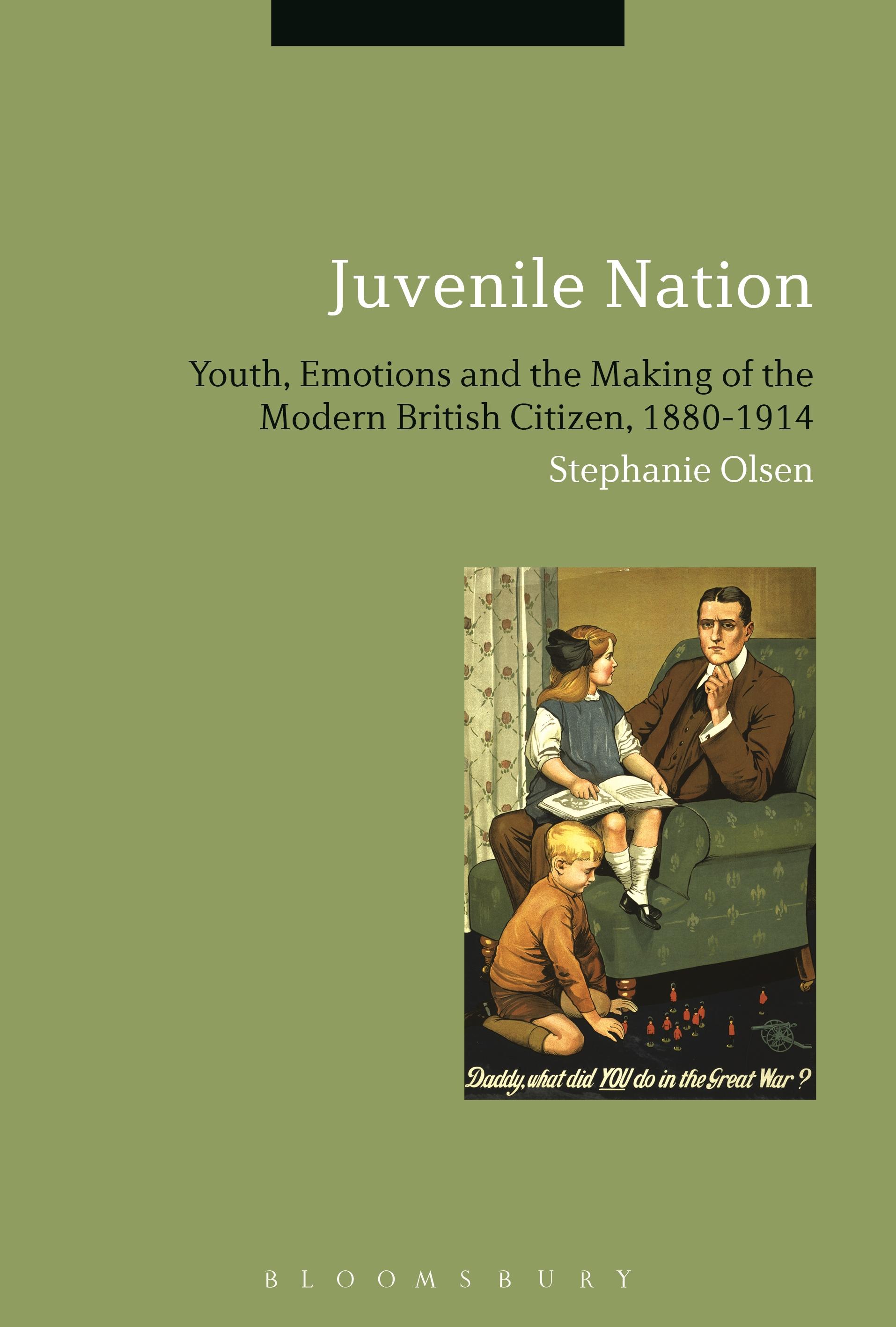
In the first five months of the Great War, one million men volunteered to fight. Yet by the end of 1915, the British government realized that conscription would be required. Why did so many enlist, and conversely, why so few? Focusing on analyses of widely felt emotions related to moral and domestic duty, Juvenile Nation broaches these questions in new ways.
Juvenile Nation examines how religious and secular youth groups, the juvenile periodical press, and a burgeoning new group of child psychologists, social workers and other 'experts' affected society's perception of a new problem character, the 'adolescent'. By what means should this character be turned into a 'fit' citizen? Considering qualities such as loyalty, character, temperance, manliness, fatherhood, and piety, Stephanie Olsen discusses the idea of an 'informal education', focused on building character through emotional control, and how this education was seen as key to shaping the future citizenry of Britain and the Empire.
Juvenile Nation recasts the militarism of the 1880s onwards as part of an emotional outpouring based on association to family, to community and to Christian cultural continuity. Significantly, the same emotional responses explain why so many men turned away from active militarism, with duty to family and community perhaps thought to have been best carried out at home. By linking the historical study of the emotions with an examination of the individual's place in society, Olsen provides an important new insight on how a generation of young men was formed.
Juvenile Nation examines how religious and secular youth groups, the juvenile periodical press, and a burgeoning new group of child psychologists, social workers and other 'experts' affected society's perception of a new problem character, the 'adolescent'. By what means should this character be turned into a 'fit' citizen? Considering qualities such as loyalty, character, temperance, manliness, fatherhood, and piety, Stephanie Olsen discusses the idea of an 'informal education', focused on building character through emotional control, and how this education was seen as key to shaping the future citizenry of Britain and the Empire.
Juvenile Nation recasts the militarism of the 1880s onwards as part of an emotional outpouring based on association to family, to community and to Christian cultural continuity. Significantly, the same emotional responses explain why so many men turned away from active militarism, with duty to family and community perhaps thought to have been best carried out at home. By linking the historical study of the emotions with an examination of the individual's place in society, Olsen provides an important new insight on how a generation of young men was formed.
Maksa helposti kortilla, Klarnalla, Apple Paylla tai Google Paylla. Etkö ole tyytyväinen? Sinulla on aina 14 päivän palautusoikeus. Lue lisää ehdoistamme. Jos sinulla on kysyttävää, lähetä meille sähköpostia osoitteeseen hello@memmo.org.
Memmo tekee opiskelusta helpompaa – missä päin maailmaa ikinä oletkin. Meillä yhdistät kurssikirjat ja fiksut opiskelutyökalut yhteen paikkaan: tiivistelmät, visat, podcastit ja muistikortit. Ja sitten Ted, opiskelukaverisi, joka vastaa kaikkeen, mitä ikinä mietitkin. Yli 50 000 opiskelijaa opiskelee jo täällä – rakennettu auttamaan sinua oppimaan nopeammin ja stressaamaan vähemmän.