
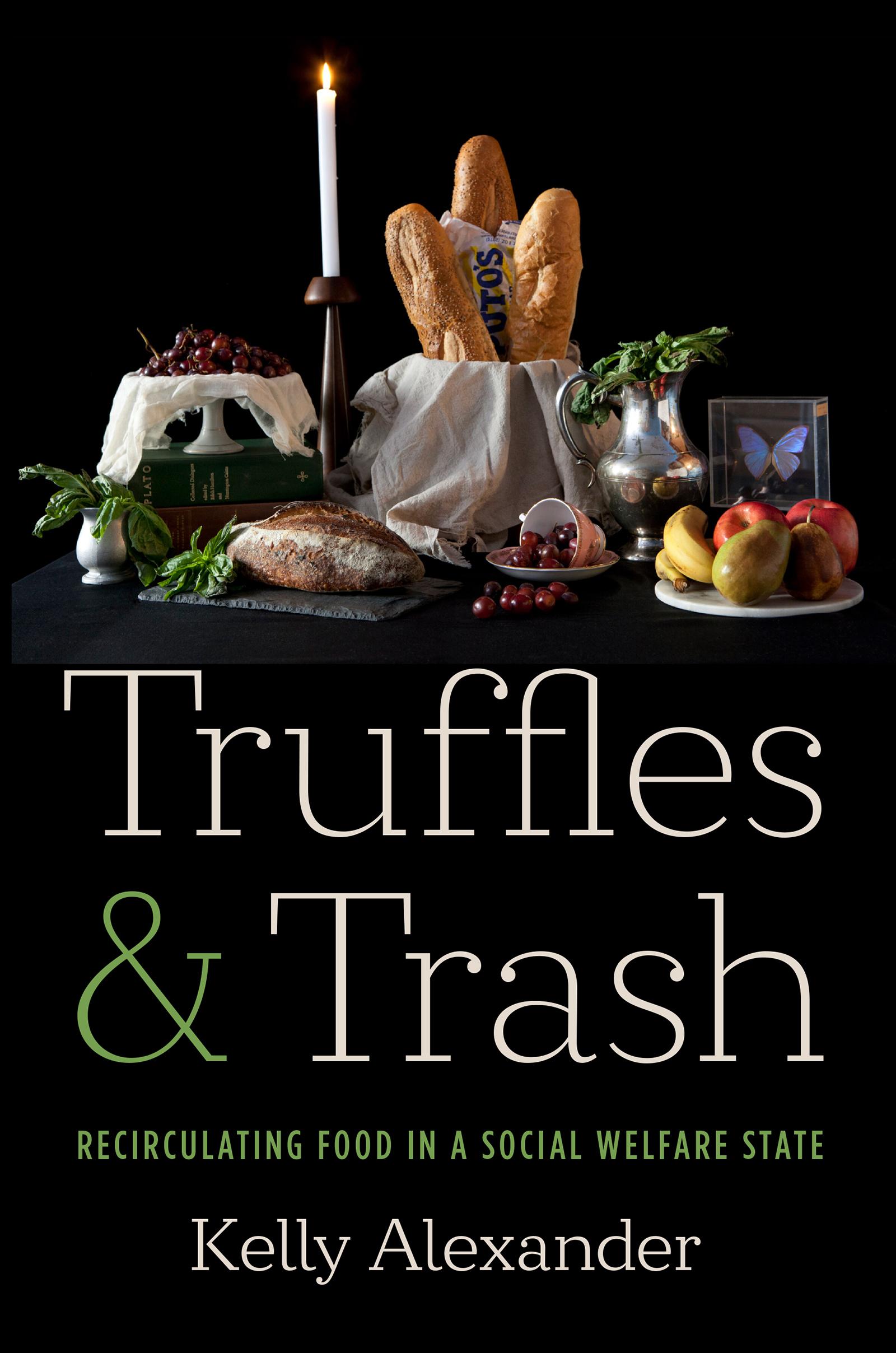
On a fragile planet with spreading food insecurity, food waste is a political and ethical problem. Examining the collaborative, sometimes scrappy institutional and community efforts to recuperate and redistribute food waste in Brussels, Belgium, Kelly Alexander reveals it is also an opportunity for new forms of sociality. Her study plays out across a diverse set of locations—including a food bank with ties to the EU, a social restaurant serving low-cost meals made from supermarket surplus by an emergent immigrant labor force, and a social inclusion program in an urban market with a “zero food waste” pop-up café. Alexander argues that these efforts, in concert with innovative policy, effectively recirculate wasted food to new publics and produce what she terms a “spectrum of edibility.”
According to Alexander, these models face challenges—including reproducing the very power dynamics across race, class, and citizenship status they seek to circumvent. They also mirror the challenges of the everyday operations of the European social welfare state, which is increasingly reliant on NGOs to meet provisioning promises. Yet she finds that they also move the needle forward to reduce food waste across one city, providing an example for major urban centers around the world.
Maksa helposti kortilla, Klarnalla, Apple Paylla tai Google Paylla. Etkö ole tyytyväinen? Sinulla on aina 14 päivän palautusoikeus. Lue lisää ehdoistamme. Jos sinulla on kysyttävää, lähetä meille sähköpostia osoitteeseen hello@memmo.org.
Memmo tekee opiskelusta helpompaa – missä päin maailmaa ikinä oletkin. Meillä yhdistät kurssikirjat ja fiksut opiskelutyökalut yhteen paikkaan: tiivistelmät, visat, podcastit ja muistikortit. Ja sitten Ted, opiskelukaverisi, joka vastaa kaikkeen, mitä ikinä mietitkin. Yli 50 000 opiskelijaa opiskelee jo täällä – rakennettu auttamaan sinua oppimaan nopeammin ja stressaamaan vähemmän.