
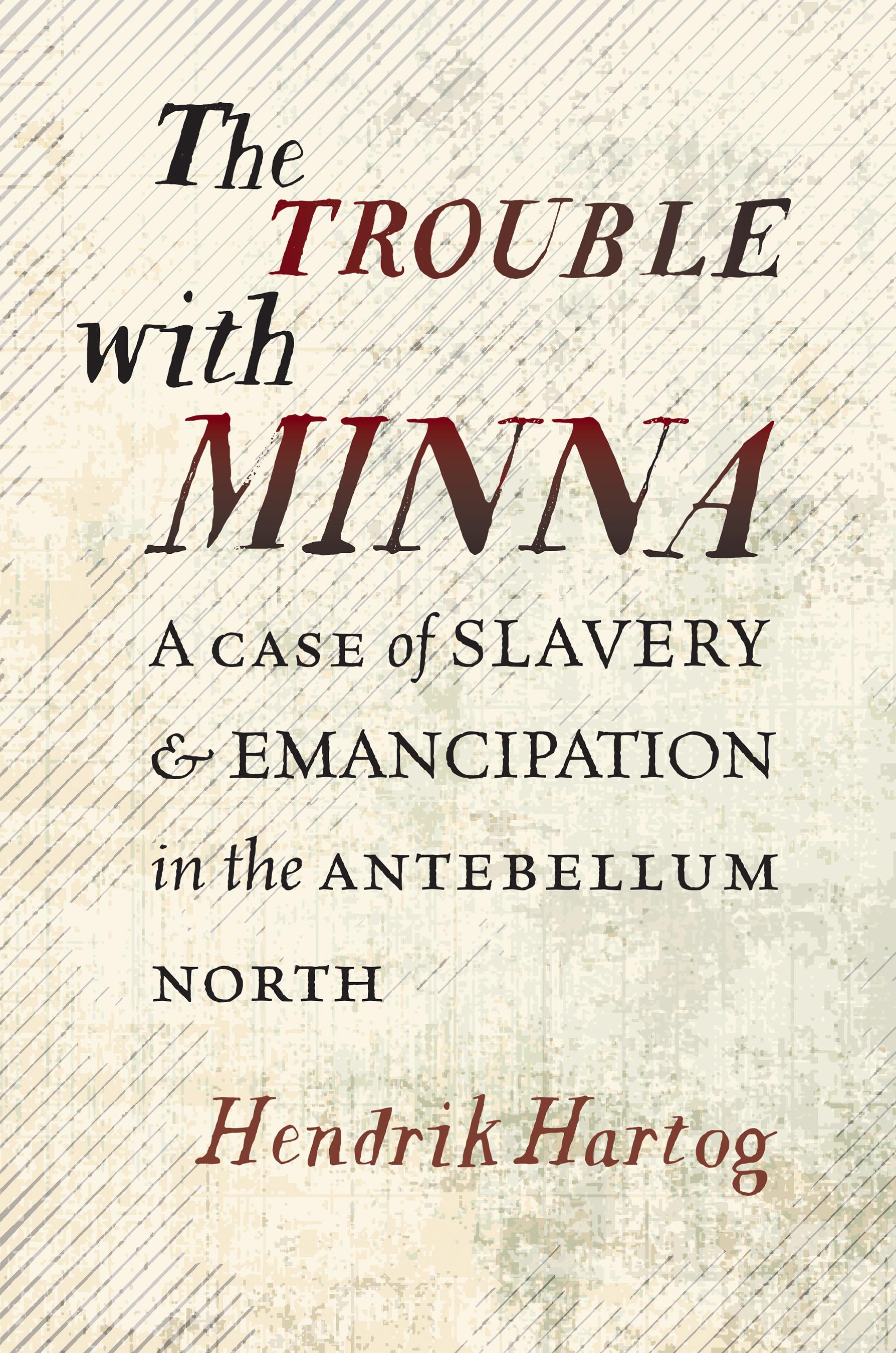
In this intriguing book, Hendrik Hartog uses a forgotten 1840 case to explore the regime of gradual emancipation that took place in New Jersey over the first half of the nineteenth century. In Minna’s case, white people fought over who would pay for the costs of caring for a dependent, apparently enslaved, woman. Hartog marks how the peculiar language mobilized by the debate—about care as a “mere voluntary courtesy”—became routine in a wide range of subsequent cases about “good Samaritans.” Using Minna’s case as a springboard, Hartog explores the statutes, situations, and conflicts that helped produce a regime where slavery was usually but not always legal and where a supposedly enslaved person may or may not have been legally free.
In exploring this liminal and unsettled legal space, Hartog sheds light on the relationships between moral and legal reasoning and a legal landscape that challenges simplistic notions of what it meant to live in freedom. What emerges is a provocative portrait of a distant legal order that, in its contradictions and moral dilemmas, bears an ironic resemblance to our own legal world.
Maksa helposti kortilla, Klarnalla, Apple Paylla tai Google Paylla. Etkö ole tyytyväinen? Sinulla on aina 14 päivän palautusoikeus. Lue lisää ehdoistamme. Jos sinulla on kysyttävää, lähetä meille sähköpostia osoitteeseen hello@memmo.org.
Memmo tekee opiskelusta helpompaa – missä päin maailmaa ikinä oletkin. Meillä yhdistät kurssikirjat ja fiksut opiskelutyökalut yhteen paikkaan: tiivistelmät, visat, podcastit ja muistikortit. Ja sitten Ted, opiskelukaverisi, joka vastaa kaikkeen, mitä ikinä mietitkin. Yli 50 000 opiskelijaa opiskelee jo täällä – rakennettu auttamaan sinua oppimaan nopeammin ja stressaamaan vähemmän.