
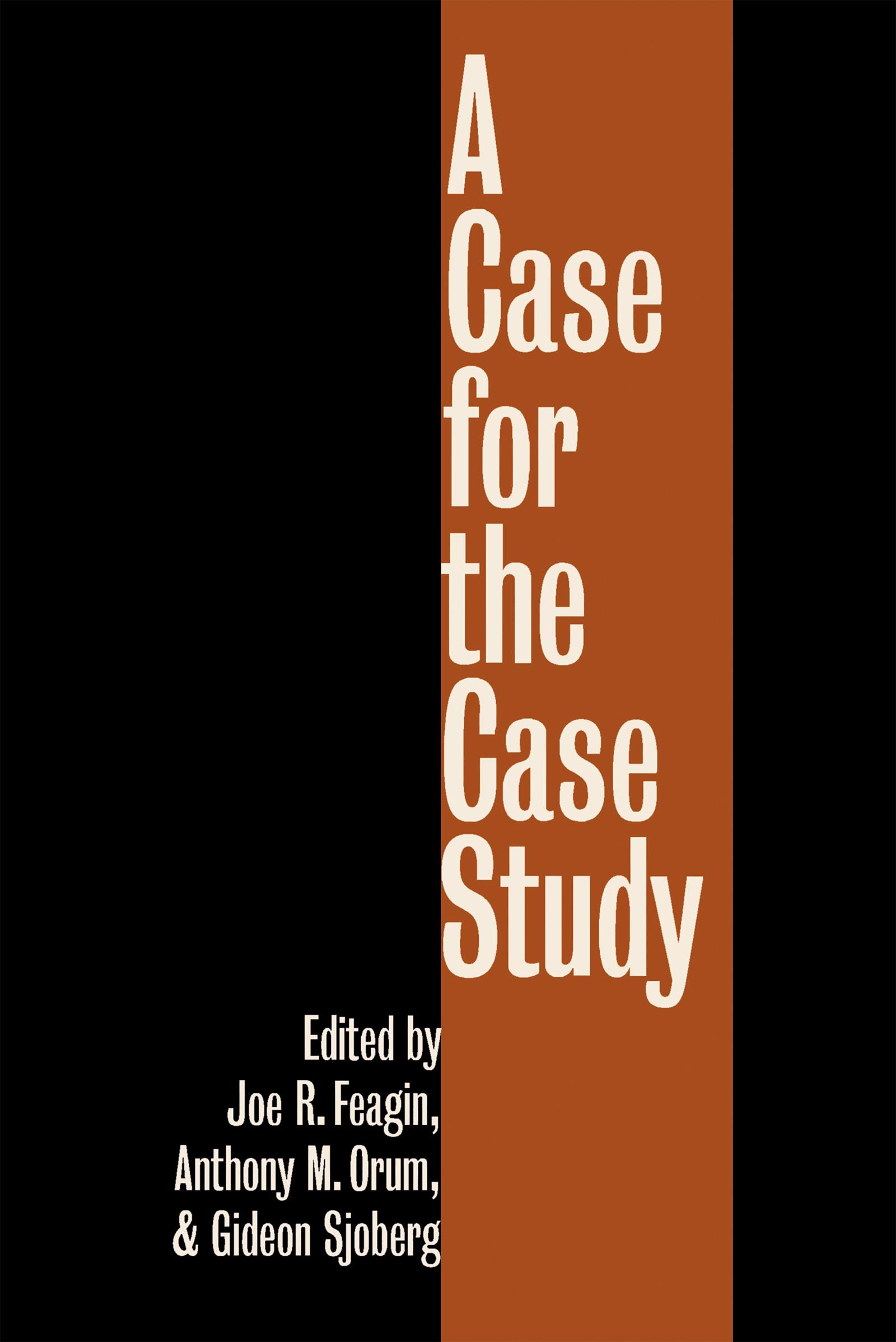
Since the end of World War II, social science research has become increasingly quantitative in nature. A Case for the Case Study provides a rationale for an alternative to quantitative research: the close investigation of single instances of social phenomena.
The first section of the book contains an overview of the central methodological issues involved in the use of the case study method. Then, well-known scholars describe how they undertook case study research in order to understand changes in church involvement, city life, gender roles, white-collar crimes, family structure, homelessness, and other types of social experience. Each contributor confronts several key questions: What does the case study tell us that other approaches cannot? To what extent can one generalize from the study of a single case or of a highly limited set of cases? Does case study work provide the basis for postulating broad principles of social structure and behavior? The answers vary, but the consensus is that the opportunity to examine certain kinds of social phenomena in depth enables social scientists to advance greatly our empirical understanding of social life.
The contributors are Leon Anderson, Howard M. Bahr, Theodore Caplow, Joe R. Feagin, Gilbert Geis, Gerald Handel, Anthonly M. Orum, Andree F. Sjoberg, Gideon Sjoberg, David A. Snow, Ted R. Vaughan, R. Stephen Warner, Christine L. Williams, and Norma Williams.
Maksa helposti kortilla, Klarnalla, Apple Paylla tai Google Paylla. Etkö ole tyytyväinen? Sinulla on aina 14 päivän palautusoikeus. Lue lisää ehdoistamme. Jos sinulla on kysyttävää, lähetä meille sähköpostia osoitteeseen hello@memmo.org.
Memmo tekee opiskelusta helpompaa – missä päin maailmaa ikinä oletkin. Meillä yhdistät kurssikirjat ja fiksut opiskelutyökalut yhteen paikkaan: tiivistelmät, visat, podcastit ja muistikortit. Ja sitten Ted, opiskelukaverisi, joka vastaa kaikkeen, mitä ikinä mietitkin. Yli 50 000 opiskelijaa opiskelee jo täällä – rakennettu auttamaan sinua oppimaan nopeammin ja stressaamaan vähemmän.