
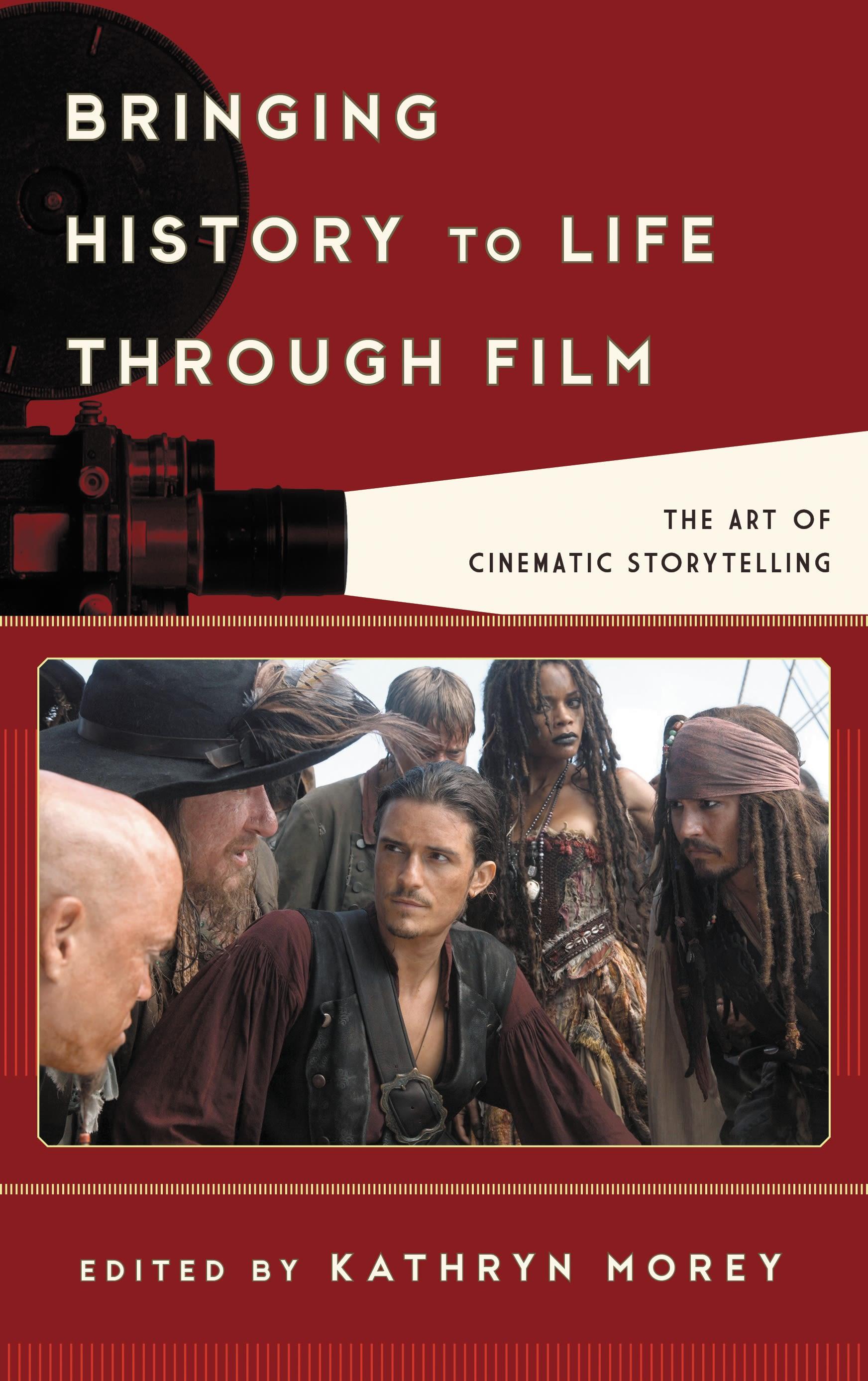
Whether re-creating an actual event or simply being set in a bygone era, films have long taken liberties with the truth. While some members of the audience can appreciate a movie without being distracted by historical inaccuracies, other viewers are more discerning. From revered classics like Gone with the Wind to recent award winners like Argo, Hollywood films often are taken to task for their loose adherence to the facts. But what obligation do filmmakers have to the truth when trying to create a two-hour piece of entertainment?
In Bringing History to Life through Film: The Art of Cinematic Storytelling, Kathryn Anne Morey brings together essays that explore the controversial issue of film as a purveyor of history. Examining a range of films, including highly regarded features like The Last of the Mohicans and Pan’s Labyrinth, as well as blockbuster franchises like Pirates of the Caribbean, chapters demonstrate that the debate surrounding the role of history on film is still as raw as ever. Organized in five sections, these essays discuss the myths and realities of history as they are portrayed on film, from “Nostalgic Utopias” to “Myths and Fairy Tales.”
The fourteen chapters shed light on how films both convey and distort historical realities to capture the “essence” of the past rather than the past itself. Ultimately, they consider what role cinema plays as the quintessential historical storyteller. In addition to cinema and media studies, this book will appeal to scholars of history and fans of a wide range of cinematic genres.
In Bringing History to Life through Film: The Art of Cinematic Storytelling, Kathryn Anne Morey brings together essays that explore the controversial issue of film as a purveyor of history. Examining a range of films, including highly regarded features like The Last of the Mohicans and Pan’s Labyrinth, as well as blockbuster franchises like Pirates of the Caribbean, chapters demonstrate that the debate surrounding the role of history on film is still as raw as ever. Organized in five sections, these essays discuss the myths and realities of history as they are portrayed on film, from “Nostalgic Utopias” to “Myths and Fairy Tales.”
The fourteen chapters shed light on how films both convey and distort historical realities to capture the “essence” of the past rather than the past itself. Ultimately, they consider what role cinema plays as the quintessential historical storyteller. In addition to cinema and media studies, this book will appeal to scholars of history and fans of a wide range of cinematic genres.
Maksa helposti kortilla, Klarnalla, Apple Paylla tai Google Paylla. Etkö ole tyytyväinen? Sinulla on aina 14 päivän palautusoikeus. Lue lisää ehdoistamme. Jos sinulla on kysyttävää, lähetä meille sähköpostia osoitteeseen hello@memmo.org.
Memmo tekee opiskelusta helpompaa – missä päin maailmaa ikinä oletkin. Meillä yhdistät kurssikirjat ja fiksut opiskelutyökalut yhteen paikkaan: tiivistelmät, visat, podcastit ja muistikortit. Ja sitten Ted, opiskelukaverisi, joka vastaa kaikkeen, mitä ikinä mietitkin. Yli 50 000 opiskelijaa opiskelee jo täällä – rakennettu auttamaan sinua oppimaan nopeammin ja stressaamaan vähemmän.