
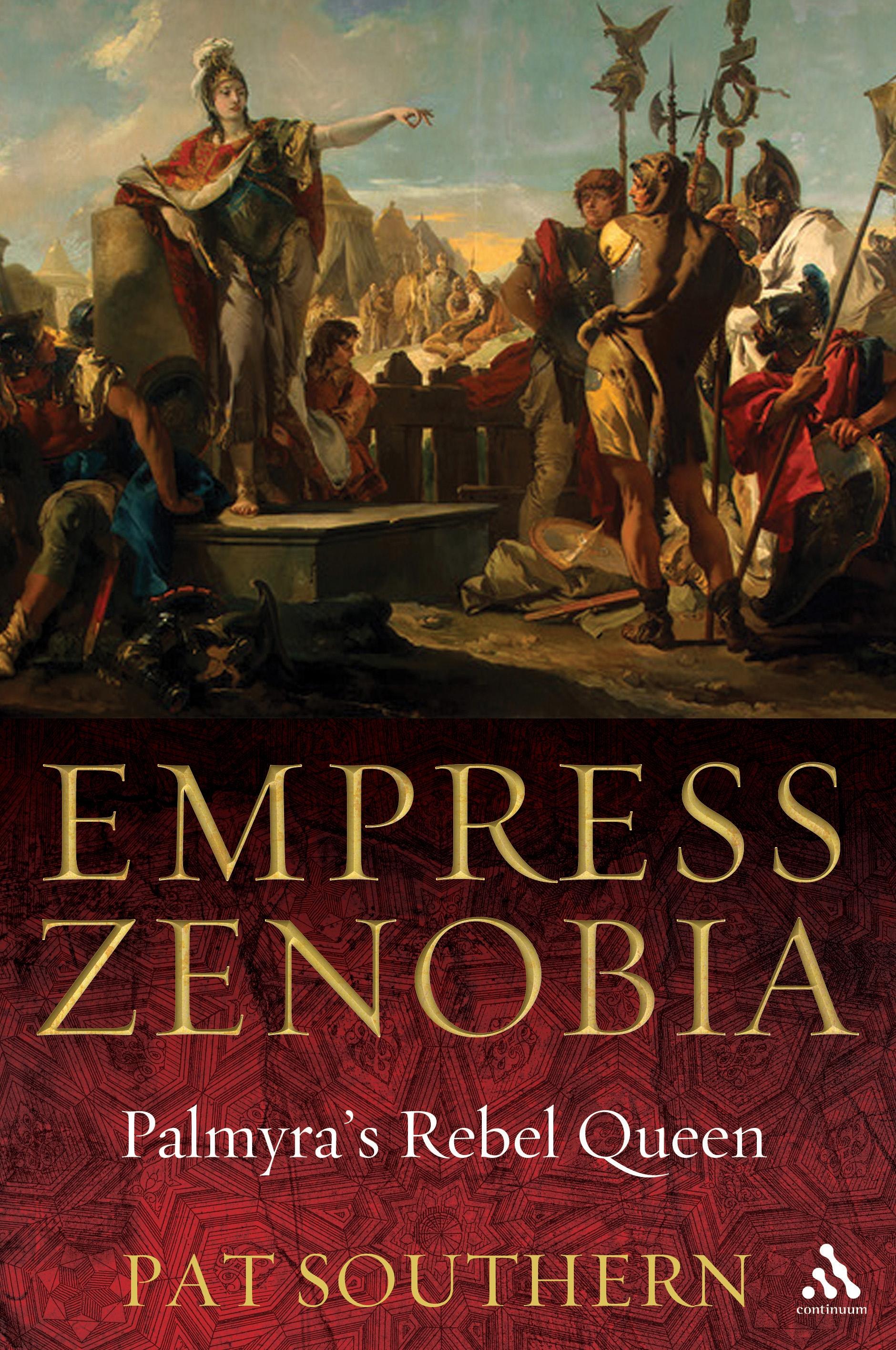
The ancient sources for the life and times of Zenobia are sparse, and the surviving literary works are biased towards the Roman point of view, much as are the sources for two other famous women who challenged Rome, Cleopatra and Boudica. In Empress Zenobia, Pat Southern seeks to tell the other side of the legendary 3rd century queen's place in history.
As queen of Palmyra (present-day Syria), Zenobia was acknowledged in her lifetime as beautiful and clever, gathering round her at the Palmyrene court writers and poets, artists and philosophers. It was said that Zenobia claimed descent from Cleopatra, which cannot be true but is indicative of how she saw herself and how she intended to be seen by others at home and abroad. This lively narrative explores the legendary queen and charts the progression of her unequivocal declaration, not only of independence from Rome, but of supremacy. Initially, Zenobia acknowledged the suzerainty of the Roman Emperors, but finally began to call herself Augusta and her son Vaballathus Augustus. There could be no clearer challenge to the authority of Rome in the east, drawing the Emperor Aurelian to the final battles and the submission of Palmyra in AD 272.
Zenobia's story has inspired many melodramatic fictions but few factual volumes of any authority have been published. Pat Southern's book is a lively account that is both up to date and authoritative, as well as thoroughly engaging.
As queen of Palmyra (present-day Syria), Zenobia was acknowledged in her lifetime as beautiful and clever, gathering round her at the Palmyrene court writers and poets, artists and philosophers. It was said that Zenobia claimed descent from Cleopatra, which cannot be true but is indicative of how she saw herself and how she intended to be seen by others at home and abroad. This lively narrative explores the legendary queen and charts the progression of her unequivocal declaration, not only of independence from Rome, but of supremacy. Initially, Zenobia acknowledged the suzerainty of the Roman Emperors, but finally began to call herself Augusta and her son Vaballathus Augustus. There could be no clearer challenge to the authority of Rome in the east, drawing the Emperor Aurelian to the final battles and the submission of Palmyra in AD 272.
Zenobia's story has inspired many melodramatic fictions but few factual volumes of any authority have been published. Pat Southern's book is a lively account that is both up to date and authoritative, as well as thoroughly engaging.
Maksa helposti kortilla, Klarnalla, Apple Paylla tai Google Paylla. Etkö ole tyytyväinen? Sinulla on aina 14 päivän palautusoikeus. Lue lisää ehdoistamme. Jos sinulla on kysyttävää, lähetä meille sähköpostia osoitteeseen hello@memmo.org.
Memmo tekee opiskelusta helpompaa – missä päin maailmaa ikinä oletkin. Meillä yhdistät kurssikirjat ja fiksut opiskelutyökalut yhteen paikkaan: tiivistelmät, visat, podcastit ja muistikortit. Ja sitten Ted, opiskelukaverisi, joka vastaa kaikkeen, mitä ikinä mietitkin. Yli 50 000 opiskelijaa opiskelee jo täällä – rakennettu auttamaan sinua oppimaan nopeammin ja stressaamaan vähemmän.