
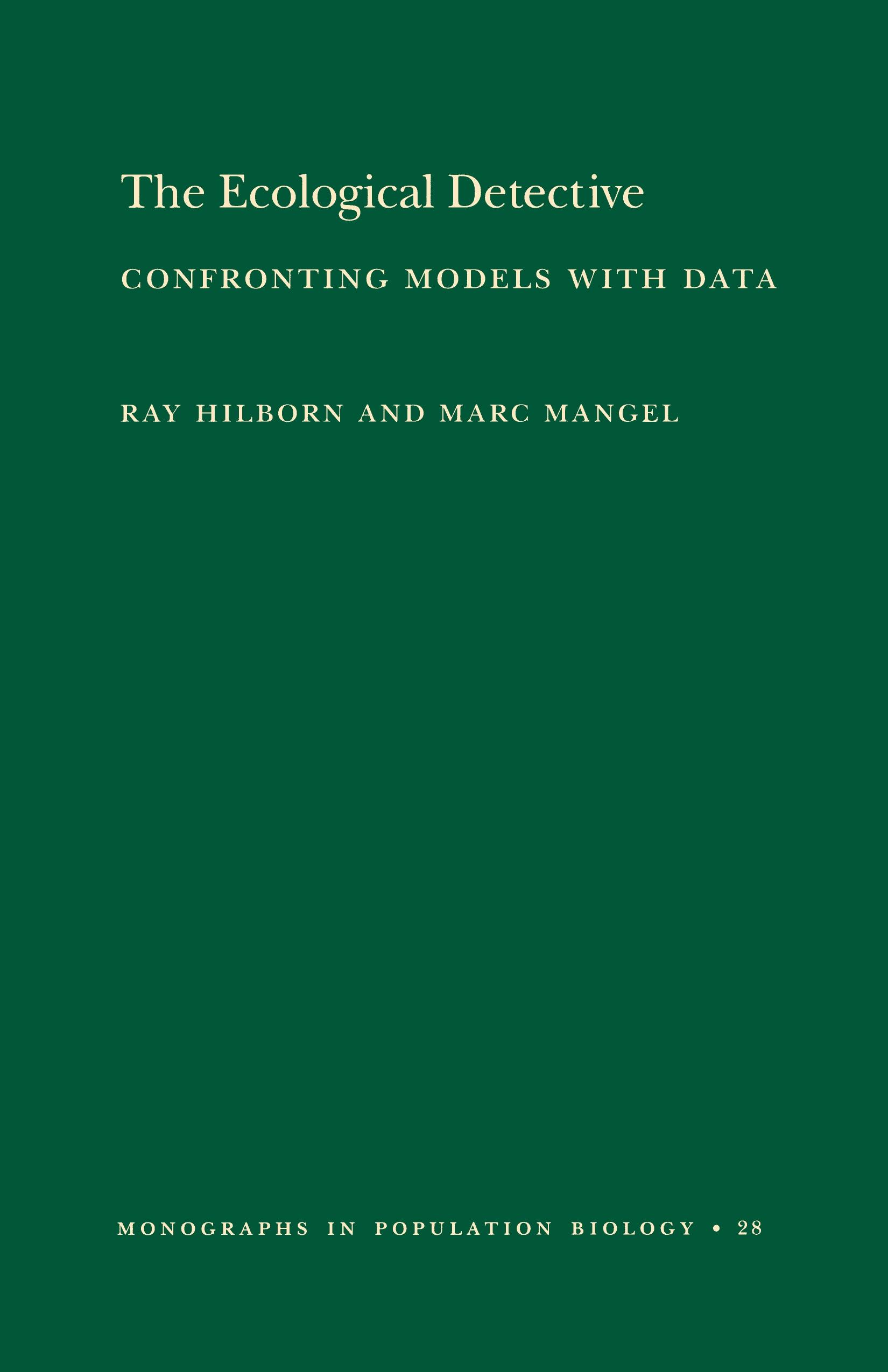
The modern ecologist usually works in both the field and laboratory, uses statistics and computers, and often works with ecological concepts that are model-based, if not model-driven. How do we make the field and laboratory coherent? How do we link models and data? How do we use statistics to help experimentation? How do we integrate modeling and statistics? How do we confront multiple hypotheses with data and assign degrees of belief to different hypotheses? How do we deal with time series (in which data are linked from one measurement to the next) or put multiple sources of data into one inferential framework? These are the kinds of questions asked and answered by The Ecological Detective.
Ray Hilborn and Marc Mangel investigate ecological data much as a detective would investigate a crime scene by trying different hypotheses until a coherent picture emerges. The book is not a set of pat statistical procedures but rather an approach. The Ecological Detective makes liberal use of computer programming for the generation of hypotheses, exploration of data, and the comparison of different models. The authors' attitude is one of exploration, both statistical and graphical. The background required is minimal, so that students with an undergraduate course in statistics and ecology can profitably add this work to their tool-kit for solving ecological problems.
Maksa helposti kortilla, Klarnalla, Apple Paylla tai Google Paylla. Etkö ole tyytyväinen? Sinulla on aina 14 päivän palautusoikeus. Lue lisää ehdoistamme. Jos sinulla on kysyttävää, lähetä meille sähköpostia osoitteeseen hello@memmo.org.
Memmo tekee opiskelusta helpompaa – missä päin maailmaa ikinä oletkin. Meillä yhdistät kurssikirjat ja fiksut opiskelutyökalut yhteen paikkaan: tiivistelmät, visat, podcastit ja muistikortit. Ja sitten Ted, opiskelukaverisi, joka vastaa kaikkeen, mitä ikinä mietitkin. Yli 50 000 opiskelijaa opiskelee jo täällä – rakennettu auttamaan sinua oppimaan nopeammin ja stressaamaan vähemmän.