
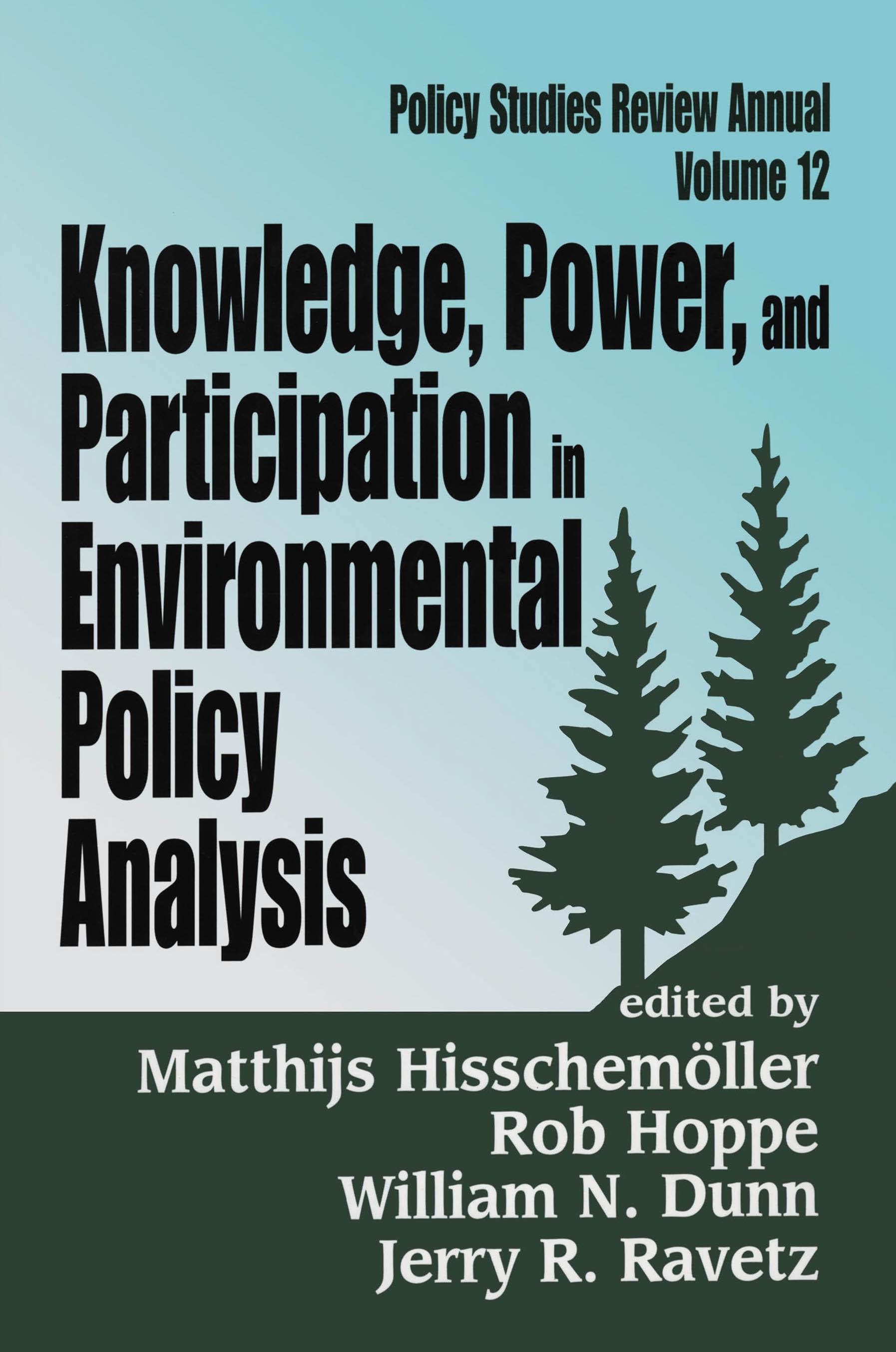
This volume probes practical dilemmas and competing re- search perspectives in environmental policy analysis. Scholars working in different fields, research traditions, societies, and policy domains offer significant insights into the processes and consequences of environmental policy making.
Part 1, "Coping with Boundaries," describes present-day conflict between experts and greater public participation in environmental policy. It shows that the institutionalization of increasingly complex environmental problems has led to a conflict between technocracy and democracy. Part 2, "The Transnational Challenge," examines modes of cooperation between grassroots movements, scientists, and regional authorities in the United States and Canada. These and other modes of cooperation laid the foundations for the Great Lakes Water Quality Agreement, increased the effectiveness of air pollution treaties, and increased climate change. Part 3, "Bio-Hazards: Policies and Paralysis," deals with environmental prob-lems closest to the everyday concerns of the public at large because they have immediate implications for food safety and other values. Part 4, "The Citizens' Perspective," focuses on citizen vis-a-vis environmental policy, noting that in order to make policies work citizens must be willing and able to participate in policy-making and cooperate in implementing environmental choices. Part 5, "Confronting Ordinary and Expert Knowledge," explores opportunities and constraints affecting public participation in evaluation of science. Part 6, "Developments in Research Programming," addresses such questions as whether scientists still have opportunities to do the research they want without being interrupted or disturbed by policy makers and other stakeholders. Part 7, "Policy Sciences' Aspirations," explores different avenues for improving environmental policy.
Volume twelve in the PSRA series should inspire further investigations of the relations among knowledge, power, and participation in environmental policy. It will be of timely interest to environmentalists, policy-makers, scholars, and the general public.
Maksa helposti kortilla, Klarnalla, Apple Paylla tai Google Paylla. Etkö ole tyytyväinen? Sinulla on aina 14 päivän palautusoikeus. Lue lisää ehdoistamme. Jos sinulla on kysyttävää, lähetä meille sähköpostia osoitteeseen hello@memmo.org.
Memmo tekee opiskelusta helpompaa – missä päin maailmaa ikinä oletkin. Meillä yhdistät kurssikirjat ja fiksut opiskelutyökalut yhteen paikkaan: tiivistelmät, visat, podcastit ja muistikortit. Ja sitten Ted, opiskelukaverisi, joka vastaa kaikkeen, mitä ikinä mietitkin. Yli 50 000 opiskelijaa opiskelee jo täällä – rakennettu auttamaan sinua oppimaan nopeammin ja stressaamaan vähemmän.