
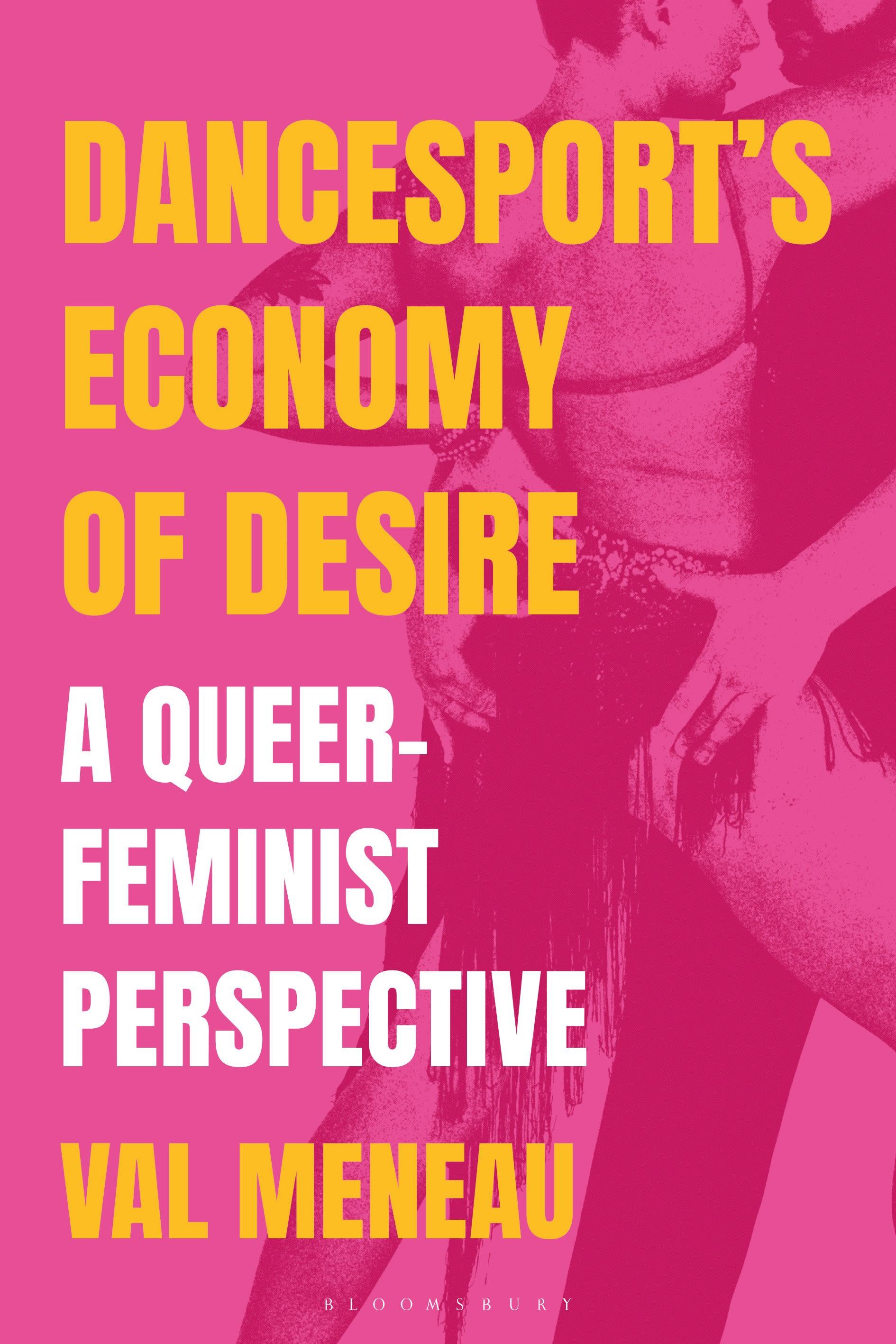
DanceSport's Economy of Desire examines how the DanceSport dispositive shapes its actors' opportunities, desires, and choices to reproduce the heteronormative gender binary, focusing on the DanceSport dispositive, a network of power that spans over and influences objects (such as clothes or competition halls), discourses (such as federations' competition regulations, syllabus books, judging criteria), and practices (dancing or choreographing).
Meneau argues that the DanceSport dispositive constrains what Latin dance can look like, despite resistance and counter-movements, by excluding or invisibilising queerness and objectifying and sexualising female dancers. This shows in all elements that affect or constitute dancers' performances on the (competition) dance floor; that includes registration, clothing, coupling, partnering, moving, judging.
This book helps readers understand how the heteronormative gender binary works, how it plays out in all the elements that influence or make up dance, and how it manages to remain hegemonic. It demonstrates how the DanceSport dispositive affects and influences all its actors, all the time – how we think, decide, move, perceive others, or incorporate knowledge that shapes our bodies according to norms and productive power. Finally, by looking for the heteronormative gender binary in the dance and in the regulations, DanceSport's Economy of Desire unravels the underlying mechanisms that secure the oppressive systems and allows society at large to better understand them.
Meneau argues that the DanceSport dispositive constrains what Latin dance can look like, despite resistance and counter-movements, by excluding or invisibilising queerness and objectifying and sexualising female dancers. This shows in all elements that affect or constitute dancers' performances on the (competition) dance floor; that includes registration, clothing, coupling, partnering, moving, judging.
This book helps readers understand how the heteronormative gender binary works, how it plays out in all the elements that influence or make up dance, and how it manages to remain hegemonic. It demonstrates how the DanceSport dispositive affects and influences all its actors, all the time – how we think, decide, move, perceive others, or incorporate knowledge that shapes our bodies according to norms and productive power. Finally, by looking for the heteronormative gender binary in the dance and in the regulations, DanceSport's Economy of Desire unravels the underlying mechanisms that secure the oppressive systems and allows society at large to better understand them.
Maksa helposti kortilla, Klarnalla, Apple Paylla tai Google Paylla. Etkö ole tyytyväinen? Sinulla on aina 14 päivän palautusoikeus. Lue lisää ehdoistamme. Jos sinulla on kysyttävää, lähetä meille sähköpostia osoitteeseen hello@memmo.org.
Memmo tekee opiskelusta helpompaa – missä päin maailmaa ikinä oletkin. Meillä yhdistät kurssikirjat ja fiksut opiskelutyökalut yhteen paikkaan: tiivistelmät, visat, podcastit ja muistikortit. Ja sitten Ted, opiskelukaverisi, joka vastaa kaikkeen, mitä ikinä mietitkin. Yli 50 000 opiskelijaa opiskelee jo täällä – rakennettu auttamaan sinua oppimaan nopeammin ja stressaamaan vähemmän.