
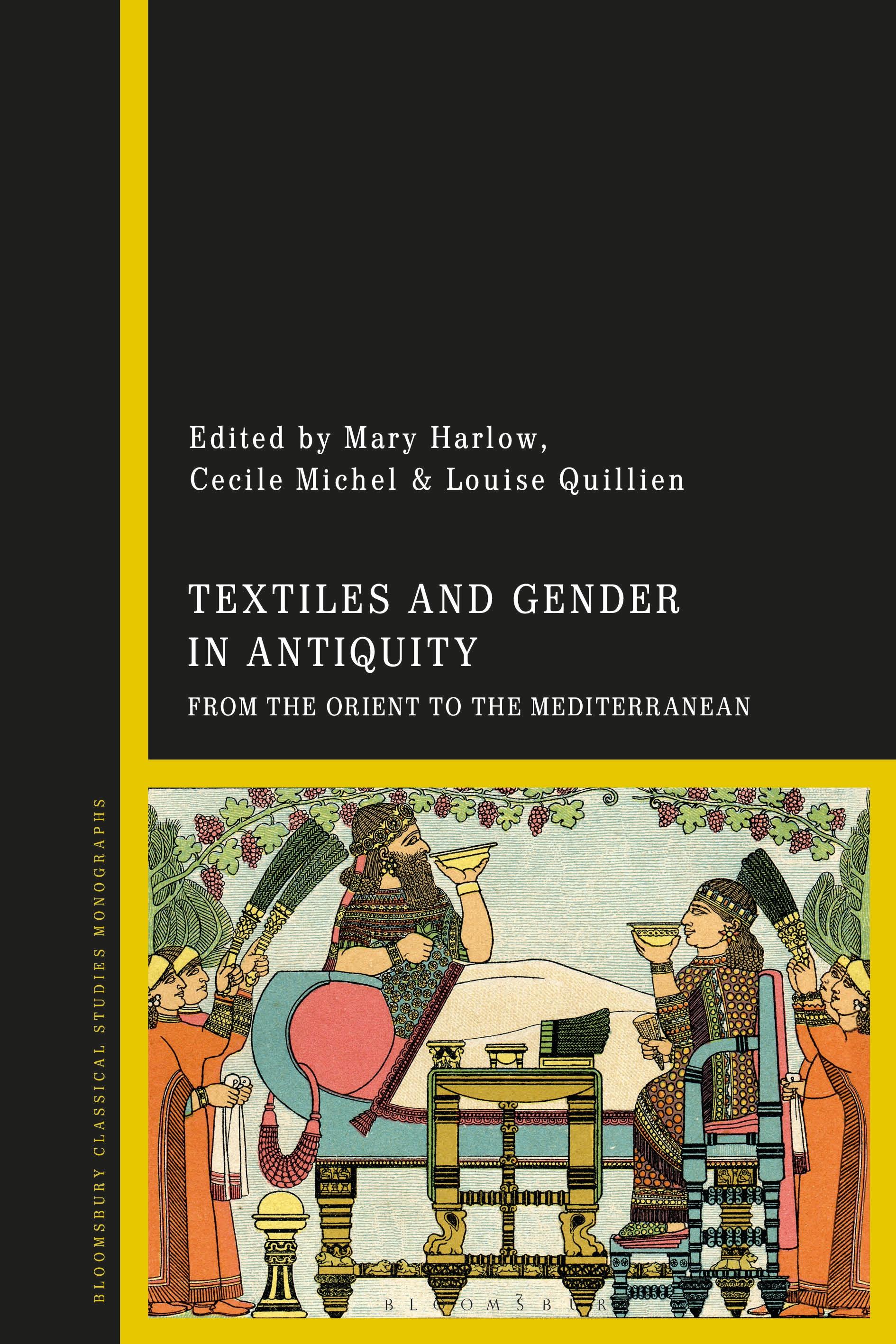
This volume looks at how the issues of textiles and gender intertwine across three millennia in antiquity and examines continuities and differences across time and space – with surprising resonances for the modern world. The interplay of gender, identity, textile production and use is notable on many levels, from the question of who was involved in the transformation of raw materials into fabric at one end, to the wearing of garments and the construction of identity at the other.
Textile production has often been considered to follow a linear trajectory from a domestic (female) activity to a more 'commercial' or 'industrial' (male-centred) mode of production. In reality, many modes of production co-existed and the making of textiles is not so easily grafted onto the labour of one sex or the other. Similarly, textiles once transformed into garments are often of 'unisex' shape but worn to express the gender of the wearer.
As shown by the detailed textual source material and the rich illustrations in this volume, dress and gender are intimately linked in the visual and written records of antiquity. The contributors show how it is common practice in both art and literature not only to use particular garments to characterize one sex or the other, but also to undermine characterizations by suggesting that they display features usually associated with the opposite gender.
Textile production has often been considered to follow a linear trajectory from a domestic (female) activity to a more 'commercial' or 'industrial' (male-centred) mode of production. In reality, many modes of production co-existed and the making of textiles is not so easily grafted onto the labour of one sex or the other. Similarly, textiles once transformed into garments are often of 'unisex' shape but worn to express the gender of the wearer.
As shown by the detailed textual source material and the rich illustrations in this volume, dress and gender are intimately linked in the visual and written records of antiquity. The contributors show how it is common practice in both art and literature not only to use particular garments to characterize one sex or the other, but also to undermine characterizations by suggesting that they display features usually associated with the opposite gender.
Maksa helposti kortilla, Klarnalla, Apple Paylla tai Google Paylla. Etkö ole tyytyväinen? Sinulla on aina 14 päivän palautusoikeus. Lue lisää ehdoistamme. Jos sinulla on kysyttävää, lähetä meille sähköpostia osoitteeseen hello@memmo.org.
Memmo tekee opiskelusta helpompaa – missä päin maailmaa ikinä oletkin. Meillä yhdistät kurssikirjat ja fiksut opiskelutyökalut yhteen paikkaan: tiivistelmät, visat, podcastit ja muistikortit. Ja sitten Ted, opiskelukaverisi, joka vastaa kaikkeen, mitä ikinä mietitkin. Yli 50 000 opiskelijaa opiskelee jo täällä – rakennettu auttamaan sinua oppimaan nopeammin ja stressaamaan vähemmän.