
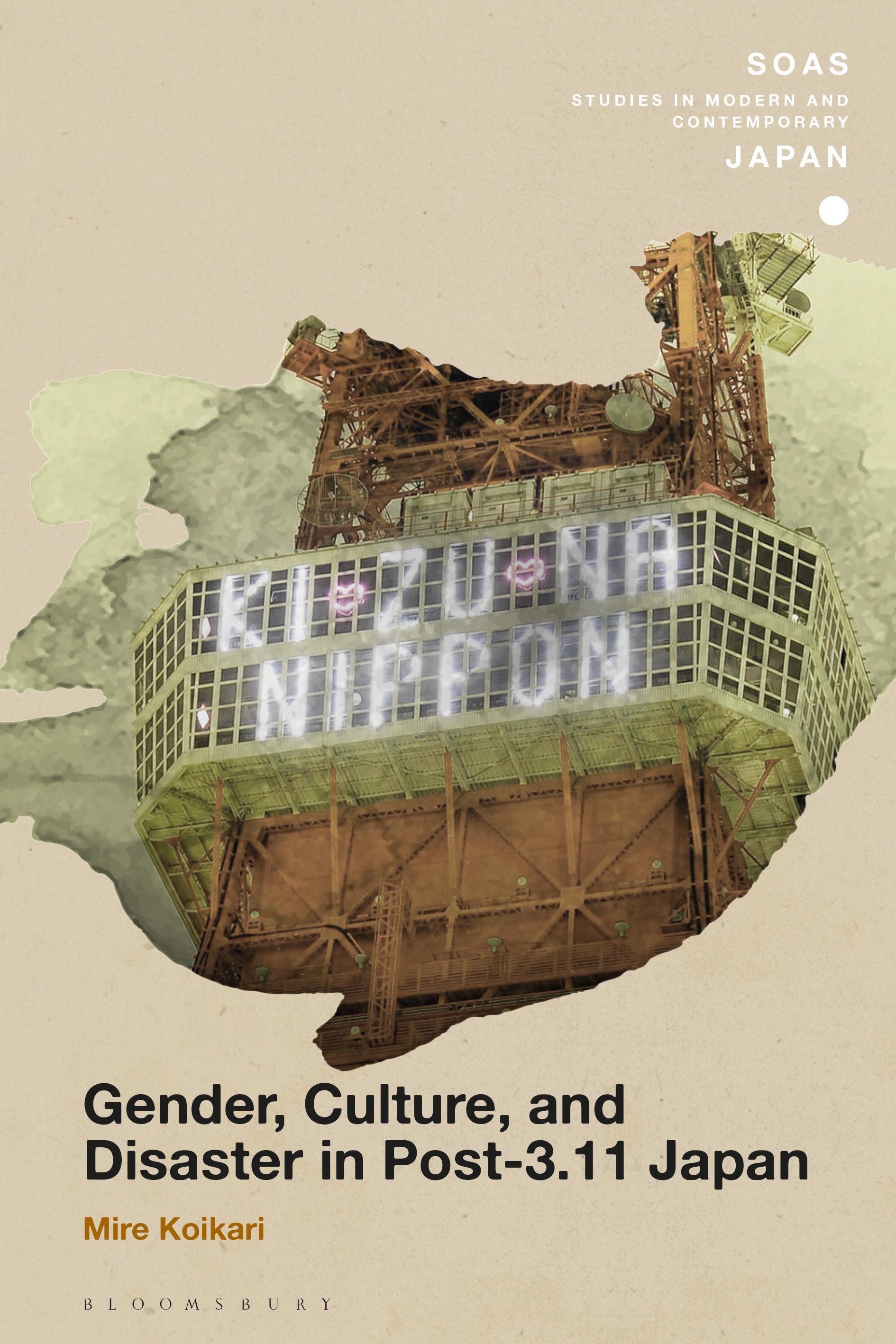
The Great East Japan Disaster – a compound catastrophe of earthquake, tsunami, and nuclear meltdown that began on March 11, 2011 – has ushered in a new era of cultural production dominated by discussions on safety and security, risk and vulnerability, and recovery and refortification. Gender, Culture, and Disaster in Post-3.11 Japan re-frames post-disaster national reconstruction as a social project imbued with dynamics of gender, race, and empire and in doing so Mire Koikari offers an innovative approach to resilience building in contemporary Japan.
From juvenile literature to civic manuals to policy statements, Koikari examines a vast array of primary sources to demonstrate how femininity and masculinity, readiness and preparedness, militarism and humanitarianism, and nationalism and transnationalism inform cultural formation and transformation triggered by the unprecedented crisis. Interdisciplinary in its orientation, the book reveals how militarism, neoliberalism, and neoconservatism drive Japan's resilience building while calling attention to historical precedents and transnational connections that animate the ongoing mobilization toward safety and security.
An important contribution to studies of gender and Japan, the book is essential reading for all those wishing to understand local and global politics of precarity and its proposed solutions amid the rising tide of pandemics, ecological hazards, industrial disasters, and humanitarian crises.
From juvenile literature to civic manuals to policy statements, Koikari examines a vast array of primary sources to demonstrate how femininity and masculinity, readiness and preparedness, militarism and humanitarianism, and nationalism and transnationalism inform cultural formation and transformation triggered by the unprecedented crisis. Interdisciplinary in its orientation, the book reveals how militarism, neoliberalism, and neoconservatism drive Japan's resilience building while calling attention to historical precedents and transnational connections that animate the ongoing mobilization toward safety and security.
An important contribution to studies of gender and Japan, the book is essential reading for all those wishing to understand local and global politics of precarity and its proposed solutions amid the rising tide of pandemics, ecological hazards, industrial disasters, and humanitarian crises.
Maksa helposti kortilla, Klarnalla, Apple Paylla tai Google Paylla. Etkö ole tyytyväinen? Sinulla on aina 14 päivän palautusoikeus. Lue lisää ehdoistamme. Jos sinulla on kysyttävää, lähetä meille sähköpostia osoitteeseen hello@memmo.org.
Memmo tekee opiskelusta helpompaa – missä päin maailmaa ikinä oletkin. Meillä yhdistät kurssikirjat ja fiksut opiskelutyökalut yhteen paikkaan: tiivistelmät, visat, podcastit ja muistikortit. Ja sitten Ted, opiskelukaverisi, joka vastaa kaikkeen, mitä ikinä mietitkin. Yli 50 000 opiskelijaa opiskelee jo täällä – rakennettu auttamaan sinua oppimaan nopeammin ja stressaamaan vähemmän.