
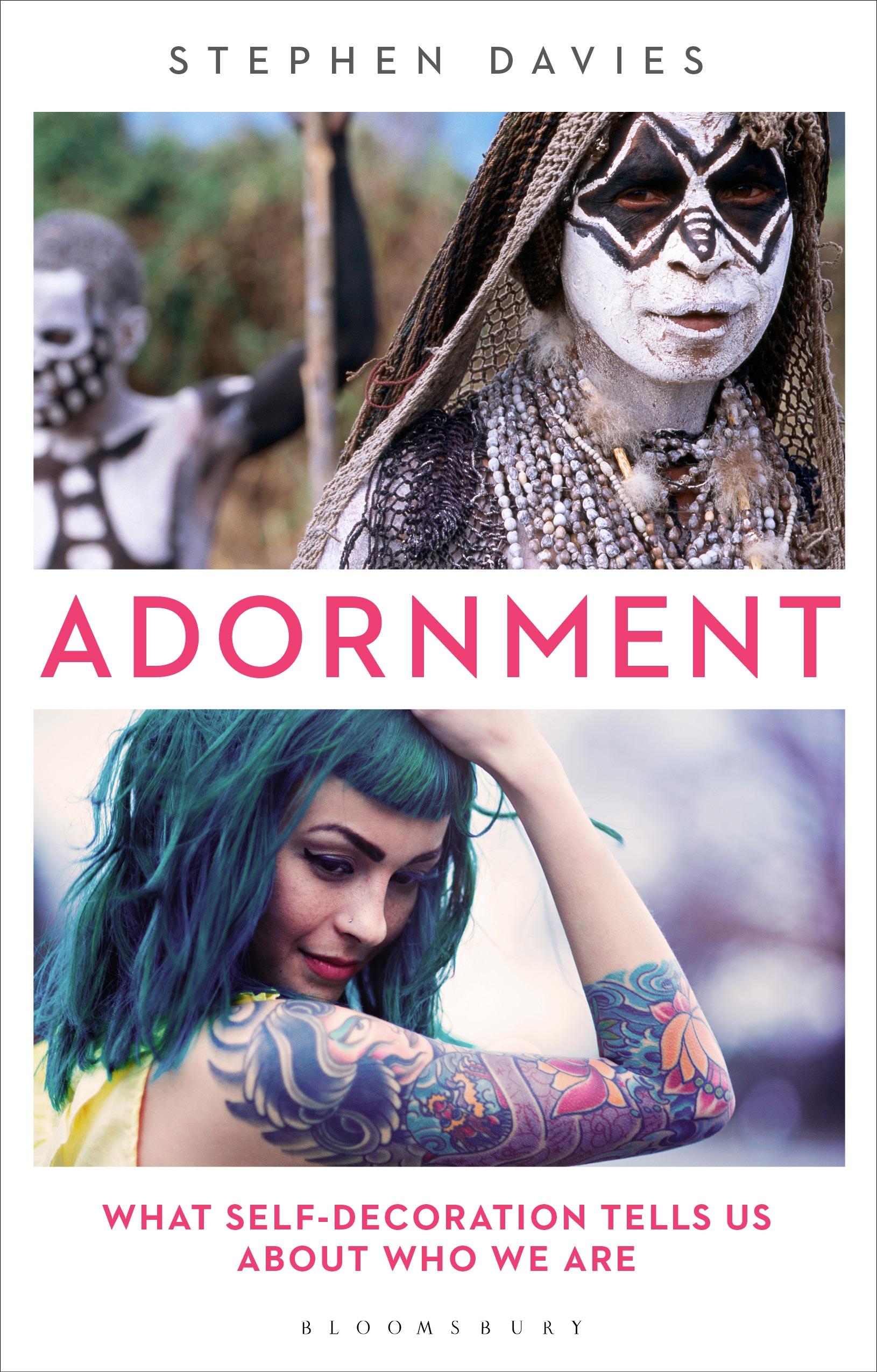
Elaborating the history, variety, pervasiveness, and function of the adornments and ornaments with which we beautify ourselves, this book takes in human prehistory, ancient civilizations, hunter-foragers, and present-day industrial societies to tell a captivating story of hair, skin, and make-up practices across times and cultures.
From the decline of the hat, the function of jewelry and popularity of tattooing to the wealth of grave goods found in the Upper Paleolithic burials and body painting of the Nuba, we see that there is no one who does not adorn themselves, their possessions, or their environment. But what messages do these adornments send? Drawing on aesthetics, evolutionary history, archaeology, ethology, anthropology, psychology, cultural history, and gender studies, Stephen Davies brings together African, Australian and North and South American indigenous cultures and unites them around the theme of adornment. He shows us that adorning is one of the few social behaviors that is close to being genuinely universal, more typical and extensive than the high-minded activities we prefer to think of as marking our species – religion, morality, and art.
Each chapter shows how modes of decoration send vitally important signals about what we care about, our affiliations and backgrounds, our social status and values. In short, by using the theme of bodily adornment to unify a very diverse set of human practices, this book tells us about who we are.
From the decline of the hat, the function of jewelry and popularity of tattooing to the wealth of grave goods found in the Upper Paleolithic burials and body painting of the Nuba, we see that there is no one who does not adorn themselves, their possessions, or their environment. But what messages do these adornments send? Drawing on aesthetics, evolutionary history, archaeology, ethology, anthropology, psychology, cultural history, and gender studies, Stephen Davies brings together African, Australian and North and South American indigenous cultures and unites them around the theme of adornment. He shows us that adorning is one of the few social behaviors that is close to being genuinely universal, more typical and extensive than the high-minded activities we prefer to think of as marking our species – religion, morality, and art.
Each chapter shows how modes of decoration send vitally important signals about what we care about, our affiliations and backgrounds, our social status and values. In short, by using the theme of bodily adornment to unify a very diverse set of human practices, this book tells us about who we are.
Maksa helposti kortilla, Klarnalla, Apple Paylla tai Google Paylla. Etkö ole tyytyväinen? Sinulla on aina 14 päivän palautusoikeus. Lue lisää ehdoistamme. Jos sinulla on kysyttävää, lähetä meille sähköpostia osoitteeseen hello@memmo.org.
Memmo tekee opiskelusta helpompaa – missä päin maailmaa ikinä oletkin. Meillä yhdistät kurssikirjat ja fiksut opiskelutyökalut yhteen paikkaan: tiivistelmät, visat, podcastit ja muistikortit. Ja sitten Ted, opiskelukaverisi, joka vastaa kaikkeen, mitä ikinä mietitkin. Yli 50 000 opiskelijaa opiskelee jo täällä – rakennettu auttamaan sinua oppimaan nopeammin ja stressaamaan vähemmän.