
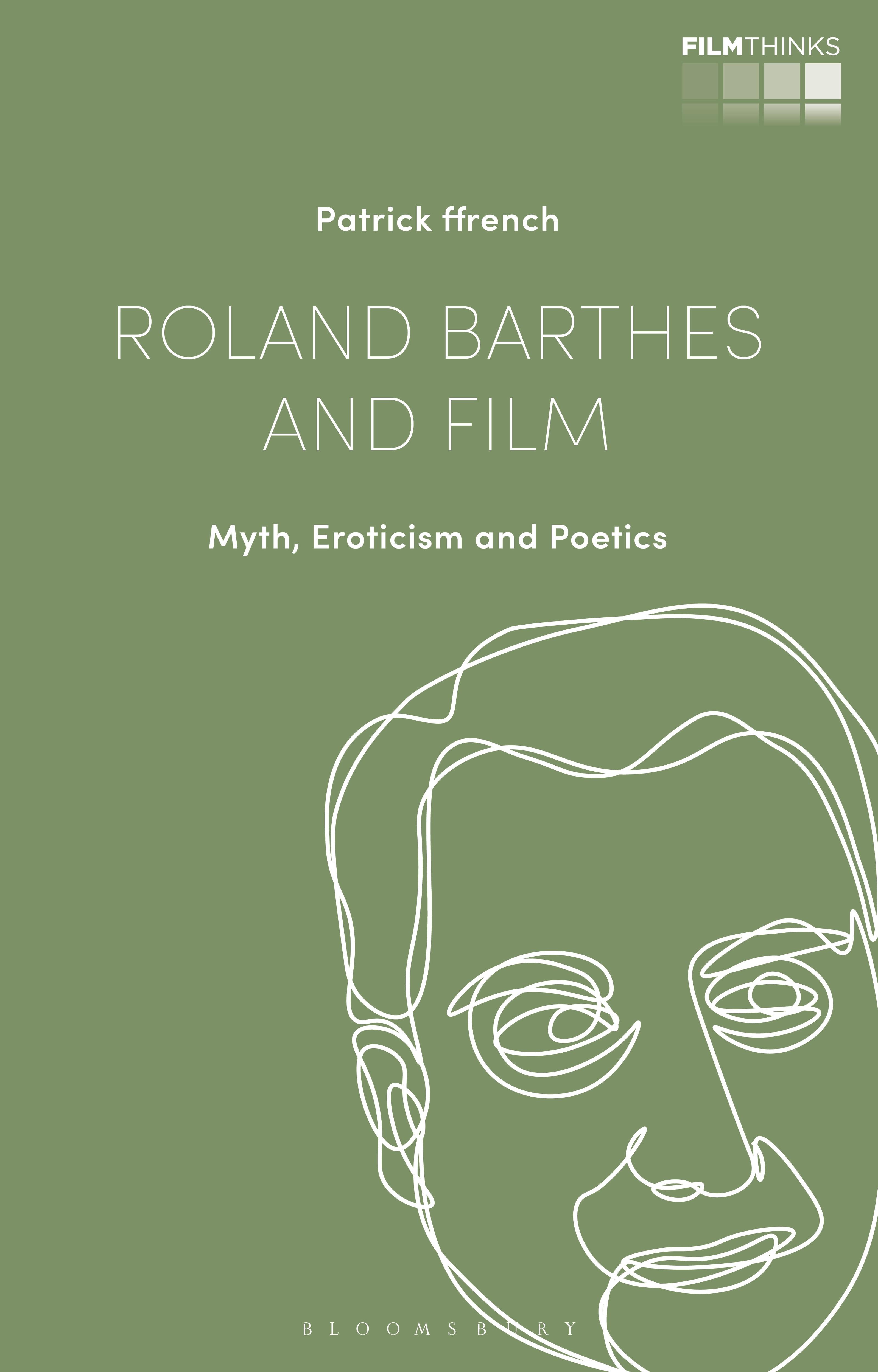
Suspicious of what he called the spectator's “sticky” adherence to the screen, Roland Barthes had a cautious attitude towards cinema. Falling into a hypnotic trance, the philosopher warned, an audience can become susceptible to ideology and “myth”. In this book, Patrick Ffrench explains that although Barthes was wary of film, he engaged deeply with it. Barthes' thought was, Ffrench argues, punctuated by the experience of watching films – and likewise his philosophy of photography, culture, semiotics, ethics and theatricality have been immensely important in film theory.
Focusing particularly on the essays 'The Third Meaning' and 'On Leaving the Cinema' and the acclaimed book Camera Lucida, Ffrench examines Barthes' writing and traces a persistent interest in films and directors, from Fellini and Antonioni, to Eisenstein, the Marx Brothers and Hitchcock. Ffrench explains that although Barthes found pleasure in “leaving the cinema” – disconnecting from its dangerous allure by a literal exit or by forcefully breaking the trance – he found value in returning to the screen anew. Barthes delved beneath the pull of progressing narrative and the moving image by becoming attentive to space and material aesthetics. This book presents an invaluable reassessment of one of the most original and subtle thinkers of the twentieth-century: a figure indebted to the movies.
Focusing particularly on the essays 'The Third Meaning' and 'On Leaving the Cinema' and the acclaimed book Camera Lucida, Ffrench examines Barthes' writing and traces a persistent interest in films and directors, from Fellini and Antonioni, to Eisenstein, the Marx Brothers and Hitchcock. Ffrench explains that although Barthes found pleasure in “leaving the cinema” – disconnecting from its dangerous allure by a literal exit or by forcefully breaking the trance – he found value in returning to the screen anew. Barthes delved beneath the pull of progressing narrative and the moving image by becoming attentive to space and material aesthetics. This book presents an invaluable reassessment of one of the most original and subtle thinkers of the twentieth-century: a figure indebted to the movies.
Maksa helposti kortilla, Klarnalla, Apple Paylla tai Google Paylla. Etkö ole tyytyväinen? Sinulla on aina 14 päivän palautusoikeus. Lue lisää ehdoistamme. Jos sinulla on kysyttävää, lähetä meille sähköpostia osoitteeseen hello@memmo.org.
Memmo tekee opiskelusta helpompaa – missä päin maailmaa ikinä oletkin. Meillä yhdistät kurssikirjat ja fiksut opiskelutyökalut yhteen paikkaan: tiivistelmät, visat, podcastit ja muistikortit. Ja sitten Ted, opiskelukaverisi, joka vastaa kaikkeen, mitä ikinä mietitkin. Yli 50 000 opiskelijaa opiskelee jo täällä – rakennettu auttamaan sinua oppimaan nopeammin ja stressaamaan vähemmän.