
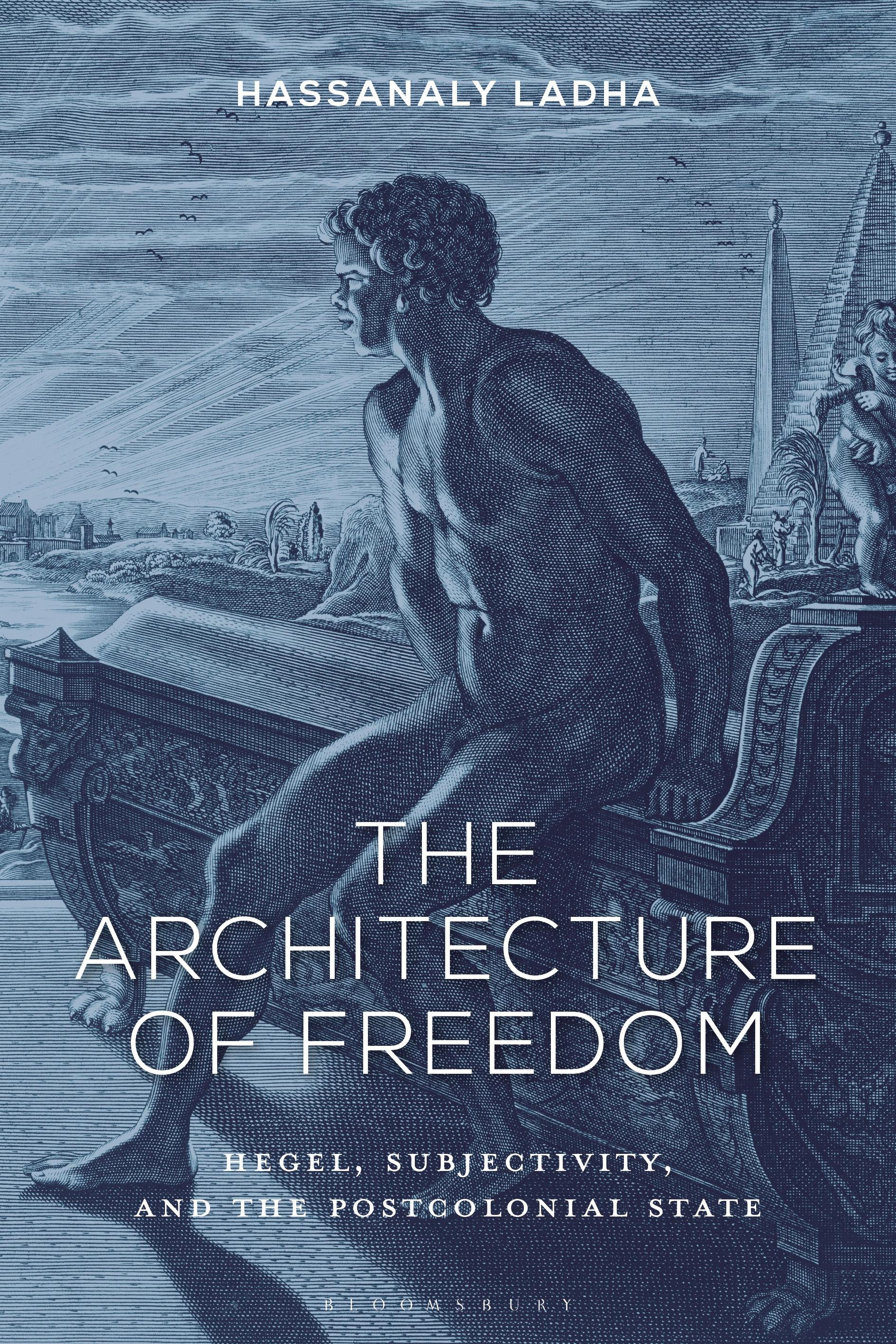
Through a radical reading of Hegel's oeuvre, The Architecture of Freedom sets forth a theory of open borders centered on a new interpretation of the German philosopher's related conceptions of language and the aesthetic, mastery and servitude, and subjectivity and the state.
The book's argument turns on Hegel's identification of “Africa” as a fluid, utopic space enabling the traversal of the East-West binary. As Hegel's figure for the non-historical, Africa emerges as the negativity that propels the movement of the dialectic in time.
Mirroring the “shrouded” continent's relation to history, Kantian “architectonics” step out of the realm of logic in Hegelian thought and drive the historical unfolding of the aesthetic. In a foundational move, Hegel hypostatizes the aesthetic entanglement of built and linguistic form as the colossus of Memnon, an African warrior memorialized in ancient architecture, myth, and art. Reaching for freedom, the Memnon marks the architectonic modality through which the African slave, at the telos of history, will fulfill the spiritual promise of the human and bring about the politically mature state.
The book examines the syncretic figure of the Memnon and slave across Hegel's lecture courses, the Phenomenology of Spirit, the Encyclopedia, and the Philosophy of Right. Ultimately the book calls for a reassessment of a range of Hegelian philosophemes across disciplines in the humanities. This book will be of particular interest to scholars in philosophy, postcolonial and African studies, political theory, architecture, and historiography.
The book's argument turns on Hegel's identification of “Africa” as a fluid, utopic space enabling the traversal of the East-West binary. As Hegel's figure for the non-historical, Africa emerges as the negativity that propels the movement of the dialectic in time.
Mirroring the “shrouded” continent's relation to history, Kantian “architectonics” step out of the realm of logic in Hegelian thought and drive the historical unfolding of the aesthetic. In a foundational move, Hegel hypostatizes the aesthetic entanglement of built and linguistic form as the colossus of Memnon, an African warrior memorialized in ancient architecture, myth, and art. Reaching for freedom, the Memnon marks the architectonic modality through which the African slave, at the telos of history, will fulfill the spiritual promise of the human and bring about the politically mature state.
The book examines the syncretic figure of the Memnon and slave across Hegel's lecture courses, the Phenomenology of Spirit, the Encyclopedia, and the Philosophy of Right. Ultimately the book calls for a reassessment of a range of Hegelian philosophemes across disciplines in the humanities. This book will be of particular interest to scholars in philosophy, postcolonial and African studies, political theory, architecture, and historiography.
Maksa helposti kortilla, Klarnalla, Apple Paylla tai Google Paylla. Etkö ole tyytyväinen? Sinulla on aina 14 päivän palautusoikeus. Lue lisää ehdoistamme. Jos sinulla on kysyttävää, lähetä meille sähköpostia osoitteeseen hello@memmo.org.
Memmo tekee opiskelusta helpompaa – missä päin maailmaa ikinä oletkin. Meillä yhdistät kurssikirjat ja fiksut opiskelutyökalut yhteen paikkaan: tiivistelmät, visat, podcastit ja muistikortit. Ja sitten Ted, opiskelukaverisi, joka vastaa kaikkeen, mitä ikinä mietitkin. Yli 50 000 opiskelijaa opiskelee jo täällä – rakennettu auttamaan sinua oppimaan nopeammin ja stressaamaan vähemmän.