
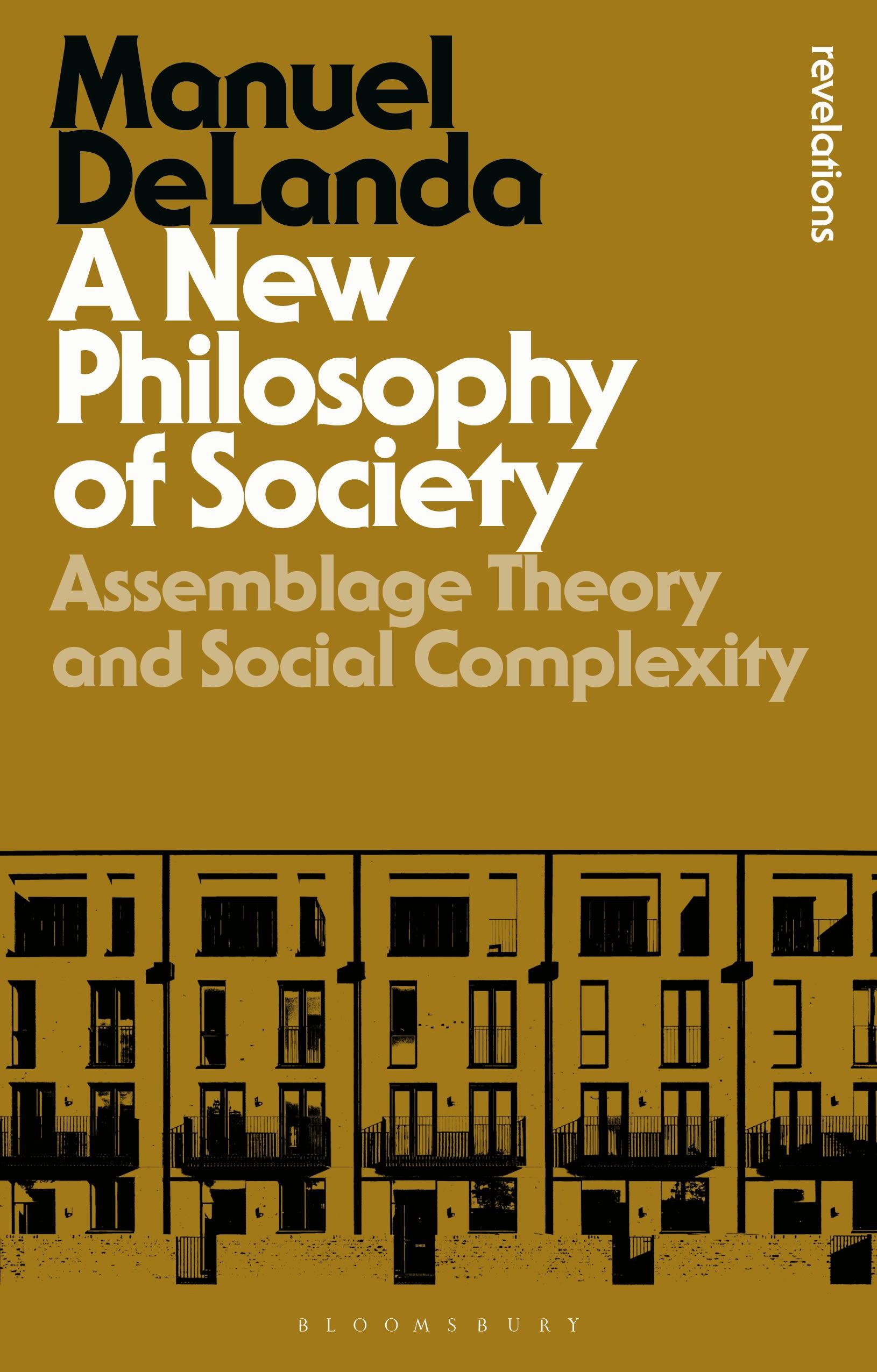
In A New Philosophy of Society Manuel DeLanda offers a fascinating look at how the contemporary world is characterized by an extraordinary social complexity. Since most social entities, from small communities to large nation-states would disappear altogether if our cognitive abilities ceased to exist, DeLanda proposes a novel approach to social ontology that asserts the autonomy of social entities from the conceptions we have of them.
He argues that Gilles Deleuze's theory of assemblages provides a framework in which sociologists and geographers studying social networks and regions can properly locate their work and fully elucidate the connections between them. Indeed, assemblage theory, as DeLanda argues, can be used to model any community, from interpersonal networks and institutional organizations, to central governments, cities and nation states.
He argues that Gilles Deleuze's theory of assemblages provides a framework in which sociologists and geographers studying social networks and regions can properly locate their work and fully elucidate the connections between them. Indeed, assemblage theory, as DeLanda argues, can be used to model any community, from interpersonal networks and institutional organizations, to central governments, cities and nation states.
Maksa helposti kortilla, Klarnalla, Apple Paylla tai Google Paylla. Etkö ole tyytyväinen? Sinulla on aina 14 päivän palautusoikeus. Lue lisää ehdoistamme. Jos sinulla on kysyttävää, lähetä meille sähköpostia osoitteeseen hello@memmo.org.
Memmo tekee opiskelusta helpompaa – missä päin maailmaa ikinä oletkin. Meillä yhdistät kurssikirjat ja fiksut opiskelutyökalut yhteen paikkaan: tiivistelmät, visat, podcastit ja muistikortit. Ja sitten Ted, opiskelukaverisi, joka vastaa kaikkeen, mitä ikinä mietitkin. Yli 50 000 opiskelijaa opiskelee jo täällä – rakennettu auttamaan sinua oppimaan nopeammin ja stressaamaan vähemmän.