
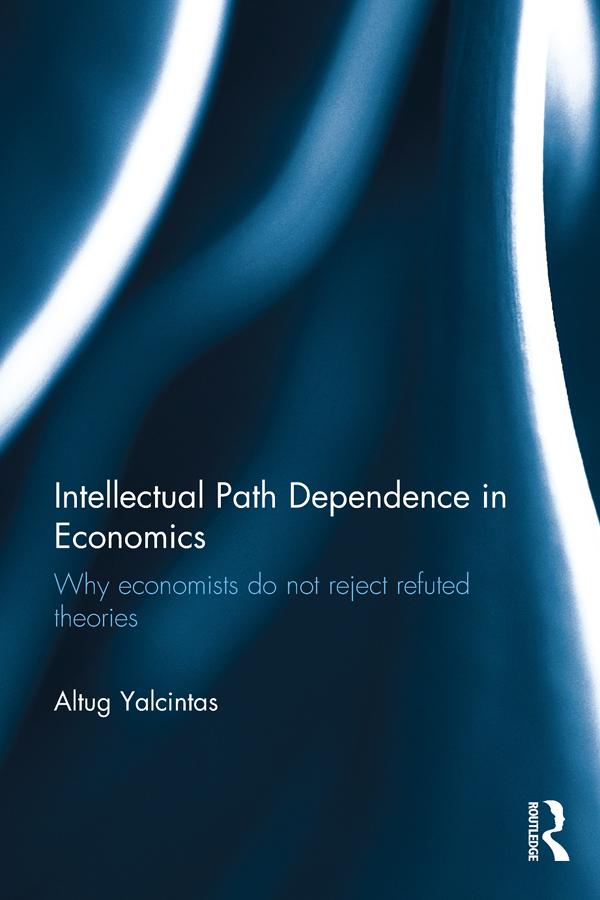
Is economics always self-corrective? Do erroneous theorems permanently disappear from the market of economic ideas? Intellectual Path Dependence in Economics argues that errors in economics are not always corrected. Although economists are often critical and open-minded, unfit explanations are nonetheless able to reproduce themselves. The problem is that theorems sometimes survive the intellectual challenges in the market of economic ideas even when they are falsified or invalidated by criticism and an abundance of counter-evidence.
A key question which often gets little or no attention is: why do economists not reject theories when they have been refuted by evidence and falsified by philosophical reasoning? This book explores the answer to this question by examining the phenomenon of intellectual path dependence in the history of economic thought. It argues that the key reason why economists do not reject refuted theories is the epistemic costs of starting to use new theories. Epistemic costs are primarily the costs of scarcity of the most valued element in academic production: time. Epistemic scarcity overwhelmingly dominates the evolution of scientific research in such a way that when researchers start off a new research project, they allocate time between replicable and un-replicable research.
This book is essential reading for anyone interested in the methodology, philosophy and history of economics.
Maksa helposti kortilla, Klarnalla, Apple Paylla tai Google Paylla. Etkö ole tyytyväinen? Sinulla on aina 14 päivän palautusoikeus. Lue lisää ehdoistamme. Jos sinulla on kysyttävää, lähetä meille sähköpostia osoitteeseen hello@memmo.org.
Memmo tekee opiskelusta helpompaa – missä päin maailmaa ikinä oletkin. Meillä yhdistät kurssikirjat ja fiksut opiskelutyökalut yhteen paikkaan: tiivistelmät, visat, podcastit ja muistikortit. Ja sitten Ted, opiskelukaverisi, joka vastaa kaikkeen, mitä ikinä mietitkin. Yli 50 000 opiskelijaa opiskelee jo täällä – rakennettu auttamaan sinua oppimaan nopeammin ja stressaamaan vähemmän.