
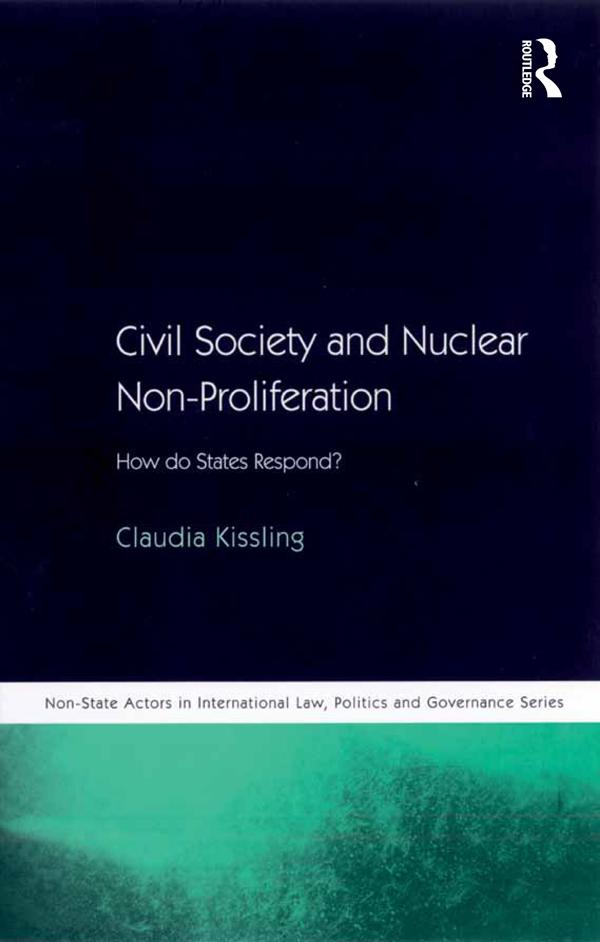
Since the end of the Cold War, globalization has brought new actors to the political arena. One of those which has attracted considerable attention in academic research is civil society or NGOs. Claudia Kissling addresses the topic of civil society participation in the nuclear non-proliferation regime. The regime qualifies well for this objective since it features, given its characteristics as a treaty regime in the international security field, notable legal avenues for civil society participation. The study takes on a twofold perspective. It addresses the empirical question of whether civil society can contribute to the evolution of regimes in the security field, especially when it comes to security cooperation. It also questions whether civil society can, under certain conditions, contribute to the democratic quality of international decision-making. Here, empirical findings are used in order to test normative political theories on the legitimacy and democracy of global institutions.
Maksa helposti kortilla, Klarnalla, Apple Paylla tai Google Paylla. Etkö ole tyytyväinen? Sinulla on aina 14 päivän palautusoikeus. Lue lisää ehdoistamme. Jos sinulla on kysyttävää, lähetä meille sähköpostia osoitteeseen hello@memmo.org.
Memmo tekee opiskelusta helpompaa – missä päin maailmaa ikinä oletkin. Meillä yhdistät kurssikirjat ja fiksut opiskelutyökalut yhteen paikkaan: tiivistelmät, visat, podcastit ja muistikortit. Ja sitten Ted, opiskelukaverisi, joka vastaa kaikkeen, mitä ikinä mietitkin. Yli 50 000 opiskelijaa opiskelee jo täällä – rakennettu auttamaan sinua oppimaan nopeammin ja stressaamaan vähemmän.
Saatat pitää myös näistä
Osta kirja0