
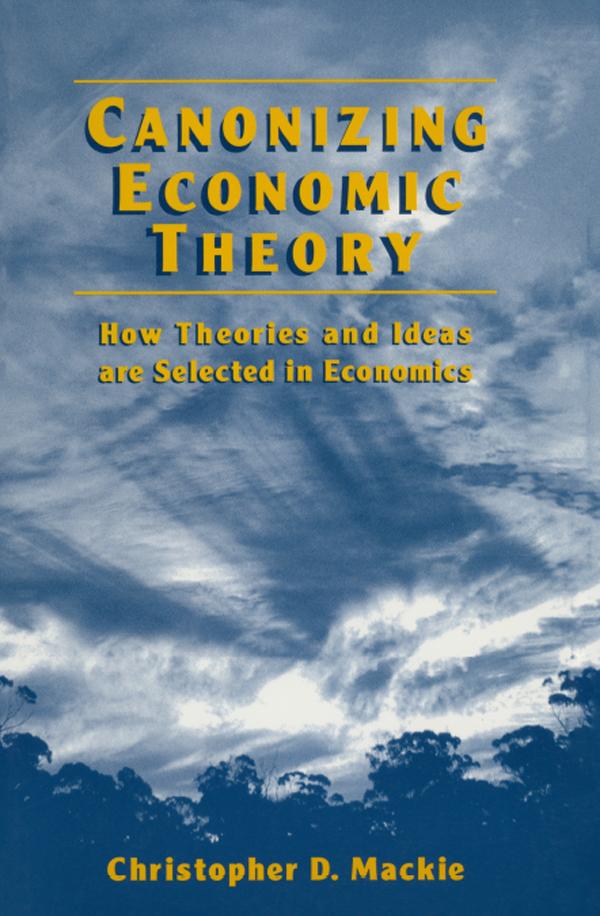
Historians of economic thought traditionally summarize, critique, and trace the development of existing theory. History of thought literature provides information about the authors, chronology, and relative importance of influential works. Generally missing from the literature, however, are answers to questions about why economic theory exists in its current form: Why have economists chosen the theories they have to represent the discipline's formal content? What are the criteria that determine the value of a theory, or of research in general; and, how have these criteria changed over time? In this insightful and well-written work, Christopher Mackie analyzes how ideas and theories are accepted in economics, from the pre-publication phase to the point at which, once written, a theory enters the accepted body of professional literature. Drawing from economics, the history of science, and philosophy, Mackie shows how both empirical and non-empirical criteria determine how theory will actually evolve.
Maksa helposti kortilla, Klarnalla, Apple Paylla tai Google Paylla. Etkö ole tyytyväinen? Sinulla on aina 14 päivän palautusoikeus. Lue lisää ehdoistamme. Jos sinulla on kysyttävää, lähetä meille sähköpostia osoitteeseen hello@memmo.org.
Memmo tekee opiskelusta helpompaa – missä päin maailmaa ikinä oletkin. Meillä yhdistät kurssikirjat ja fiksut opiskelutyökalut yhteen paikkaan: tiivistelmät, visat, podcastit ja muistikortit. Ja sitten Ted, opiskelukaverisi, joka vastaa kaikkeen, mitä ikinä mietitkin. Yli 50 000 opiskelijaa opiskelee jo täällä – rakennettu auttamaan sinua oppimaan nopeammin ja stressaamaan vähemmän.
Saatat pitää myös näistä
Osta kirja0