
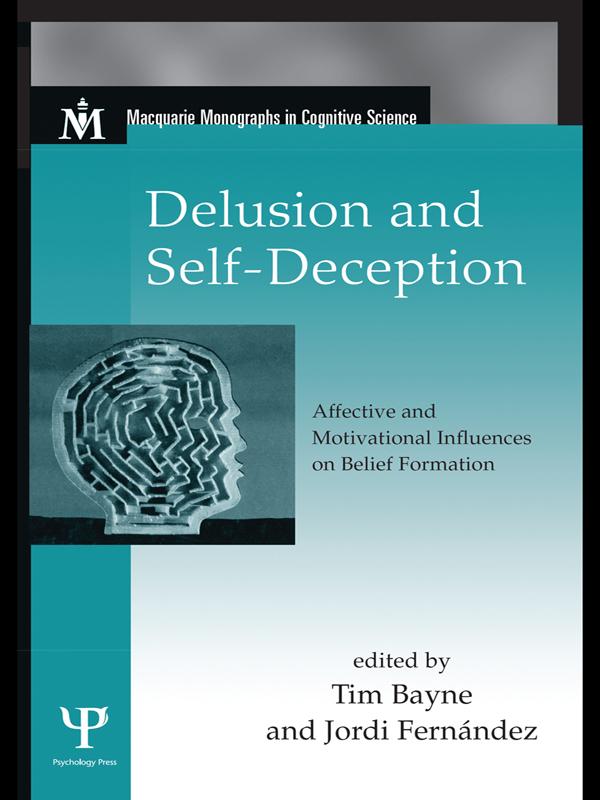
This collection of essays focuses on the interface between delusions and self-deception. As pathologies of belief, delusions and self-deception raise many of the same challenges for those seeking to understand them. Are delusions and self-deception entirely distinct phenomena, or might some forms of self-deception also qualify as delusional? To what extent might models of self-deception and delusion share common factors? In what ways do affect and motivation enter into normal belief-formation, and how might they be implicated in self-deception and delusion? The essays in this volume tackle these questions from both empirical and conceptual perspectives. Some contributors focus on the general question of how to locate self-deception and delusion within our taxonomy of psychological states. Some contributors ask whether particular delusions - such as the Capgras delusion or anosognosia for hemiplegia - might be explained by appeal to motivational and affective factors. And some contributors provide general models of motivated reasoning, against which theories of pathological belief-formation might be measured.
The volume will be of interest to cognitive scientists, clinicians, and philosophers interested in the nature of belief and the disturbances to which it is subject.
Maksa helposti kortilla, Klarnalla, Apple Paylla tai Google Paylla. Etkö ole tyytyväinen? Sinulla on aina 14 päivän palautusoikeus. Lue lisää ehdoistamme. Jos sinulla on kysyttävää, lähetä meille sähköpostia osoitteeseen hello@memmo.org.
Memmo tekee opiskelusta helpompaa – missä päin maailmaa ikinä oletkin. Meillä yhdistät kurssikirjat ja fiksut opiskelutyökalut yhteen paikkaan: tiivistelmät, visat, podcastit ja muistikortit. Ja sitten Ted, opiskelukaverisi, joka vastaa kaikkeen, mitä ikinä mietitkin. Yli 50 000 opiskelijaa opiskelee jo täällä – rakennettu auttamaan sinua oppimaan nopeammin ja stressaamaan vähemmän.