
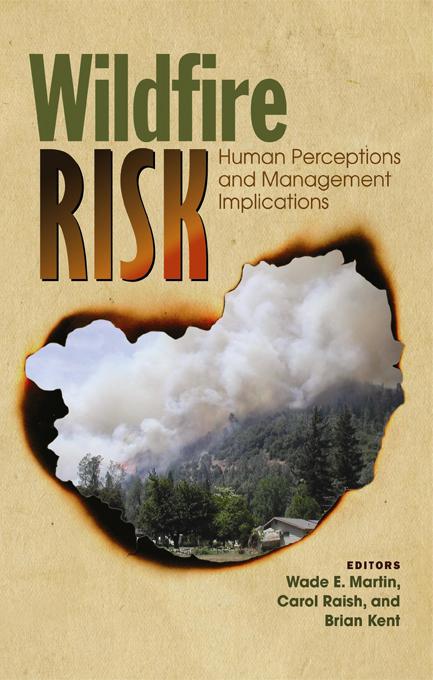
The continuing encroachment of human settlements into fire-prone areas and extreme fire seasons in recent years make it urgent that we better understand both the physical and human dimensions of managing the risk from wildfire. Wildfire Risk follows from our awareness that increasing public knowledge about wildfire hazard does not necessarily lead to appropriate risk reduction behavior. Drawing heavily upon health and risk communication, and risk modeling, the authors advance our understanding of how individuals and communities respond to wildfire hazard. They present results of original research on the social, economic, and psychological factors in responses to risk, discuss how outreach and education can influence behavior, and consider differences among ethnic/racial groups and between genders with regard to values, views, and attitudes about wildfire risk. They explore the role of public participation in risk assessment and mitigation, as well as in planning for evacuation and recovery after fire. Wildfire Risk concludes with a dedicated section on risk-modeling, with perspectives from decision sciences, geography, operations research, psychology, experimental economics, and other social sciences.
Maksa helposti kortilla, Klarnalla, Apple Paylla tai Google Paylla. Etkö ole tyytyväinen? Sinulla on aina 14 päivän palautusoikeus. Lue lisää ehdoistamme. Jos sinulla on kysyttävää, lähetä meille sähköpostia osoitteeseen hello@memmo.org.
Memmo tekee opiskelusta helpompaa – missä päin maailmaa ikinä oletkin. Meillä yhdistät kurssikirjat ja fiksut opiskelutyökalut yhteen paikkaan: tiivistelmät, visat, podcastit ja muistikortit. Ja sitten Ted, opiskelukaverisi, joka vastaa kaikkeen, mitä ikinä mietitkin. Yli 50 000 opiskelijaa opiskelee jo täällä – rakennettu auttamaan sinua oppimaan nopeammin ja stressaamaan vähemmän.
Saatat pitää myös näistä
Osta kirja0