
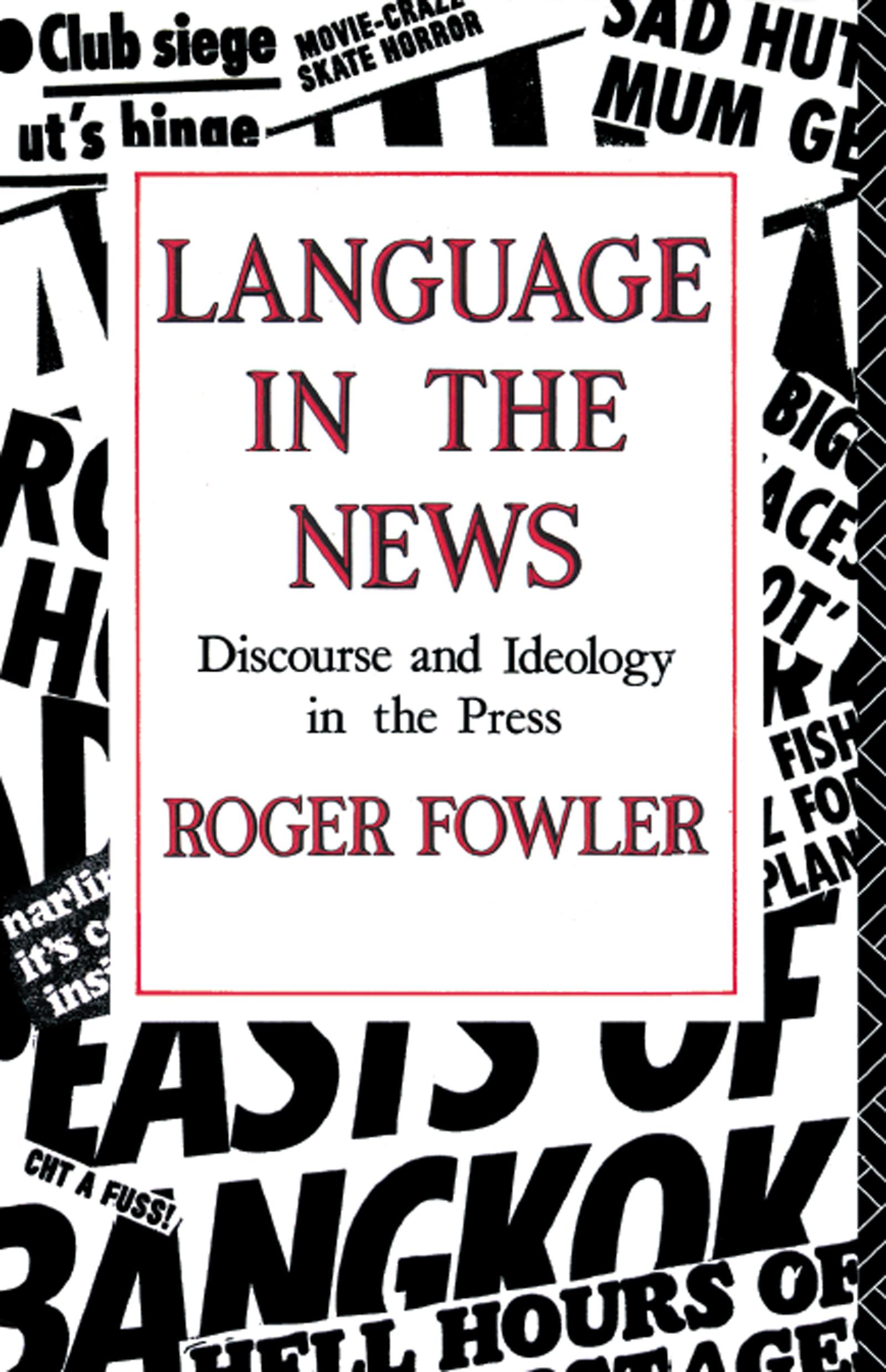
Newspaper coverage of world events is presented as the unbiased recording of `hard facts`. In an incisive study of both the quality and the popular press, Roger Fowler challenges this perception, arguing that news is a practice, a product of the social and political world on which it reports. Writing from the perspective of critical linguistics, Fowler examines the crucial role of language in mediating reality. Starting with a general account of news values and the processes of selection and transformation which go to make up the news, Fowler goes on to consider newspaper representations of gender, power, authority and law and order. He discusses stereotyping, terms of abuse and endearment, the editorial voice and the formation of consensus. Fowler's analysis takes in some of the major news stories of the Thatcher decade - the American bombing of Libya in 1986, the salmonella-in-eggs affair, the problems of the National Health Service and the controversy of youth and contraception.
Maksa helposti kortilla, Klarnalla, Apple Paylla tai Google Paylla. Etkö ole tyytyväinen? Sinulla on aina 14 päivän palautusoikeus. Lue lisää ehdoistamme. Jos sinulla on kysyttävää, lähetä meille sähköpostia osoitteeseen hello@memmo.org.
Memmo tekee opiskelusta helpompaa – missä päin maailmaa ikinä oletkin. Meillä yhdistät kurssikirjat ja fiksut opiskelutyökalut yhteen paikkaan: tiivistelmät, visat, podcastit ja muistikortit. Ja sitten Ted, opiskelukaverisi, joka vastaa kaikkeen, mitä ikinä mietitkin. Yli 50 000 opiskelijaa opiskelee jo täällä – rakennettu auttamaan sinua oppimaan nopeammin ja stressaamaan vähemmän.
Saatat pitää myös näistä
Osta kirja0