
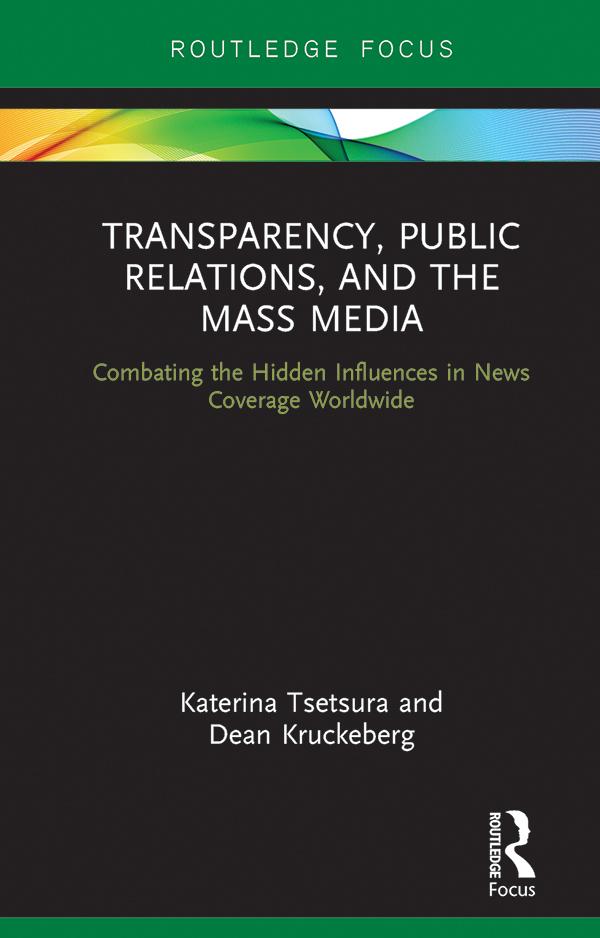
This book is about media transparency and good-faith attempts of honesty by both the sources and the gate-keepers of news and other information that the mass media present as being unbiased. Specifically, this book provides a theoretical framework for understanding media transparency and its antithesis--media opacity--by analyzing extensive empirical data that the authors have collected from more than 60 countries throughout the world. The practice of purposeful media opacity, which exists to greater or lesser extents worldwide, is a powerful hidden influencer of the ostensibly impartial media gate-keepers whose publicly perceived role is to present news and other information based on these gate-keepers’ perception of this information’s truthfulness. Empirical data that the authors have collected globally illustrate the extent of media opacity practices worldwide and note its pervasiveness in specific regions and countries. The authors examine, from multiple perspectives, the complex question of whether media opacity should be categorically condemned as being universally inappropriate and unethical or whether it should be accepted—or at least tolerated—in some situations and environments.
Maksa helposti kortilla, Klarnalla, Apple Paylla tai Google Paylla. Etkö ole tyytyväinen? Sinulla on aina 14 päivän palautusoikeus. Lue lisää ehdoistamme. Jos sinulla on kysyttävää, lähetä meille sähköpostia osoitteeseen hello@memmo.org.
Memmo tekee opiskelusta helpompaa – missä päin maailmaa ikinä oletkin. Meillä yhdistät kurssikirjat ja fiksut opiskelutyökalut yhteen paikkaan: tiivistelmät, visat, podcastit ja muistikortit. Ja sitten Ted, opiskelukaverisi, joka vastaa kaikkeen, mitä ikinä mietitkin. Yli 50 000 opiskelijaa opiskelee jo täällä – rakennettu auttamaan sinua oppimaan nopeammin ja stressaamaan vähemmän.