
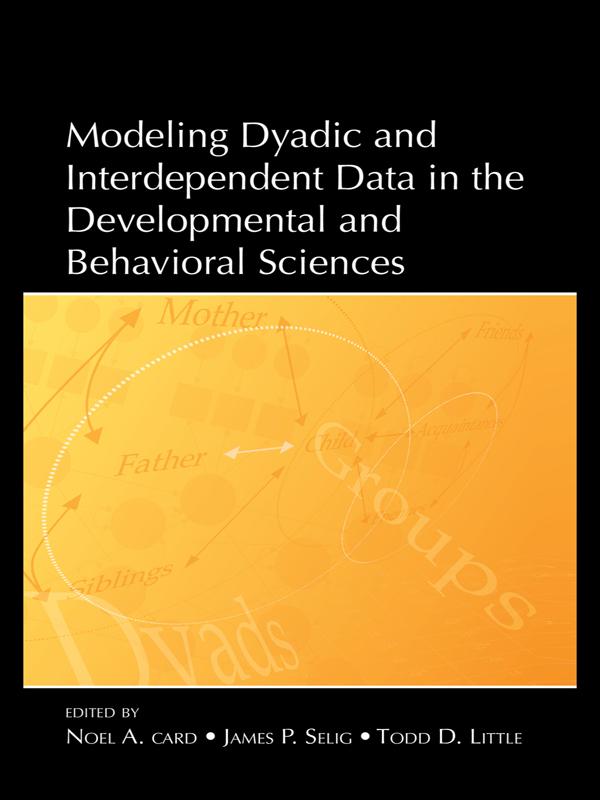
This book reviews methods of conceptualizing, measuring, and analyzing interdependent data in developmental and behavioral sciences. Quantitative and developmental experts describe best practices for modeling interdependent data that stem from interactions within families, relationships, and peer groups, for example. Complex models for analyzing longitudinal data, such as growth curves and time series, are also presented.
Many contributors are innovators of the techniques and all are able to clearly explain the methodologies and their practical problems including issues of measurement, missing data, power and sample size, and the specific limitations of each method.
Featuring a balance between analytic strategies and applications, the book addresses:
- The Actor-Partner Interdependence Model for analyzing influence between two individuals
- The Intraclass Correlational Approach for analyzing distinguishable roles (parent-child) or exchangeable (same-sex) dyadic data
- The Social Relations Model for analyzing group interdependency
- Social Network Analysis approaches for relationships between individuals
This book is intended for graduate students and researchers across the developmental, social, behavioral, and educational sciences. It is an excellent research guide and a valuable resource for advanced methods courses.
Maksa helposti kortilla, Klarnalla, Apple Paylla tai Google Paylla. Etkö ole tyytyväinen? Sinulla on aina 14 päivän palautusoikeus. Lue lisää ehdoistamme. Jos sinulla on kysyttävää, lähetä meille sähköpostia osoitteeseen hello@memmo.org.
Memmo tekee opiskelusta helpompaa – missä päin maailmaa ikinä oletkin. Meillä yhdistät kurssikirjat ja fiksut opiskelutyökalut yhteen paikkaan: tiivistelmät, visat, podcastit ja muistikortit. Ja sitten Ted, opiskelukaverisi, joka vastaa kaikkeen, mitä ikinä mietitkin. Yli 50 000 opiskelijaa opiskelee jo täällä – rakennettu auttamaan sinua oppimaan nopeammin ja stressaamaan vähemmän.