
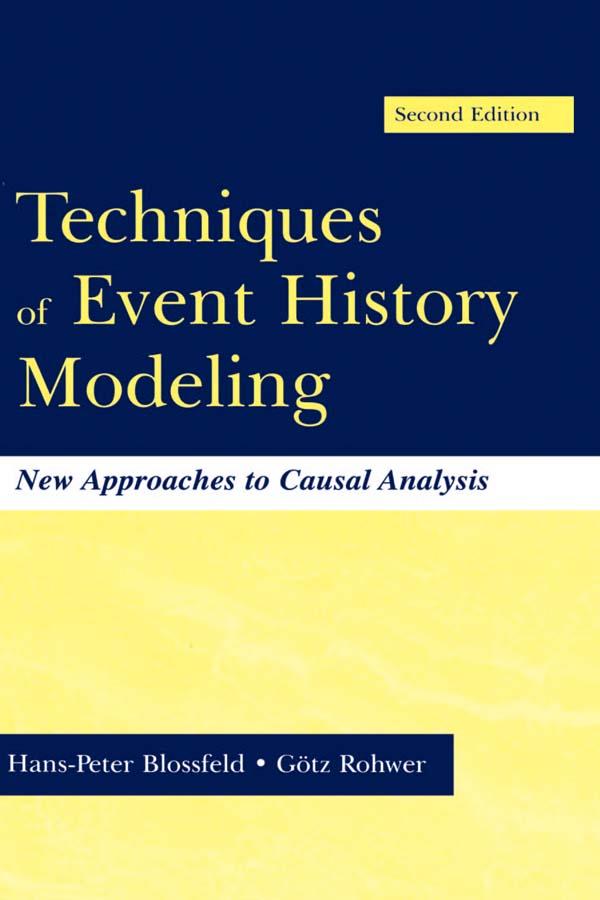
Including new developments and publications which have appeared since the publication of the first edition in 1995, this second edition:
*gives a comprehensive introductory account of event history modeling techniques and their use in applied research in economics and the social sciences;
*demonstrates that event history modeling is a major step forward in causal analysis. To do so the authors show that event history models employ the time-path of changes in states and relate changes in causal variables in the past to changes in discrete outcomes in the future; and
*introduces the reader to the computer program Transition Data Analysis (TDA). This software estimates the sort of models most frequently used with longitudinal data, in particular, discrete-time and continuous-time event history data.
Techniques of Event History Modeling can serve as a student textbook in the fields of statistics, economics, the social sciences, psychology, and the political sciences. It can also be used as a reference for scientists in all fields of research.
Maksa helposti kortilla, Klarnalla, Apple Paylla tai Google Paylla. Etkö ole tyytyväinen? Sinulla on aina 14 päivän palautusoikeus. Lue lisää ehdoistamme. Jos sinulla on kysyttävää, lähetä meille sähköpostia osoitteeseen hello@memmo.org.
Memmo tekee opiskelusta helpompaa – missä päin maailmaa ikinä oletkin. Meillä yhdistät kurssikirjat ja fiksut opiskelutyökalut yhteen paikkaan: tiivistelmät, visat, podcastit ja muistikortit. Ja sitten Ted, opiskelukaverisi, joka vastaa kaikkeen, mitä ikinä mietitkin. Yli 50 000 opiskelijaa opiskelee jo täällä – rakennettu auttamaan sinua oppimaan nopeammin ja stressaamaan vähemmän.