
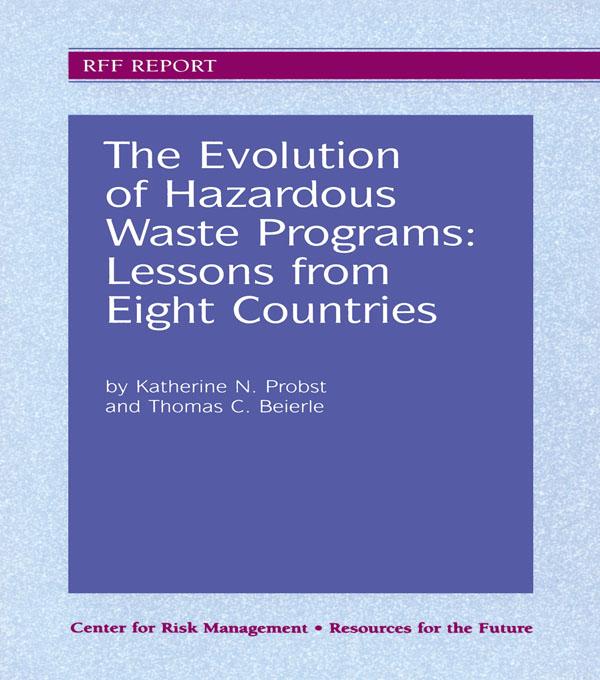
In most countries, the development of environmental programs follows a similar pattern. Early efforts concentrate on direct threats to public health, such as contaminated drinking water and air pollution. Only after these problems are addressed does the need to improve day-to-day management of hazardous wastes reach the top of the environmental agenda.
In this new report, RFF‘s Katherine Probst and Thomas Beierle compare the development of hazardous waste management programs in eight countries---the United States, Canada, Germany, Denmark, Indonesia, Hong Kong, Malaysia, and Thailand---and discuss steps taken to foster proper hazardous waste management. The authors focus on two questions: What were the major steps in the evolution of a successful hazardous waste program? What role, if any, did the public sector play in financing modern treatment and disposal facilities? Based on interviews and secondary sources, this report includes country-specific profiles that detail the steps in the evolution of each country‘s hazardous waste management program and describe the role of the public sector in facility financing.
Maksa helposti kortilla, Klarnalla, Apple Paylla tai Google Paylla. Etkö ole tyytyväinen? Sinulla on aina 14 päivän palautusoikeus. Lue lisää ehdoistamme. Jos sinulla on kysyttävää, lähetä meille sähköpostia osoitteeseen hello@memmo.org.
Memmo tekee opiskelusta helpompaa – missä päin maailmaa ikinä oletkin. Meillä yhdistät kurssikirjat ja fiksut opiskelutyökalut yhteen paikkaan: tiivistelmät, visat, podcastit ja muistikortit. Ja sitten Ted, opiskelukaverisi, joka vastaa kaikkeen, mitä ikinä mietitkin. Yli 50 000 opiskelijaa opiskelee jo täällä – rakennettu auttamaan sinua oppimaan nopeammin ja stressaamaan vähemmän.