
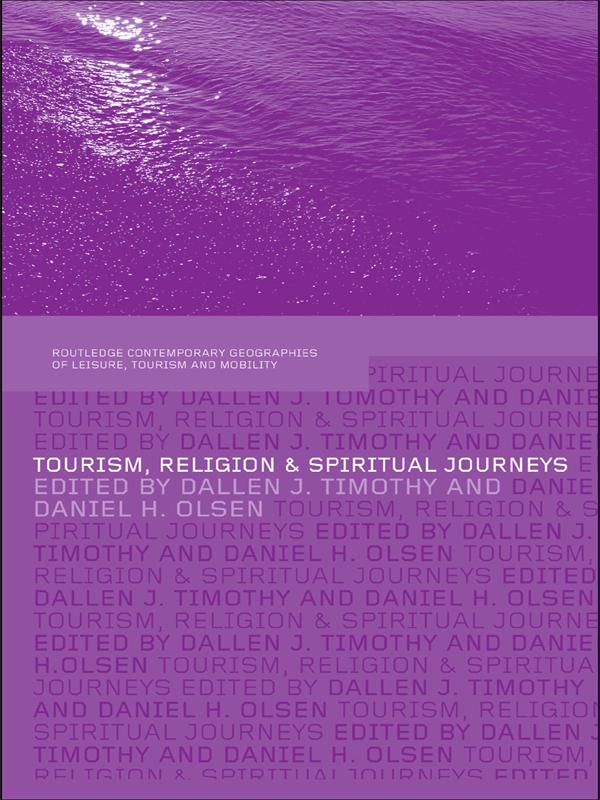
Religion and spirituality are still among the most common motivations for travel - many major tourism destinations have developed largely as a result of their connections to sacred people, places and events. Providing a comprehensive assessment of the primary issues and concepts related to this intersection of tourism and religion, this revealing book gives a balanced discussion of both the theoretical and applied subjects that destination planners, religious organizations, scholars, and tourism service providers must deal with on a daily basis.
Bringing together a distinguished list of contributors, this volume takes a global approach and incorporates substantial empirical cases from Hinduism, Islam, Judaism, Roman Catholicism, Mormonism, New Ageism, Sikhism, Buddhism, and the spiritual philosophies of East Asia. On a conceptual level, it considers, amongst other topics:
- contested heritage
- the pilgrim-tourist dichotomy
- secularization of pilgrimage experiences
- religious humanism
- educational aspects of religious tourism
- commodification of religious icons and services.
A vibrant collection of essays, this outstanding book discusses many important practices, paradigms, and problems that are currently being examined and debated. It raises an array of significant and interesting questions and as such is a valuable resource for students, scholars and researchers of tourism, religion and cultural studies.
Maksa helposti kortilla, Klarnalla, Apple Paylla tai Google Paylla. Etkö ole tyytyväinen? Sinulla on aina 14 päivän palautusoikeus. Lue lisää ehdoistamme. Jos sinulla on kysyttävää, lähetä meille sähköpostia osoitteeseen hello@memmo.org.
Memmo tekee opiskelusta helpompaa – missä päin maailmaa ikinä oletkin. Meillä yhdistät kurssikirjat ja fiksut opiskelutyökalut yhteen paikkaan: tiivistelmät, visat, podcastit ja muistikortit. Ja sitten Ted, opiskelukaverisi, joka vastaa kaikkeen, mitä ikinä mietitkin. Yli 50 000 opiskelijaa opiskelee jo täällä – rakennettu auttamaan sinua oppimaan nopeammin ja stressaamaan vähemmän.