
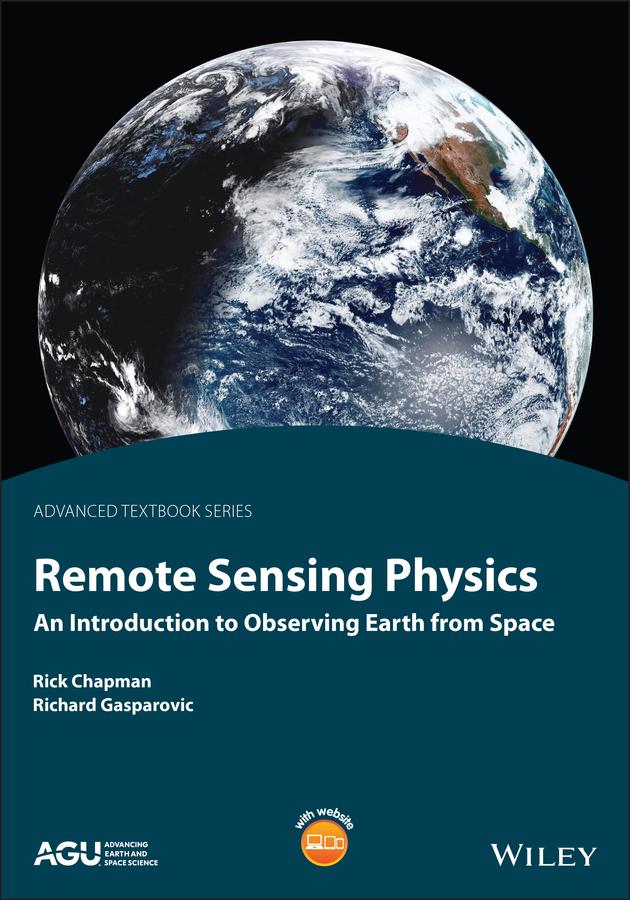
The development of spaceborne remote sensing technology has led to a new understanding of the complexity of our planet by allowing us to observe Earth and its environments on spatial and temporal scales that are unavailable to terrestrial sensors.
Remote Sensing Physics: An Introduction to Observing Earth from Space is a graduate-level text that examines the underlying physical principles and techniques used to make remote measurements, along with the algorithms used to extract geophysical information from those measurements.
Volume highlights include:
- Basis for Earth remote sensing including ocean, land, and atmosphere
- Description of satellite orbits relevant for Earth observations
- Physics of passive sensing, including infrared, optical and microwave imagers
- Physics of active sensing, including radars and lidars
- Overview of current and future Earth observation missions
- Compendium of resources including an extensive bibliography
- Sample problem sets and answers available to instructors
The American Geophysical Union promotes discovery in Earth and space science for the benefit of humanity. Its publications disseminate scientific knowledge and provide resources for researchers, students, and professionals.
Maksa helposti kortilla, Klarnalla, Apple Paylla tai Google Paylla. Etkö ole tyytyväinen? Sinulla on aina 14 päivän palautusoikeus. Lue lisää ehdoistamme. Jos sinulla on kysyttävää, lähetä meille sähköpostia osoitteeseen hello@memmo.org.
Memmo tekee opiskelusta helpompaa – missä päin maailmaa ikinä oletkin. Meillä yhdistät kurssikirjat ja fiksut opiskelutyökalut yhteen paikkaan: tiivistelmät, visat, podcastit ja muistikortit. Ja sitten Ted, opiskelukaverisi, joka vastaa kaikkeen, mitä ikinä mietitkin. Yli 50 000 opiskelijaa opiskelee jo täällä – rakennettu auttamaan sinua oppimaan nopeammin ja stressaamaan vähemmän.