
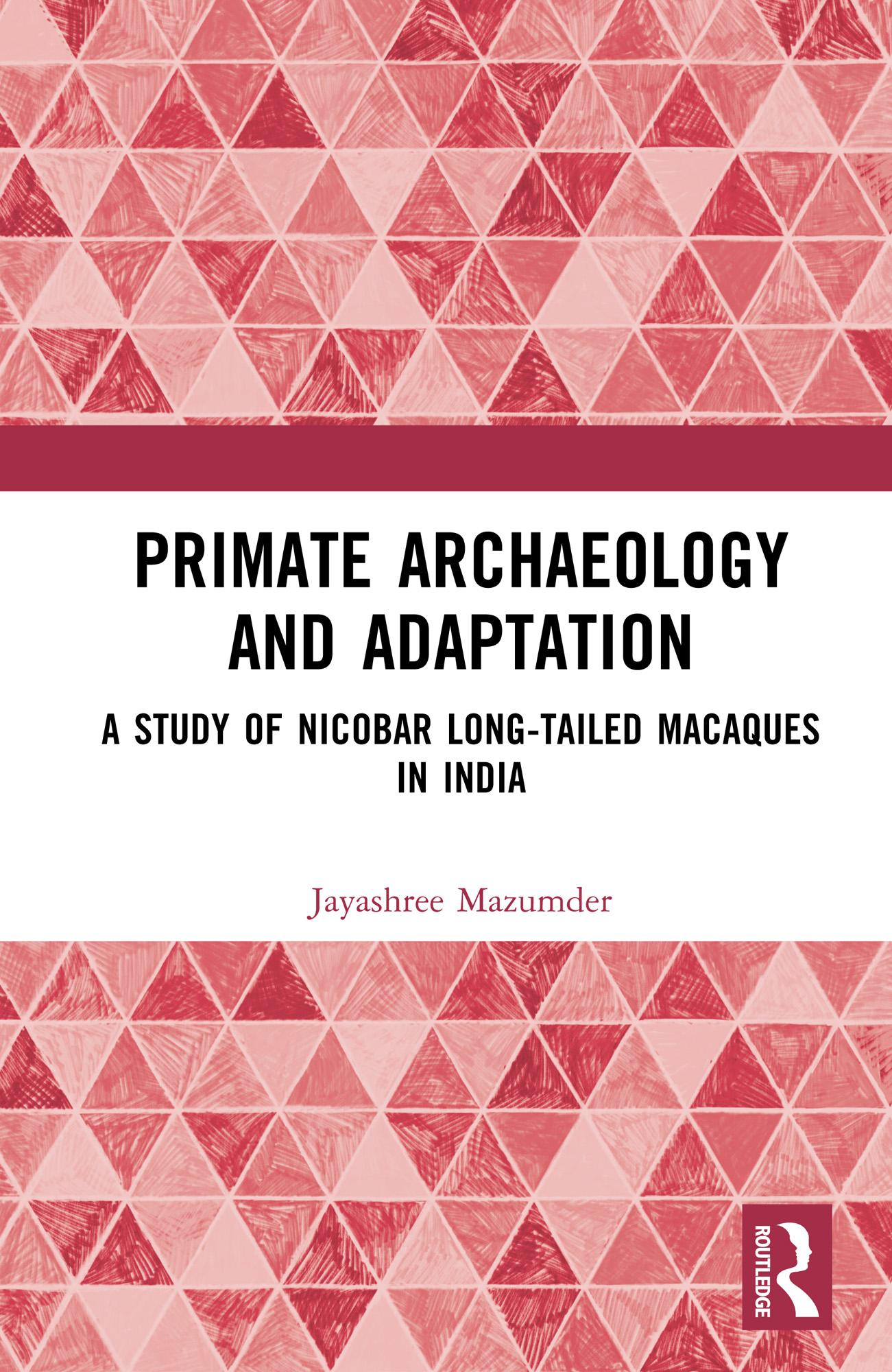
Primate Archaeology and Adaptation offers an interdisciplinary examination of Nicobar long-tailed macaques, situating their tool use, social behavior, and ecological flexibility within deep evolutionary time and contemporary conservation challenges. It documents the ecology, social organization, and behavioral repertoire of long-tailed macaques across Southeast Asia, including foraging strategies, food sharing, reproductive dynamics, exploratory behavior, and diverse forms of object manipulation. The book presents detailed accounts of tool-related behaviors, such as leaf ‘glove’ use, substrate selection for pounding, and the innovative use of anthropogenic materials, while carefully distinguishing between tool use and broader object use. By bridging fossil history, behavioral ecology, and archaeological method, it rethinks material culture beyond humans.
This book will interest scholars and advanced students in biological anthropology, primatology, archaeology, human evolution, animal behavior, and conservation studies. It will also appeal to researchers working on material culture, island ecology, and South Asian environmental policy.
Maksa helposti kortilla, Klarnalla, Apple Paylla tai Google Paylla. Etkö ole tyytyväinen? Sinulla on aina 14 päivän palautusoikeus. Lue lisää ehdoistamme. Jos sinulla on kysyttävää, lähetä meille sähköpostia osoitteeseen hello@memmo.org.
Memmo tekee opiskelusta helpompaa – missä päin maailmaa ikinä oletkin. Meillä yhdistät kurssikirjat ja fiksut opiskelutyökalut yhteen paikkaan: tiivistelmät, visat, podcastit ja muistikortit. Ja sitten Ted, opiskelukaverisi, joka vastaa kaikkeen, mitä ikinä mietitkin. Yli 50 000 opiskelijaa opiskelee jo täällä – rakennettu auttamaan sinua oppimaan nopeammin ja stressaamaan vähemmän.