
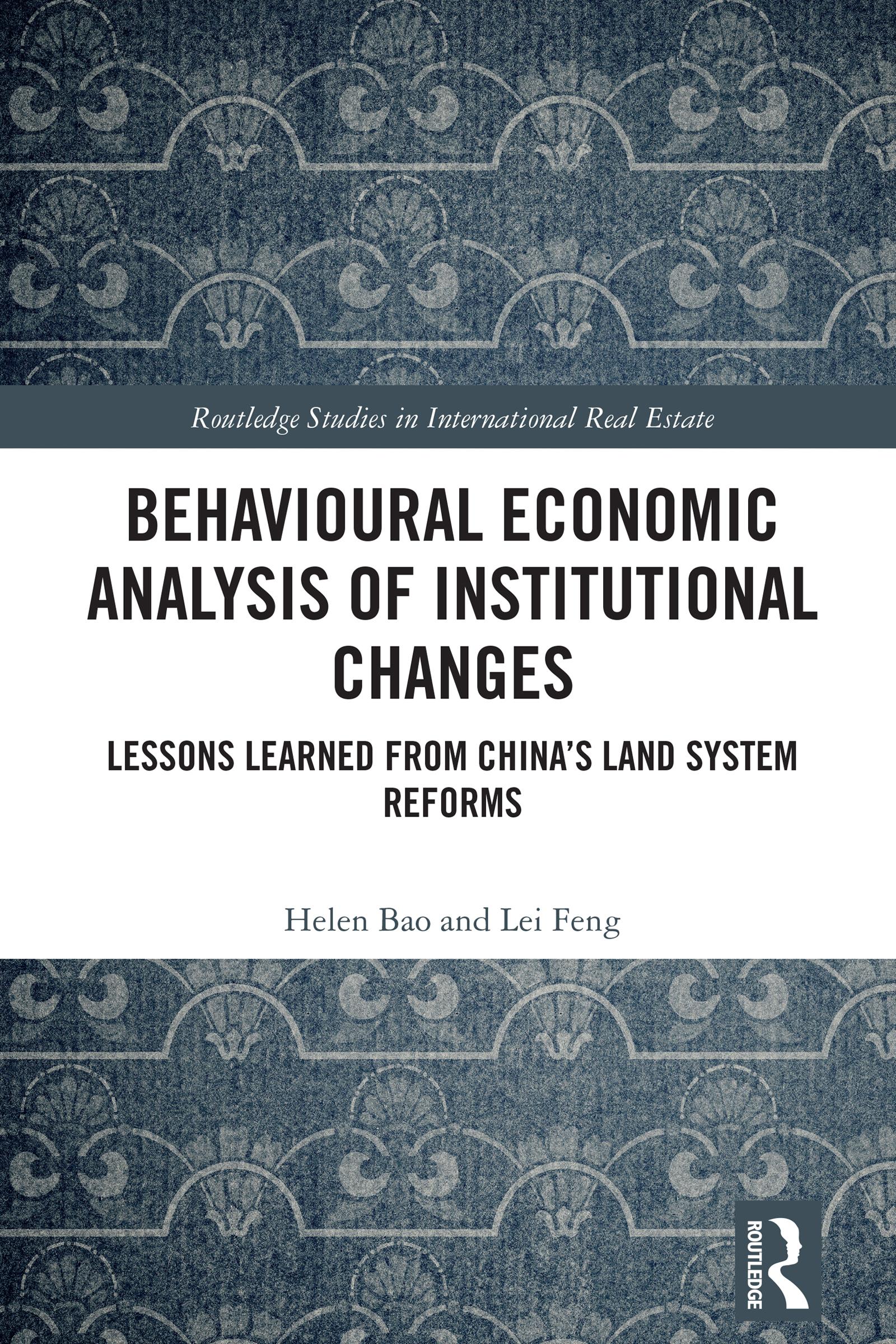
This book examines the evolution of China’s rural land system through an integrated lens of institutional and behavioural economics. It traces seventy years of reform, from collective farming to market-oriented land transfers, to explain how central policy, local implementation and farmers’ responses interact to shape institutional change. Moving beyond standard accounts focused on property rights and transaction costs, the book introduces a dynamic framework based on Prospect Theory, incorporating cognitive biases, social norms and bounded rationality. Drawing on two large-scale rural household surveys, the book combines empirical analysis with historical case studies to explore how reforms were received, adapted and resisted.
This book will benefit researchers, policymakers and graduate students interested in institutional change, land policy or Chinese rural development. It offers new tools to understand policy implementation in environments marked by uncertainty, decentralisation and informal constraints. By highlighting how behavioural factors mediate formal rules, the book provides insights that extend beyond China, informing the design of effective land and property rights reforms globally.
Maksa helposti kortilla, Klarnalla, Apple Paylla tai Google Paylla. Etkö ole tyytyväinen? Sinulla on aina 14 päivän palautusoikeus. Lue lisää ehdoistamme. Jos sinulla on kysyttävää, lähetä meille sähköpostia osoitteeseen hello@memmo.org.
Memmo tekee opiskelusta helpompaa – missä päin maailmaa ikinä oletkin. Meillä yhdistät kurssikirjat ja fiksut opiskelutyökalut yhteen paikkaan: tiivistelmät, visat, podcastit ja muistikortit. Ja sitten Ted, opiskelukaverisi, joka vastaa kaikkeen, mitä ikinä mietitkin. Yli 50 000 opiskelijaa opiskelee jo täällä – rakennettu auttamaan sinua oppimaan nopeammin ja stressaamaan vähemmän.