
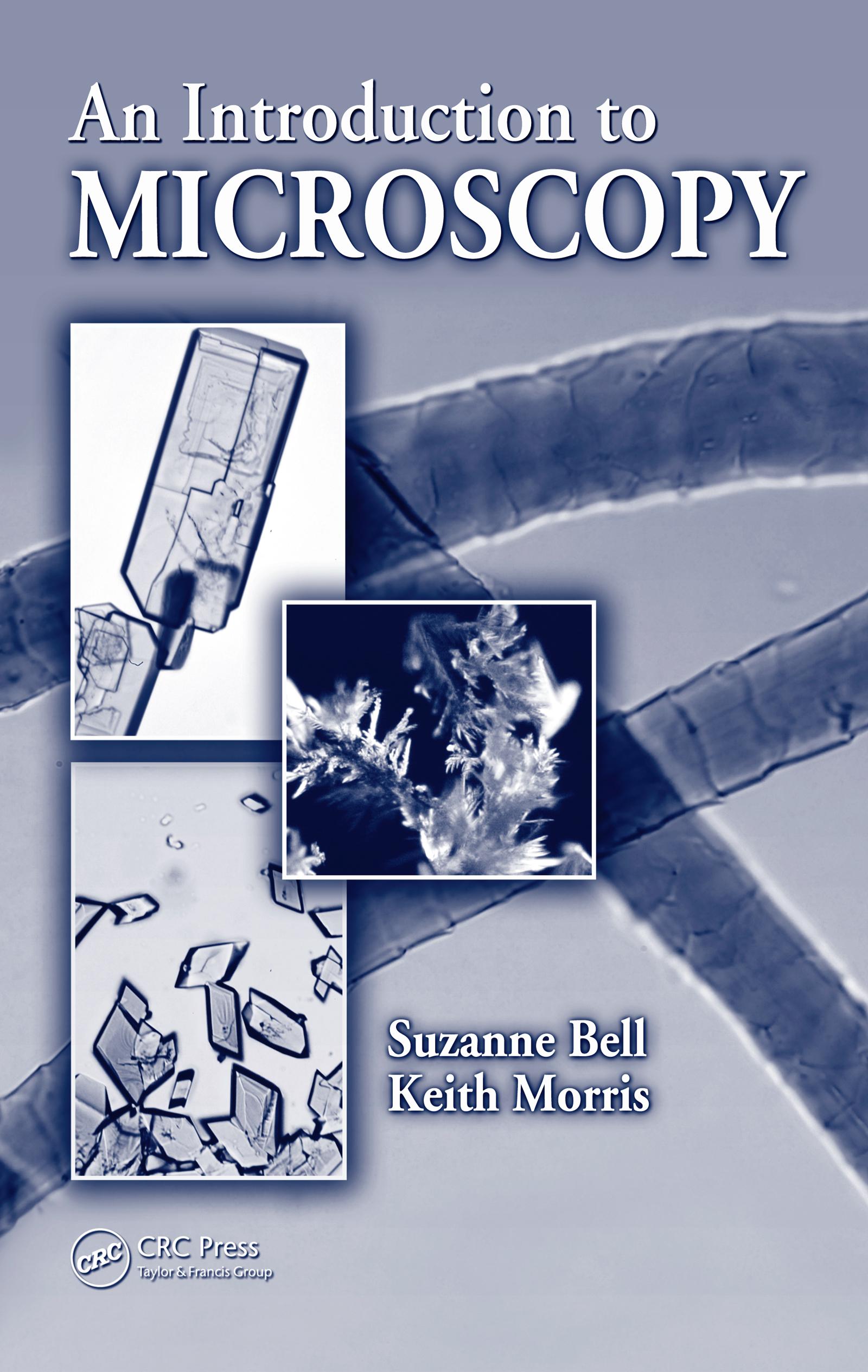
Microscopy, which has served as a fundamental scientific technique for centuries, remains an invaluable tool in chemistry, biology, healthcare, and forensics. Increasingly, it is being integrated into modern chemical instrumentation and is of value as a powerful analytical tool across many scientific disciplines.
Designed to serve as a primary resource for undergraduate or graduate students, An Introduction to Microscopy helps students master the foundational principles of microscopy. Intentionally concise, this text does not attempt to cover all aspects of all types of microscopy such as polarizing light and fluorescence. Instead, the authors’ intent is to provide students with the basic knowledge necessary to explore and understand these more advanced techniques. The authors draw from their own extensive backgrounds in forensic identification to explain the methods and ways in which microscopy shapes every investigation.
All nine chapters include questions and most include simple exercises related to the material covered. Numerous figures and photographs supplement the text and explain the procedures and principles introduced. A glossary is included as well as a convenient list of abbreviations, and references to more in-depth readings.
Offers a Fundamental Approach for Students in all Fields
The material assumes basic mathematics skill through algebra and a basic knowledge of fundamental chemistry and physics (essential for understanding optics). Although the authors used the high-quality microscopes found in their laboratories to produce the images found in the book, the information and methods can be applied to any type of microscope to which students have access.
Understanding the fundamentals of microscopy provides students with a relevant and marketable skill that can be readily applied in many fields, even if the students have not had significant academic training in the subject. Furthermore, by understanding various aspects of microscopy, students will begin to understand the science behind other related areas, such as spectroscopy, optics, and any number of applications involving analytical instrumentation.
Maksa helposti kortilla, Klarnalla, Apple Paylla tai Google Paylla. Etkö ole tyytyväinen? Sinulla on aina 14 päivän palautusoikeus. Lue lisää ehdoistamme. Jos sinulla on kysyttävää, lähetä meille sähköpostia osoitteeseen hello@memmo.org.
Memmo tekee opiskelusta helpompaa – missä päin maailmaa ikinä oletkin. Meillä yhdistät kurssikirjat ja fiksut opiskelutyökalut yhteen paikkaan: tiivistelmät, visat, podcastit ja muistikortit. Ja sitten Ted, opiskelukaverisi, joka vastaa kaikkeen, mitä ikinä mietitkin. Yli 50 000 opiskelijaa opiskelee jo täällä – rakennettu auttamaan sinua oppimaan nopeammin ja stressaamaan vähemmän.