
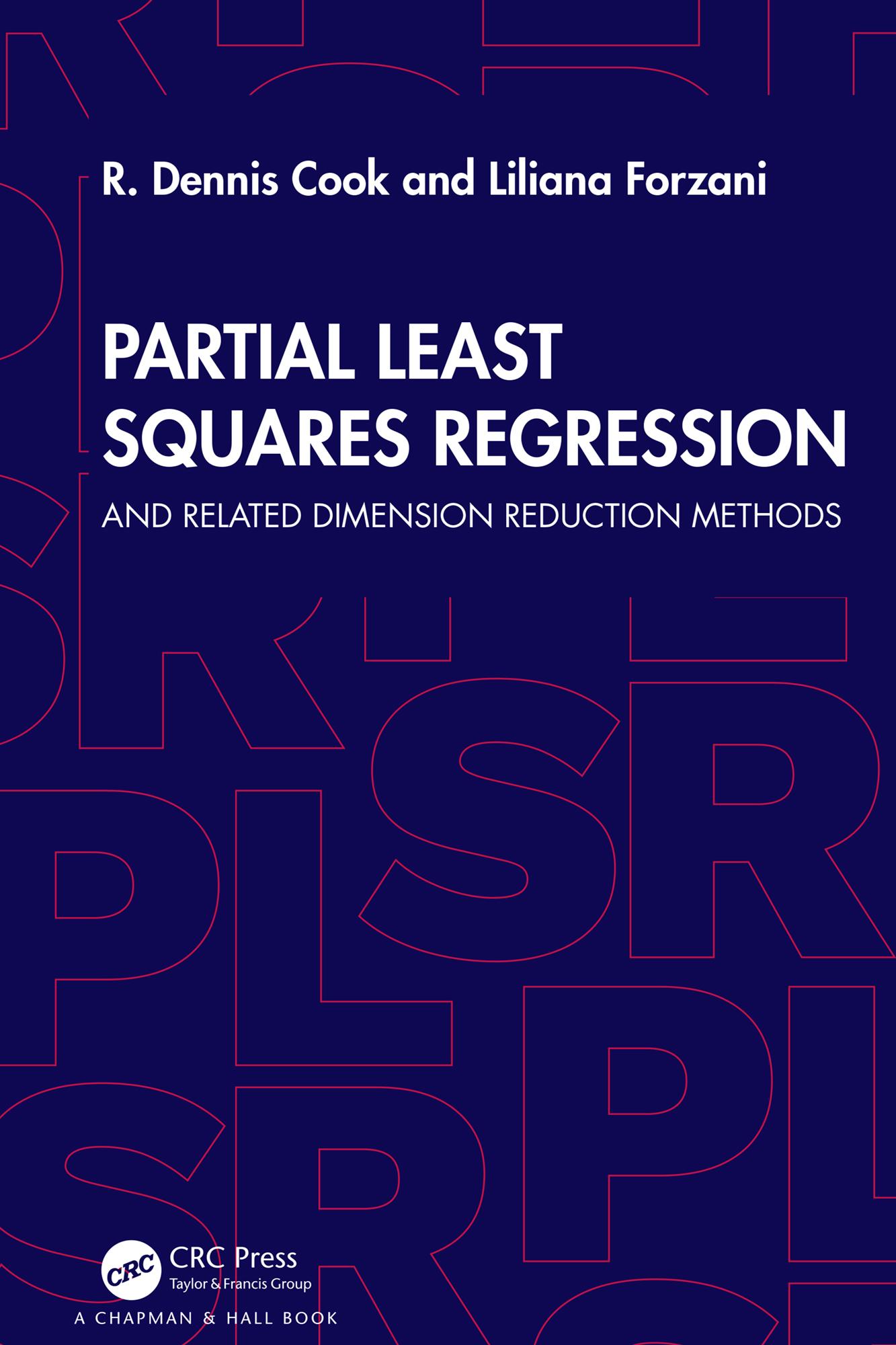
Partial least squares (PLS) regression is, at its historical core, a black-box algorithmic method for dimension reduction and prediction based on an underlying linear relationship between a possibly vector-valued response and a number of predictors.
Through envelopes, much more has been learned about PLS regression, resulting in a mass of information that allows an envelope bridge that takes PLS regression from a black-box algorithm to a core statistical paradigm based on objective function optimization and, more generally, connects the applied sciences and statistics in the context of PLS. This book focuses on developing this bridge. It also covers uses of PLS outside of linear regression, including discriminant analysis, non-linear regression, generalized linear models and dimension reduction generally.
Key Features:
• Showcases the first serviceable method for studying high-dimensional regressions.
• Provides necessary background on PLS and its origin.
• R and Python programs are available for nearly all methods discussed in the book.
This book can be used as a reference and as a course supplement at the Master's level in Statistics and beyond. It will be of interest to both statisticians and applied scientists.
Maksa helposti kortilla, Klarnalla, Apple Paylla tai Google Paylla. Etkö ole tyytyväinen? Sinulla on aina 14 päivän palautusoikeus. Lue lisää ehdoistamme. Jos sinulla on kysyttävää, lähetä meille sähköpostia osoitteeseen hello@memmo.org.
Memmo tekee opiskelusta helpompaa – missä päin maailmaa ikinä oletkin. Meillä yhdistät kurssikirjat ja fiksut opiskelutyökalut yhteen paikkaan: tiivistelmät, visat, podcastit ja muistikortit. Ja sitten Ted, opiskelukaverisi, joka vastaa kaikkeen, mitä ikinä mietitkin. Yli 50 000 opiskelijaa opiskelee jo täällä – rakennettu auttamaan sinua oppimaan nopeammin ja stressaamaan vähemmän.