
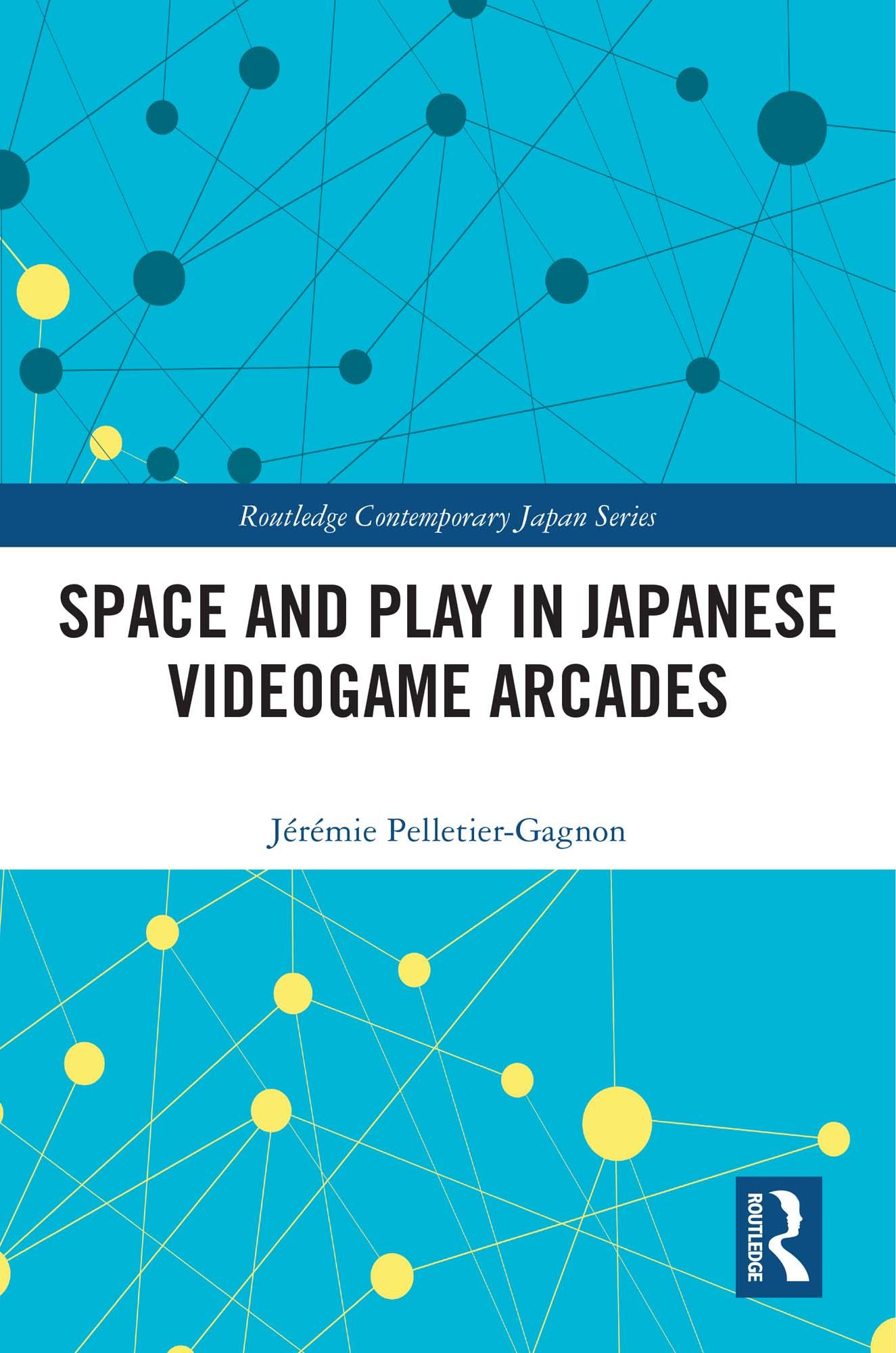
This book presents a scholarly investigation of the development and culture of Japanese videogame arcades, both from a historical and contemporary point of view.
Providing an overview of the historical evolution of public amusement spaces from the early rooftop amusement spaces from the early nineteenth century to the modern multi‑floor and interconnected arcade complexes that characterize the urban fabric of contemporary Japan, the book argues that arcade videogames and their associated practices must be examined in the context in which they are played, situated in the interrelation between the game software, the cabinets as material conditions of play, and the space of the venue that frames the experience. Including three case studies of distinct and significant game centres located in Tokyo and Kyoto, the book addresses of play in public, including the notion of performance and observation as play practices, spatial appropriation, as well as the compartmentalization of the play experience.
In treating videogames as sets of circumstances, the book identifies the opportunities for ludic practices that videogame arcades provide in Japan. As such, it will appeal to students and scholars of Game Studies and Digital Media Studies, as well as those of Japanese Culture and Society.
Maksa helposti kortilla, Klarnalla, Apple Paylla tai Google Paylla. Etkö ole tyytyväinen? Sinulla on aina 14 päivän palautusoikeus. Lue lisää ehdoistamme. Jos sinulla on kysyttävää, lähetä meille sähköpostia osoitteeseen hello@memmo.org.
Memmo tekee opiskelusta helpompaa – missä päin maailmaa ikinä oletkin. Meillä yhdistät kurssikirjat ja fiksut opiskelutyökalut yhteen paikkaan: tiivistelmät, visat, podcastit ja muistikortit. Ja sitten Ted, opiskelukaverisi, joka vastaa kaikkeen, mitä ikinä mietitkin. Yli 50 000 opiskelijaa opiskelee jo täällä – rakennettu auttamaan sinua oppimaan nopeammin ja stressaamaan vähemmän.