
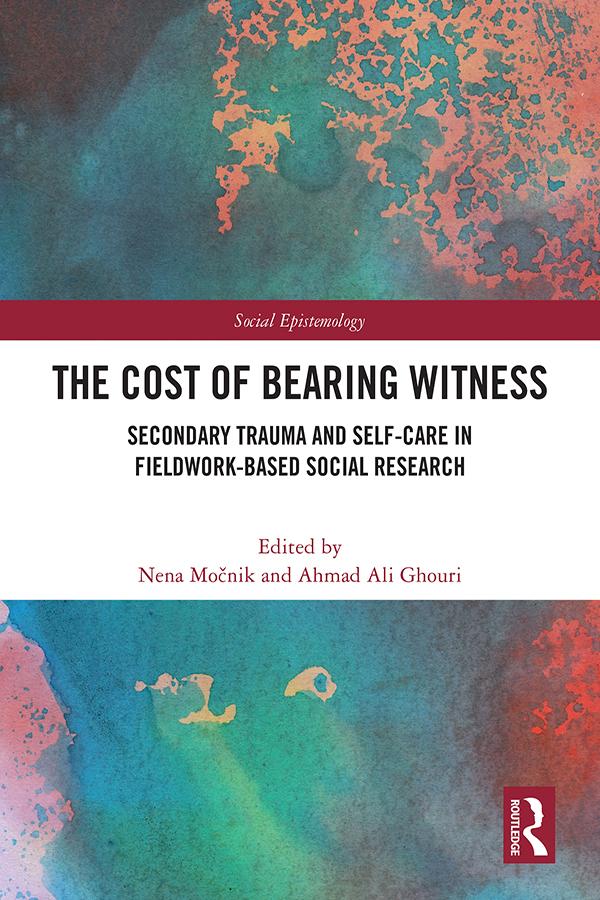
This highly interdisciplinary volume fills the gap in research ethics that has so far omitted to address the psychological, physiological, and socio-political impacts on researchers conducting field-based social research in traumatic environments.
The chapters in this book discuss various facets of secondary trauma from different methodological and theoretical perspectives, geographic, and historical contexts, and address a wide range of questions spanning from recent complex topics to semi-historical events and future concerns causing traumatic anxiety. While most chapters explore the process of healing and recovery from traumatic experiences during fieldwork-based research, few chapters also propose constructive approaches for developing personal and institutional methodologies and techniques to better prepare researchers to cope with secondary trauma.
The book offers useful insights and concrete changes in research methodologies that can help minimize the risk of trauma and new approaches to preventing and handling the consequences of conducting field-based social research in traumatic environments. It was originally published as a special issue of Social Epistemology.
Maksa helposti kortilla, Klarnalla, Apple Paylla tai Google Paylla. Etkö ole tyytyväinen? Sinulla on aina 14 päivän palautusoikeus. Lue lisää ehdoistamme. Jos sinulla on kysyttävää, lähetä meille sähköpostia osoitteeseen hello@memmo.org.
Memmo tekee opiskelusta helpompaa – missä päin maailmaa ikinä oletkin. Meillä yhdistät kurssikirjat ja fiksut opiskelutyökalut yhteen paikkaan: tiivistelmät, visat, podcastit ja muistikortit. Ja sitten Ted, opiskelukaverisi, joka vastaa kaikkeen, mitä ikinä mietitkin. Yli 50 000 opiskelijaa opiskelee jo täällä – rakennettu auttamaan sinua oppimaan nopeammin ja stressaamaan vähemmän.