
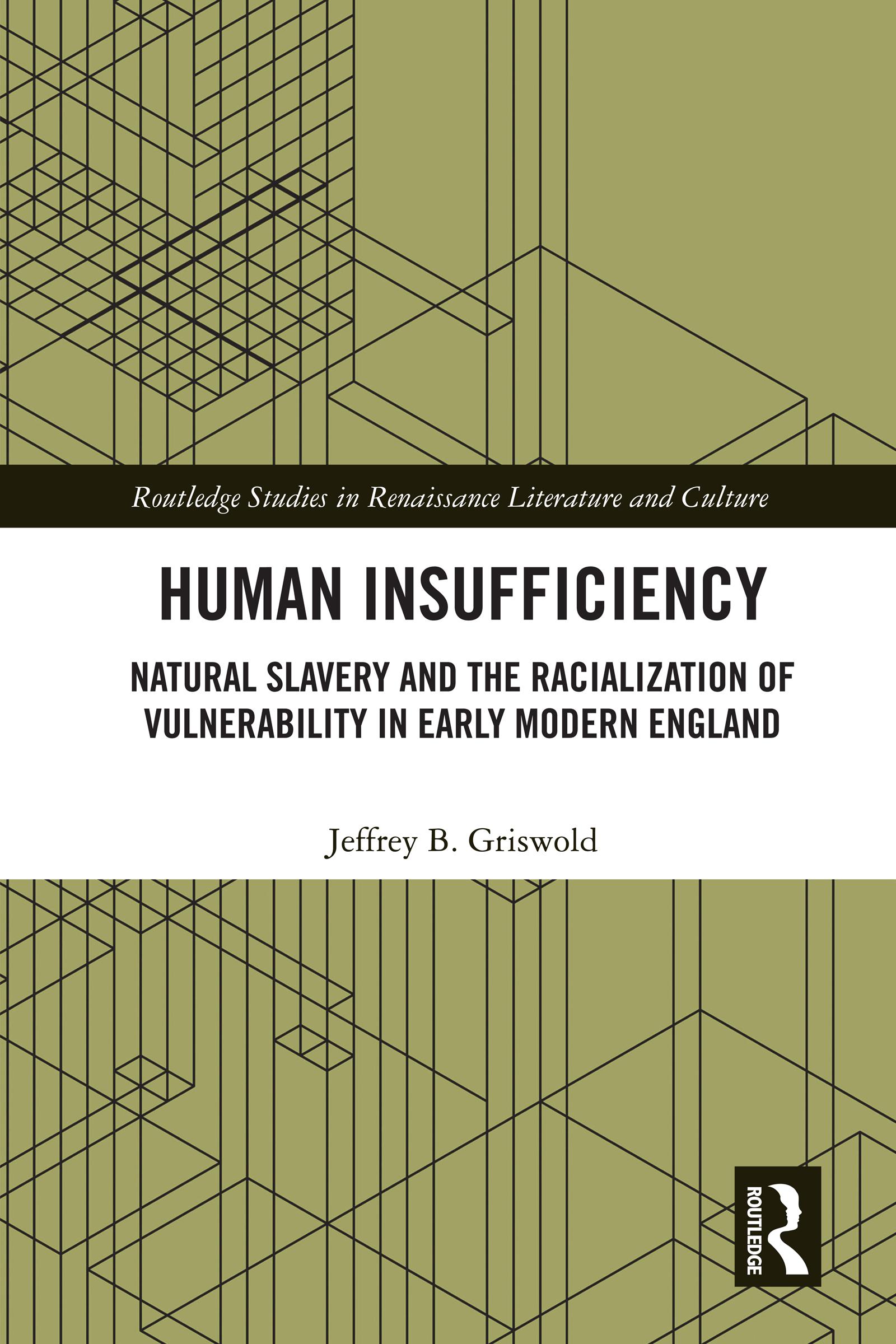
Human Insufficiency argues that early modern writers depict the human political subject as physically vulnerable in order to naturalize slavery. Representations of Man as a weak creature—“poor” and “bare” in King Lear’s words—strategically portrayed English bodies as needing care from people who were imagined to be less fragile. Drawing on Aristotle’s depictions of the natural master and the natural slave in the Politics, English writers distinguished the fully human political subject from the sub-human Slave who would care for his feeble body. This justification of a nascent slaving economy reinvents the violence of enslaving Afro-diasporic peoples as a natural system of care. Human Insufficiency’s most important contribution to early modern critical race studies is expanding the scope of the human as a racialized category by demonstrating how depictions of Man as a vulnerable species were part of a discourse racializing slavery.
Maksa helposti kortilla, Klarnalla, Apple Paylla tai Google Paylla. Etkö ole tyytyväinen? Sinulla on aina 14 päivän palautusoikeus. Lue lisää ehdoistamme. Jos sinulla on kysyttävää, lähetä meille sähköpostia osoitteeseen hello@memmo.org.
Memmo tekee opiskelusta helpompaa – missä päin maailmaa ikinä oletkin. Meillä yhdistät kurssikirjat ja fiksut opiskelutyökalut yhteen paikkaan: tiivistelmät, visat, podcastit ja muistikortit. Ja sitten Ted, opiskelukaverisi, joka vastaa kaikkeen, mitä ikinä mietitkin. Yli 50 000 opiskelijaa opiskelee jo täällä – rakennettu auttamaan sinua oppimaan nopeammin ja stressaamaan vähemmän.